At the border post between South Africa and Botswana, a line of minibus taxis waits to ferry tourists into the Kruger National Park. The scene is familiar: travellers from neighbouring states form a steady stream that fuels the country’s hospitality and tour-operator businesses.
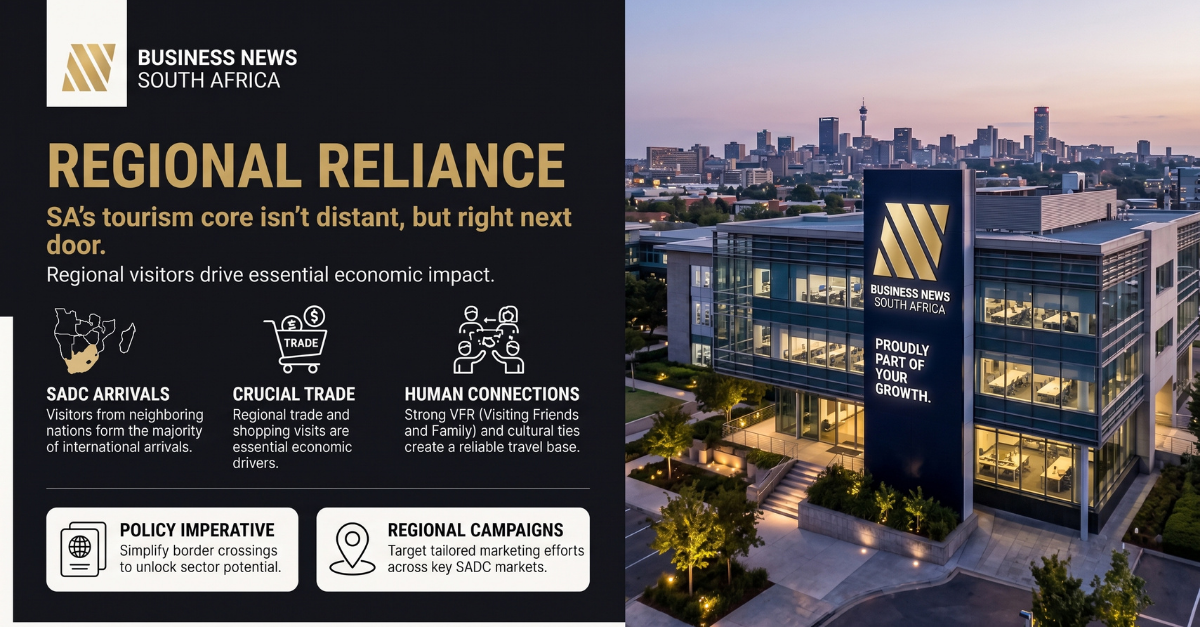
According to tourism-review.com, South Africa’s tourism relies heavily on neighbouring countries. The statement is a claim by the website, not an independently verified statistic, but it reflects a long-standing pattern in the sector.
Tourism contributes around 8% of South Africa’s gross domestic product, according to the World Bank, and employs roughly 1.5 million people. A sizable share of those visitors arrive from the Southern African Development Community (SADC) members, Zimbabwe, Mozambique, Botswana, Namibia, Lesotho and Eswatini. For small-scale hotels, guest houses and local tour guides, the proximity of these markets means lower travel costs for visitors and a more predictable flow of guests throughout the year.
That reliance creates both opportunities and risks for South African SMEs. On the upside, regional tourists tend to stay shorter periods, often opting for budget accommodation and day-trip excursions, which can boost occupancy rates for smaller establishments that struggle to compete with international chains. On the downside, any disruption in a neighbour’s economy, for example, a currency devaluation in Zimbabwe or a political crisis in Mozambique, can quickly translate into fewer arrivals and empty rooms.
Recent years have shown how volatile the picture can be. When Mozambique experienced severe flooding in 2022, border crossings saw a dip in tourist numbers, and hotels in the Limpopo province reported lower bookings. While the exact impact on revenue is not publicly broken down, the pattern illustrates how external shocks in neighbouring economies ripple into South Africa’s tourism value chain.
For entrepreneurs in the sector, the key takeaway is the importance of diversification. Many successful operators now market to both regional and overseas visitors, using digital platforms to reach travellers from Europe and Asia while maintaining strong ties with travel agencies in neighbouring capitals. Some have also begun to offer cross-border packages that combine attractions in South Africa with short stays in Botswana or Namibia, turning a reliance on neighbours into a collaborative selling point.
Policy makers are aware of the dynamic. The Department of Tourism has highlighted regional cooperation as a pillar of its growth strategy, encouraging visa-free travel agreements and joint marketing campaigns with SADC partners. While the details of those initiatives are still being finalised, the intent is to smooth the flow of tourists across borders and reduce administrative friction.
In practical terms, small business owners should watch for changes in exchange rates, border regulations and the political climate of their neighbours. A sudden increase in visa fees or a new travel advisory can shave off a few percent of bookings, which for a boutique guest house can mean the difference between profit and loss.
Ultimately, the heavy reliance on neighbouring countries is not a static fact but a moving target. As regional economies recover from the pandemic and as infrastructure projects, such as the new railway link between Pretoria and Gaborone, come online, the flow of tourists is likely to grow. For South African SMEs, staying attuned to those developments will be as important as offering good service.
South Africa’s own visa policy has been a genuine point of friction in this relationship for years, with SADC visitors sometimes facing processing delays or documentation requirements that push regional travellers toward destinations with simpler entry rules instead. Every administrative hurdle removed at the border effectively functions as a marketing win for South African tourism, since it costs the country nothing beyond the will to fix its own paperwork, unlike the international marketing campaigns competing destinations spend heavily to run.