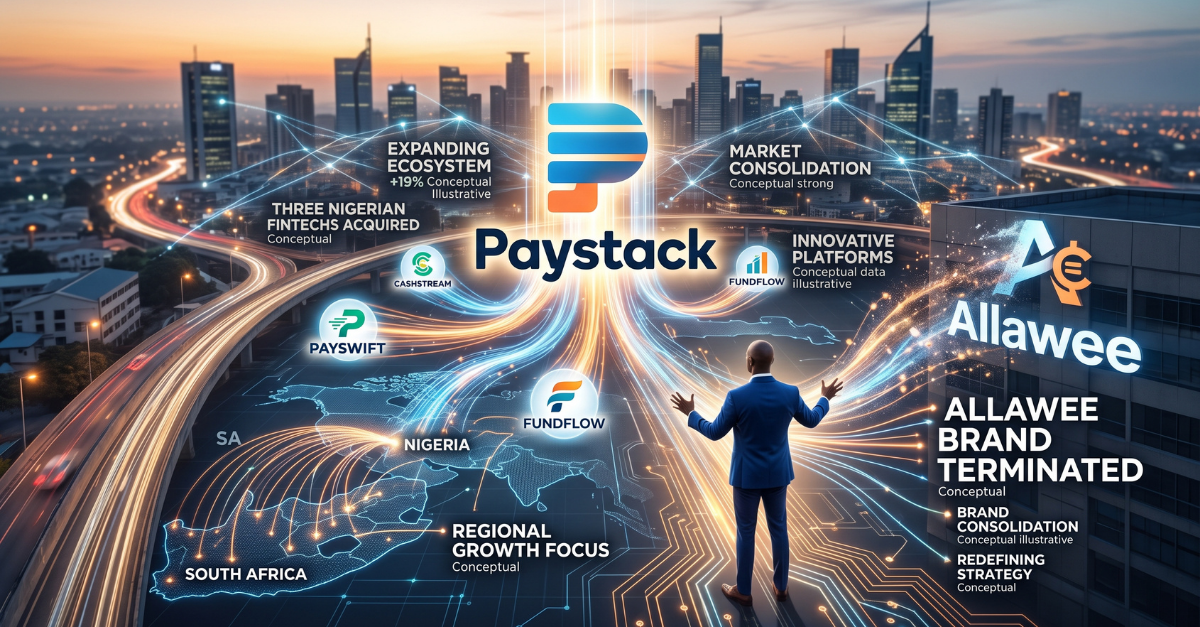
According to a report in Tech Times, payments platform Paystack has bought three Nigerian fintech companies in the past 18 months and has now retired the Allawee brand, the last of its recent acquisitions to disappear.
Paystack, a homegrown payments gateway that lets small businesses accept card and bank-transfer payments online, was bought by US-based payment processor Stripe in 2020. An acquisition, in simple terms, is when one company purchases another and takes control of its assets, customers and technology. The three fintechs that Paystack has added to its portfolio have not been named publicly, and no financial details have been disclosed.
The decision to fold the Allawee brand, a name that had been used for a suite of payment tools, signals that Paystack is moving toward a single, unified offering. A brand, in this context, is the public name and visual identity that a company uses to market its services. By retiring Allawee, Paystack can focus its marketing and product development on one platform, which it says will simplify the experience for merchants.
Why the moves matter to small business owners
For entrepreneurs who run online shops, subscription services or on-demand platforms, the choice of payment gateway can affect transaction fees, checkout speed and the ability to accept different payment methods. Paystack already handles a large share of online payments in Nigeria, and its expansion through acquisitions could bring new features such as instant payouts, better fraud protection or integration with local banks. Those improvements could reduce the time and cost of moving money from a customer’s card to a business’s bank account.
At the same time, consolidation reduces the number of independent fintech providers in the market. Fewer competitors can mean less pressure on pricing and slower innovation. Small firms that previously worked with a niche fintech may now have to switch to Paystack’s standard terms, which could be more or less favourable depending on the business model.
Paystack’s parent, Stripe, has a reputation for building a global payments infrastructure that works across borders. By adding local Nigerian fintechs, Paystack can tap into existing relationships with banks, mobile money operators and regulatory bodies. That could make it easier for a South African SME looking to expand into Nigeria to use a single provider for cross-border sales.
However, the exact impact on fees, service levels and support remains unclear because the companies involved have not released details. Paystack’s statement, as quoted by Tech Times, simply notes that the integration of the three fintechs is complete and that the Allawee brand will no longer be offered.
Regulators in Nigeria have been encouraging consolidation in the financial-technology sector to improve consumer protection and reduce systemic risk. The Central Bank of Nigeria (CBN) requires payment service providers to meet capital and compliance standards. By bringing smaller fintechs under the Paystack umbrella, the group may find it easier to meet those requirements, but the report does not confirm any regulatory approval process.
For entrepreneurs, the practical takeaway is to review the terms of any existing Paystack or former Allawee contracts. If a business is already using Paystack, the transition may be seamless, but if it relies on a fintech that has been absorbed, the owner should contact Paystack’s support team to understand any changes to pricing or functionality.
In the broader picture, Paystack’s activity reflects a trend of larger payment platforms buying up niche players to build a more comprehensive service stack. Similar moves have been seen in South Africa, where larger banks have acquired smaller payment startups to broaden their digital offerings. The pattern suggests that the future of payments for SMEs may involve fewer, but larger, service providers that aim to cover the entire transaction journey.
Until Paystack releases more information about the three fintechs it has acquired, small business owners will have to wait for concrete details. The company’s claim that the integration is complete is a statement of intent, not an independently verified fact.