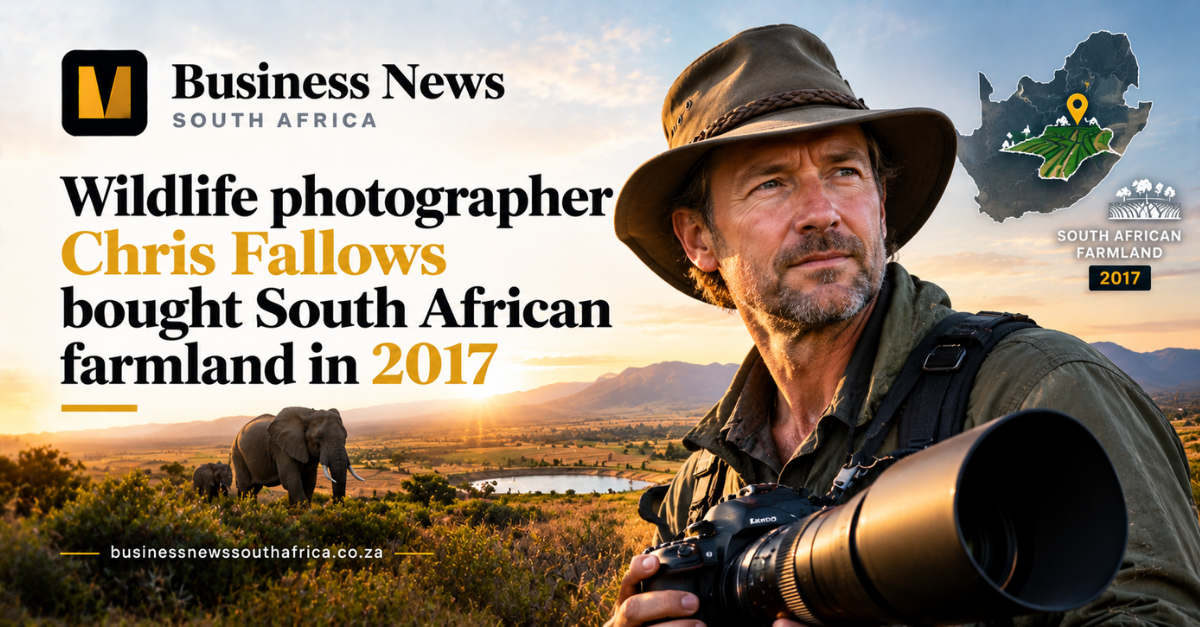
In 2017, Australian photographer Chris Fallows, best known for the “Air Jaws” series on great white sharks, bought a piece of South African farmland, according to a report in The Times of India. Fallows makes a living from wildlife-art, selling prints, books and licensing images of sharks, and the report says his earnings funded the purchase. The fact that a professional photographer with a reputation built on marine wildlife chose to invest in land on the African continent adds an unexpected twist to the ongoing conversation about who is buying South African farmland and why.
Why the purchase matters
For South African farmers and policy makers, any foreign individual buying land can affect the supply of farmland and influence price trends. While the size and location of Fallows’ farm were not disclosed, the transaction adds to a modest but noticeable flow of non-traditional investors entering the agricultural market. The presence of a wildlife photographer among those investors illustrates that the pool of potential buyers is not limited to conventional agribusinesses, mining interests or large multinational corporations. This diversification of buyer profiles can have ripple effects that reach beyond the immediate transaction.
South Africa has long debated foreign ownership of agricultural land. Government data indicates that foreign individuals own a small but measurable share of the country’s roughly 13 million hectares of farmland. The entry of a wildlife photographer into this space shows how diverse the buyer pool can be. The debate often centres on the balance between attracting capital that can improve productivity and protecting the interests of local producers who depend on land for their livelihoods.
The Times of India story provides the basic fact of the purchase but does not give details on the farm’s size, exact location or purchase price. Those specifics remain unverified beyond the media report. The lack of detail is typical of many private land transactions, where confidentiality clauses and the absence of a public register for individual sales limit the amount of information that can be disclosed. This opacity can make it difficult for observers to assess the broader impact of each new acquisition.
For small-scale farmers, the episode is a reminder that land can attract buyers from unexpected sectors, and that any increase in foreign ownership may shape future land-policy discussions. Small producers often watch the market closely because shifts in land availability or price can affect their ability to expand, invest in new technology or secure financing. When a foreign buyer enters the market, even if the parcel is modest in size, it can signal a trend that prompts other investors to consider similar moves.
How foreign land acquisition works in South Africa
The legal framework governing the purchase of agricultural land by non-residents requires that foreign individuals obtain consent from the relevant government authority before completing a transaction. This process is designed to ensure that acquisitions are consistent with national development goals and that they do not undermine food security or rural development objectives. Applicants typically must demonstrate the intended use of the land, provide evidence of financial capacity and outline any plans for investment in infrastructure or employment.
Once consent is granted, the transaction proceeds much like any private sale. The buyer and seller negotiate terms, draft a sale agreement and register the transfer with the deeds office. The registration process creates a public record of ownership, but the details of price and exact acreage are often omitted from public summaries. The requirement for consent does not prevent foreign individuals from purchasing land, but it does give the state a mechanism to monitor and, if necessary, intervene in cases where a proposed acquisition is deemed contrary to the public interest.
In practice, the consent process can take several months, depending on the complexity of the proposed use and the workload of the approving authority. Applicants may be asked to provide additional documentation, such as environmental impact assessments or proof of compliance with zoning regulations. The system aims to balance openness to investment with safeguards that protect the broader agricultural sector and the communities that rely on it.
Implications for South African business owners
Business owners who operate in agriculture, agribusiness services, supply chains or rural finance should be aware of the broader context in which foreign land purchases occur. An influx of capital from abroad can lead to improvements in infrastructure, the introduction of new farming techniques and the creation of jobs in rural areas. At the same time, heightened competition for land can push up prices, making it more challenging for local entrepreneurs to acquire new parcels or expand existing operations.
For companies that provide inputs such as seeds, fertilizers, machinery or advisory services, a new foreign owner may represent a potential client with the resources to invest in modernisation. Conversely, if foreign owners consolidate land into larger estates, smaller suppliers may find it harder to compete for contracts. The net effect depends on the strategic choices made by the new landholder and the degree to which they integrate with existing local networks.
Financial institutions also monitor foreign land ownership because it can affect credit risk assessments. Lenders may view a well-funded foreign buyer as a lower-risk borrower, but they also consider the broader market dynamics that could influence the borrower’s ability to generate cash flow from agricultural production. Changes in land prices can affect collateral values, which in turn influence loan terms for other farmers in the region.
Historical perspective on land reform and foreign investment
South Africa’s history of land distribution is marked by long-standing inequities that have shaped contemporary policy debates. Land reform initiatives have sought to address historical dispossession by redistributing land to previously disadvantaged groups, while also promoting agricultural development and economic growth. The presence of foreign investors adds another layer to this complex landscape, as policymakers must weigh the benefits of external capital against the imperative to ensure that land remains accessible to those who need it most.
Over the years, the government has introduced various measures to regulate foreign ownership, including limits on the proportion of land that can be held by non-residents in certain provinces and requirements for joint ventures with South African partners. These measures are intended to encourage collaboration, transfer of skills and shared benefits. While the exact thresholds and conditions have evolved, the underlying principle remains that foreign investment should complement, rather than replace, domestic agricultural activity.
In the context of these policies, the purchase by Chris Fallows can be seen as an example of a foreign individual complying with the established consent process and entering the market under the same rules that apply to all investors. The fact that his primary source of income is wildlife-art rather than traditional farming underscores the breadth of interests that can be attracted to South African land, ranging from conservation-focused enterprises to commercial agriculture.
Potential motivations behind non-traditional land purchases
Individuals from creative or conservation-oriented backgrounds may be drawn to South African farmland for several reasons. The country’s diverse ecosystems provide opportunities for eco-tourism, wildlife photography, research and habitat restoration. Owning land can give a photographer direct access to unique environments, reduce reliance on third-party permits and enable long-term projects that align with personal artistic or environmental goals.
From an investment perspective, farmland is often viewed as a stable, tangible asset that can appreciate over time. The agricultural sector’s resilience to economic cycles, combined with the potential for income from crops, livestock or leasing arrangements, makes it an attractive addition to a diversified portfolio. For someone whose earnings are tied to the sale of visual media, allocating capital to land can provide a hedge against market fluctuations in the art world.
These motivations are not exclusive to any single profession, and they illustrate why the pool of potential buyers can include people whose primary expertise lies outside of conventional farming. The presence of such buyers can introduce new ideas, promote sustainable land management practices and foster collaborations that benefit both the environment and local communities.
What small-scale farmers can do to stay informed
Farmers who operate on a modest scale should keep abreast of changes in land-ownership patterns by monitoring announcements from government departments, industry associations and local media outlets. Attending community meetings, participating in farmer cooperatives and engaging with extension services can provide early warnings about shifts in land availability or price pressures. By staying connected, producers can better anticipate market dynamics and adjust their business plans accordingly.
In addition, building relationships with financial institutions that understand the agricultural sector can help farmers secure financing that is resilient to fluctuations in land values. Diversifying income streams, such as exploring value-added processing, agritourism or niche markets, can also reduce dependence on land alone and improve overall profitability. These strategies become especially relevant when the market sees an influx of capital from foreign investors who may be willing to pay premium prices for high-quality parcels.
Finally, engaging in policy dialogues, whether through formal consultation processes or informal networks, allows farmers to voice concerns and contribute to the shaping of regulations that govern foreign land ownership. By participating in these conversations, small producers can help ensure that future policies balance the need for investment with the protection of local livelihoods.
Conclusion
The purchase of South African farmland by an Australian wildlife photographer highlights the evolving nature of land investment in the country. While the transaction itself is modest in the context of the nation’s vast agricultural landscape, it exemplifies a broader trend of diverse, non-traditional actors entering the market. The existing legal framework requires foreign individuals to obtain consent, providing a mechanism for oversight and alignment with national objectives. For South African business owners, especially those in agriculture and related sectors, the presence of such investors can bring both opportunities and challenges. Understanding the regulatory environment, monitoring market signals and actively participating in policy discussions are essential steps for navigating a landscape where land ownership continues to attract attention from a wide array of global participants.