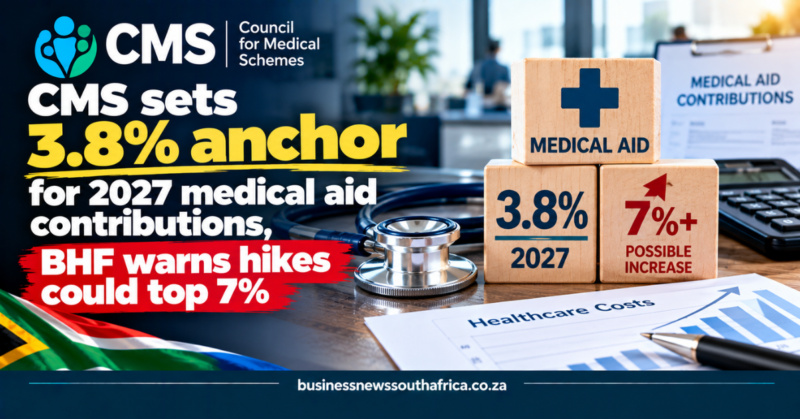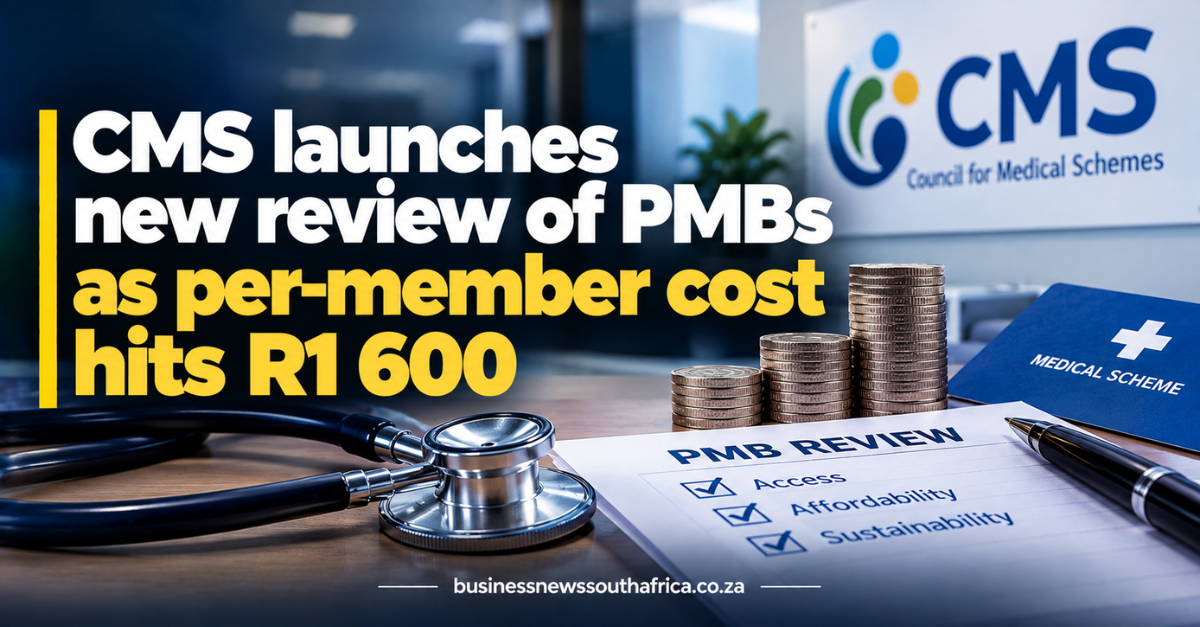
The Council for Medical Schemes (CMS) announced at the end of August that it has started a fresh review of Prescribed Minimum Benefits (PMBs). PMBs are the set of medical services that private health insurers, known locally as medical aids, must cover by law, ranging from chronic disease treatment to emergency care. The council says the current PMB package pushes the cost of covering a member to as much as R1 600, a figure that makes entry into any medical aid unaffordable for many South Africans.
Under the law, the PMB regulations must be reviewed at least every two years, but South Africa has not changed the core rules since 2003. As a result, the share of total health-care spend that goes to PMBs has risen to roughly 60 per cent of the billions of rands paid out each year. For a typical scheme, the basic minimum cost that members pay out of pocket sits at about R1 000, while the scheme’s own cost per member can climb to R1 600. That gap is the main driver of high premiums and low enrolment.
To address the imbalance, the CMS says it has spent years trying to reshape the PMB system into a new Primary Healthcare (PHC) package. PHC is a broader approach that bundles preventive, curative and rehabilitative services around the patient’s first point of contact with the health system. The council claims the proposed PHC package has been refined through stakeholder consultation, technical review and alignment with the National Department of Health. However, before any cost figures can be finalised, the CMS needs up-to-date utilisation and expenditure data from the medical aids.
According to the CMS, it previously received membership and claims data from the schemes and used that to start the costing exercise. It now asks each medical aid to submit data covering the period 1 January 2023 to 31 December 2025, with a deadline of the end of October 2026. The data will be used to model current use patterns, health-care spending and the refined PHC package. The council notes that the costing process itself is still to be determined, meaning the final impact on premiums remains uncertain.
Industry reaction
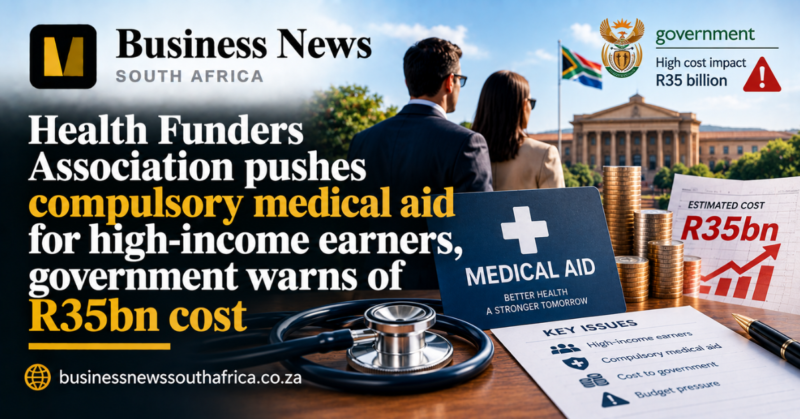
The Board of Healthcare Funders (BHF) and the Health Funders Association (HFA) have warned that the reforms could raise coverage costs. Both bodies point out that if the new PHC requirements sit on top of the existing PMB obligations, schemes may have to broaden basic coverage, which could push premiums higher even if the change is short-term. The HFA flagged in 2024 that it was unclear whether the PHC package would operate as a stand-alone set of benefits or be layered onto the current PMB structure. A slight rise in PMB costs, the HFA says, could deter people from joining a medical aid.
Katlego Mothudi, managing director of the BHF, raised a similar concern in July 2026, saying that every additional item that must be included as a minimum pushes out other benefits. He warned that the “more that needs to be included as a minimum, crowds out everything else”. The council, for its part, says ten new PMB Definition Guidelines will be drafted and communicated to ensure patients are not stuck with outdated treatment standards while the broader changes are finalised. Those guidelines are intended to update standard treatment protocols and essential medicines lists to reflect modern medical advances.
For small business owners and entrepreneurs who rely on medical aid schemes for themselves and their staff, the review matters because any increase in scheme costs is likely to be passed on as higher contributions. While the CMS has not yet released a timeline for when new premiums might be announced, the data request deadline of October 2026 suggests that any pricing adjustments would not be visible before 2027. In the meantime, businesses can monitor the CMS’s forthcoming guidelines and the data submissions of the major medical aids to gauge whether the PHC package will be a separate product or an addition to the existing PMB list.
In short, the CMS is moving a long-overdue review forward, but the final shape of the new PHC package and its cost impact remain to be seen. Stakeholders will have to wait for the costing model to be built, for the ten new definition guidelines to be published, and for the medical aids to submit their data before the sector can assess whether premiums will rise, stay flat or even fall.
Source: BusinessTech