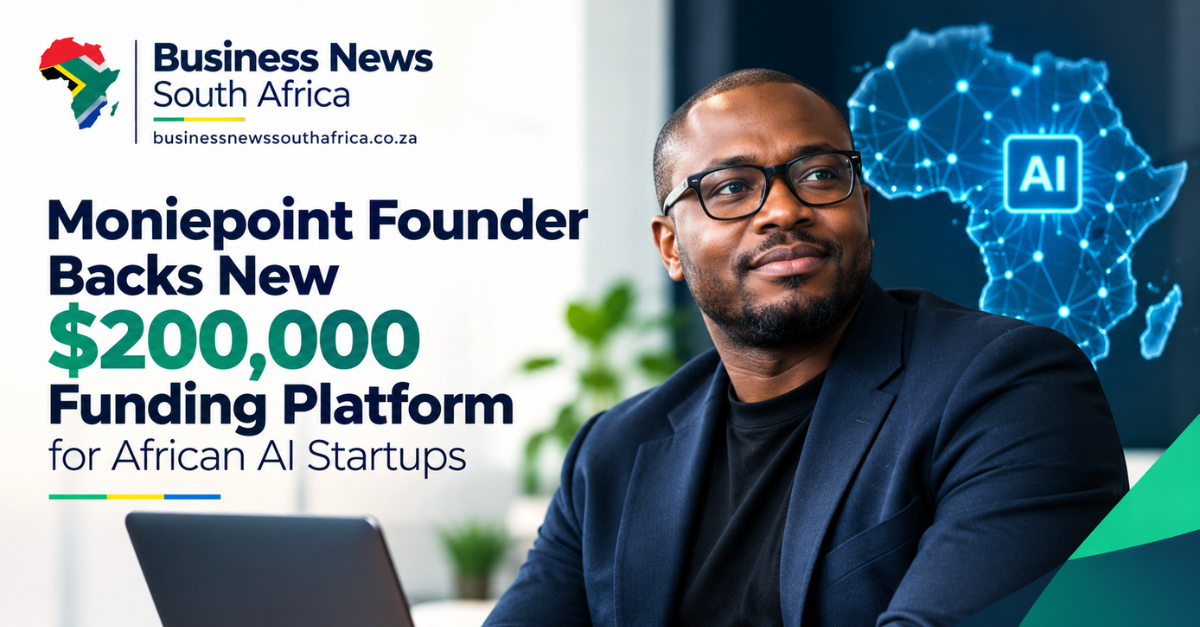
A new funding platform aimed squarely at African AI startups is offering up to $200,000 in equity-free capital to ten companies, with applications closing on 30 September, according to a report by Disrupt Africa. The Askya AI Growth Platform is run by Askya Investment Partners, led by founder and managing partner Babacar Seck, the former chief executive of Digital Africa, in partnership with innovation firm Magna Collective.
The programme is structured as a six-week hybrid course rather than a long-term incubator, combining masterclasses and one-to-one coaching with practical support across technology, product development, governance and distribution. Startups accepted into the cohort also get access to cloud resources, compute infrastructure and help connecting with customers and talent, the kind of operational support that AI-native companies often struggle to afford on their own given how expensive compute has become relative to a typical early-stage African startup’s budget.
Eligibility is pitched at companies further along than the idea stage: Askya is looking for pre-seed to Series A businesses with a live product already in front of customers and demonstrated demand, not concepts still being validated. The inaugural cohort carries an honorary chair in Tosin Eniolorunda, founder and group chief executive of Moniepoint, the Nigerian fintech that has become one of the continent’s best-known startup success stories, lending the programme a degree of credibility with the kind of later-stage investors these startups will eventually need to court.
A pointed argument about who builds AI
Seck’s framing of the programme’s purpose leaves little room for ambiguity about what he thinks is at stake. “AI is rapidly becoming a key driver of economic development,” he said. “Africa can either become a producer of AI technology, exporting innovation and creating high-value jobs, or remain a mere importer, consuming solutions built elsewhere and paying the associated costs and dependencies.” It is a framing that puts Askya’s programme in company with a small but growing list of Africa-focused AI initiatives, including Google’s own accelerator running concurrently in South Africa, all making a version of the same argument: that the continent’s AI story cannot just be about adoption of tools built in Silicon Valley or Shenzhen.
The zero-equity structure matters for the same reason it does in comparable programmes elsewhere on the continent. AI startups face a cost structure that looks different from a typical software business, with compute and model access eating into runway in a way a conventional SaaS company never has to budget for. A founder giving up equity to cover what is essentially an infrastructure bill, rather than to fund genuine growth, is a worse trade than the same dilution used to hire engineers or acquire customers. Grant-style capital targeted specifically at that cost line lets founders preserve their cap table for the funding rounds that will actually determine who controls the company long term.
For South African founders specifically, the programme adds to a widening set of AI-specific funding options appearing on the continent this year, alongside Google’s accelerator and a handful of smaller grant programmes run by cloud providers competing for early relationships with the next generation of AI-native companies. Whether $200,000 and six weeks of structured support is enough to meaningfully change a startup’s trajectory will depend heavily on how far along the ten selected companies already are when the cohort begins, since a platform built around go-to-market coaching and compute access does more for a company with paying customers than one still searching for product-market fit.
The involvement of Eniolorunda as honorary chair is also a deliberate credibility signal rather than a ceremonial title. Moniepoint’s own rise, from a payments infrastructure business to one of the few African fintechs with a valuation in the billions of dollars, is precisely the kind of outcome venture investors point to when arguing that African-built technology companies can scale to a size that justifies serious capital. Attaching that name to an AI-specific programme is Askya’s way of telling later-stage investors, who may eventually be asked to fund a follow-on round for one of these ten startups, that the platform’s screening process carries some weight beyond Seck’s own track record at Digital Africa.
It is also worth noting what this kind of programme cannot do. Six weeks of coaching and a $200,000 cheque will not close the compute gap between an African AI startup and a well-funded competitor in the United States or China outright, nor will it resolve the deeper infrastructure constraints, unreliable power, patchy fibre in parts of the continent, expensive cloud egress costs, that make running AI workloads from Africa more expensive than doing so from a data centre in Virginia or Frankfurt. What it can do is buy ten specific companies enough runway and credibility to reach their next funding conversation without having given away a chunk of their company simply to keep the servers running in the meantime.
Applications close at the end of September, with the ten selected startups expected to be announced once Askya has worked through what is likely to be a large pool of applicants drawn from across the continent’s AI-native startup scene, not South Africa alone. It joins a growing list of grant-style AI funding programmes now open to South African founders, including this site’s coverage of MTN Foundation’s own R1 million grant for black women-owned ICT firms.