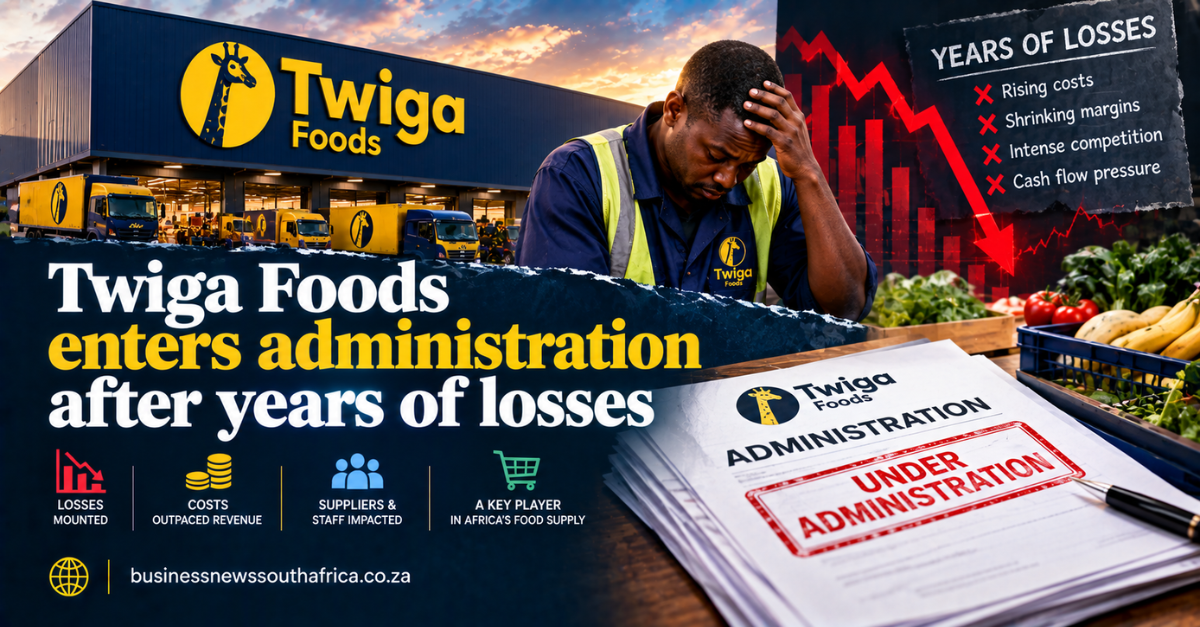
In the early morning rush of Nairobi’s open markets, traders still set up stalls while a quiet office building that once buzzed with Twiga Foods‘ logistics team now sits empty. According to a report by Brand Spur, the Kenyan food-distribution startup has entered administration, a legal process that places an insolvent company under the control of an appointed administrator.
Administration in Kenya works much like bankruptcy protection elsewhere: an independent administrator takes over the company’s affairs, aims to keep the business running if possible, and works to repay creditors as far as the assets allow. For a company that once touted a high-tech platform linking smallholder farmers directly to retailers, the move signals a stark reversal.
What led Twiga Foods to this point?
Twiga Foods was founded in 2014 with the ambition to streamline the supply chain for fresh produce. Its mobile-first platform allowed farmers to list crops, while retailers could order via an app, promising fresher food, lower prices and reduced waste. The model attracted significant venture capital, including a $30 million round led by Goldman Sachs in 2020, and at its peak the company claimed to serve over 30 000 retailers and source from thousands of farms across Kenya and neighbouring Tanzania.
That rapid growth came with heavy logistical costs, refrigerated trucks, warehousing, and a sprawling network of field agents. When inflation spiked in 2022 and 2023, input prices rose and consumer spending tightened, the margins that had justified the expansion began to shrink. Industry observers note that many agri-tech firms in East Africa face a similar squeeze: high upfront capital needs, seasonal cash-flow gaps and a market still adjusting to digital procurement.
Twiga’s own statements, released in earlier earnings updates, warned of “cash-flow constraints” and a “need to recalibrate our growth trajectory”. While the company has not disclosed the exact debt level that triggered the administration filing, the move suggests that creditors, possibly including the venture funds that backed the firm, are seeking a structured way to recover what they can.
Implications for South African SMEs
For South African entrepreneurs, Twiga’s story offers a cautionary tale. The allure of scaling quickly with venture money can be powerful, but the underlying economics must be robust enough to survive market headwinds. Small and medium-size enterprises that rely on external financing should model worst-case cash-flow scenarios and keep a clear line of sight on operating costs.
Twiga also highlights the importance of local market dynamics. While digital platforms can unlock efficiencies, they remain vulnerable to macro-economic shifts such as currency volatility, fuel price spikes and changes in consumer behaviour. South African agri-tech start-ups may need to build more flexible supply-chain arrangements and maintain stronger relationships with both producers and retailers to weather downturns.
Finally, the administration process itself can affect a wide network of stakeholders, from farmers who lose a reliable buyer to retailers who must find alternative sources. SMEs that depend on a single large partner should consider diversification strategies to mitigate the risk of a partner’s financial distress.
Twiga Foods’ entry into administration does not necessarily mean the end of its brand or its technology. Administrators often seek buyers for viable parts of a business, and the company’s data assets and distribution know-how could still hold value for a new owner. For now, the focus will be on how the appointed administrator manages creditor claims and whether any of Twiga’s operations can be salvaged.
In the broader picture, the episode underscores a growing reality for African start-ups: access to capital is improving, but sustainable growth still hinges on disciplined financial management and a deep understanding of local market pressures.