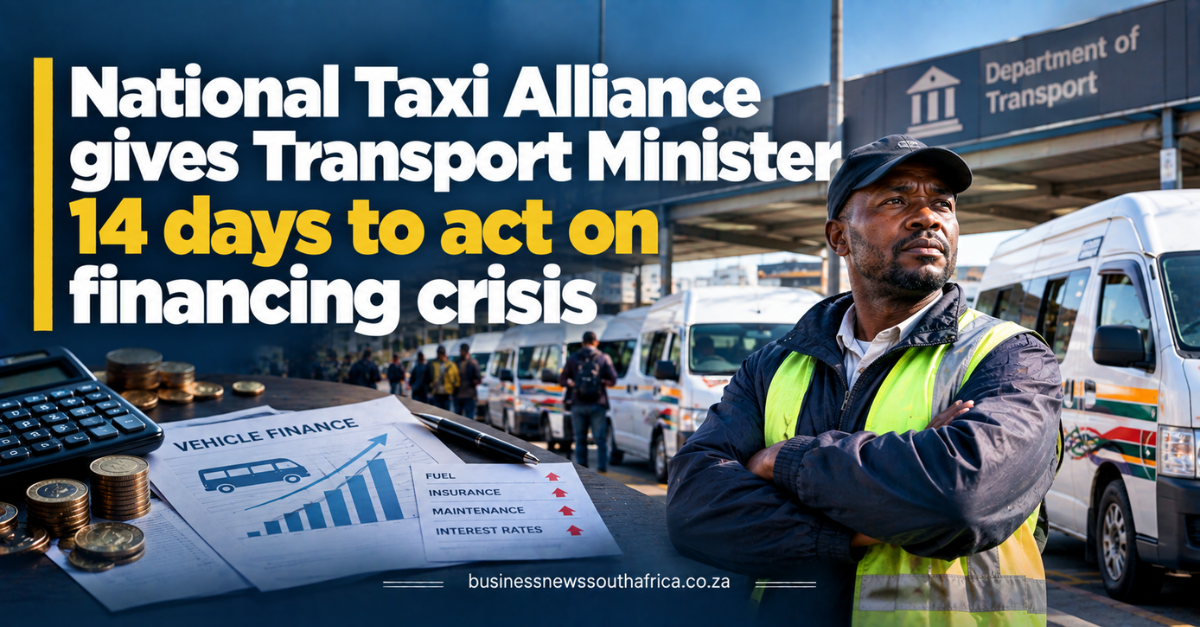
The National Taxi Alliance (NTA) has set a 14-day deadline for Transport Minister Barbara Creecy to answer a list of demands that could reshape the cost structure of South Africa’s minibus taxi industry. If the government does not respond, the NTA says it will organise a national protest march, a move that could disrupt daily commuting for millions and put pressure on small businesses that rely on taxi services for staff transport.
According to NTA spokesperson Theo Malele, operators are caught in a “national affordability crisis”. Rising fuel prices, higher maintenance bills and expensive vehicle financing are squeezing margins that were already thin. Malele highlighted that a new diesel Quantum minibus retails for R606 000, with monthly repayments of R18 000, a figure he described as unaffordable for most operators.
The alliance argues that financial institutions label taxi operators as a “high-risk market”, which forces lenders to charge higher interest rates and extend loan terms beyond the traditional 60 months. Some operators are now paying for a vehicle over 80 months, a situation Malele likened to “a wreck” by the time the final payment is due.
Beyond financing, the NTA is pressing for a targeted 12-month fuel rebate that would apply only to licensed public passenger operations. The rebate is intended as temporary relief while the alliance seeks safeguards against abuse. Malele also called for a change to public-transport subsidies, urging that support follow commuters rather than being tied to specific operators. He suggested that the electronic fare-collection system used for buses and trains be made interoperable for taxis, allowing passengers to receive subsidies regardless of the mode they choose.
In addition to the financial and subsidy requests, the NTA wants the government, the National Treasury and the National Credit Regulator to intervene and review the classification of taxi operators as a risk market. The alliance says that a fairer risk rating would bring interest rates in line with other sectors, easing the cash-flow pressure that threatens the viability of many small operators.
Malele pointed out that passenger numbers have fallen as private cars increasingly serve routes that were once the domain of minibuses. “The passenger count on taxis has significantly gone down,” he said, adding that deteriorating road conditions, potholes around taxi ranks in central business districts, are driving up maintenance costs and further eroding profitability.
The NTA says it is ready to professionalise the sector, having already trialled an electronic fare-collection system. What it lacks, according to Malele, is “a little bit of support from the government side so that we can just tighten up loose ends”.
While the alliance’s demands are clear, the government’s response remains unknown. The 14-day clock starts now, and the next steps will determine whether the industry faces a costly protest or a negotiated relief package.
For small business owners who depend on reliable taxi services, the outcome could affect employee punctuality, customer footfall and overall operating costs. The situation also highlights a broader challenge for South Africa’s informal transport sector, which supplies the majority of commuter trips but often operates without the financial safety nets enjoyed by larger firms.
Read more about transport-related regulatory developments in our Regulatory & Policy section.
The minibus taxi industry moves the large majority of South African commuters daily and has historically operated with limited access to conventional bank financing, relying instead on industry-specific lenders charging higher rates to cover the sector’s perceived risk. Disputes between taxi associations and government over financing terms have recurred periodically for years, often centred on vehicle replacement costs and the industry’s long-standing request for a dedicated, lower-cost financing vehicle similar to those available to other transport operators. The Department of Transport’s own public transport policy documents outline the current framework governing minibus taxi regulation and financing. For related coverage, see this site’s Regulatory and Policy coverage.