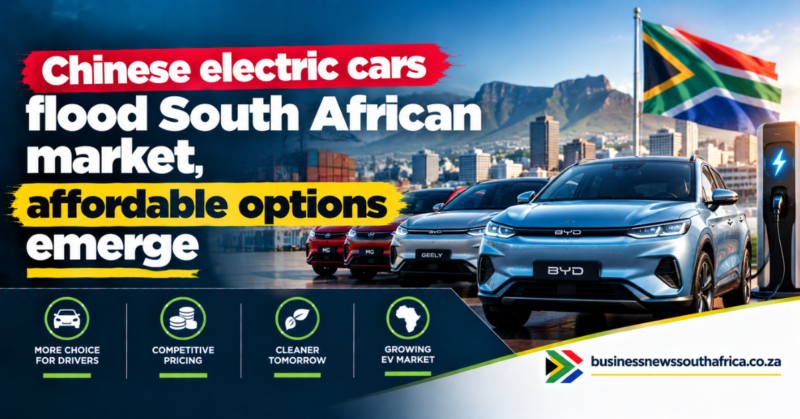
Accenture South Africa’s principal director for automotive & e-mobility, Greg Cress, told TechCentral that the Chinese car market in South Africa has entered a second phase, one where styling does more of the selling work than price alone.
The first wave was all about affordability. Chinese manufacturers cut prices until they matched local rivals, creating a price parity that made the cars attractive to cost-conscious buyers. Cress says the new wave is about desirability, buyers still watch the price tag, but they are now looking at how the car looks and feels.
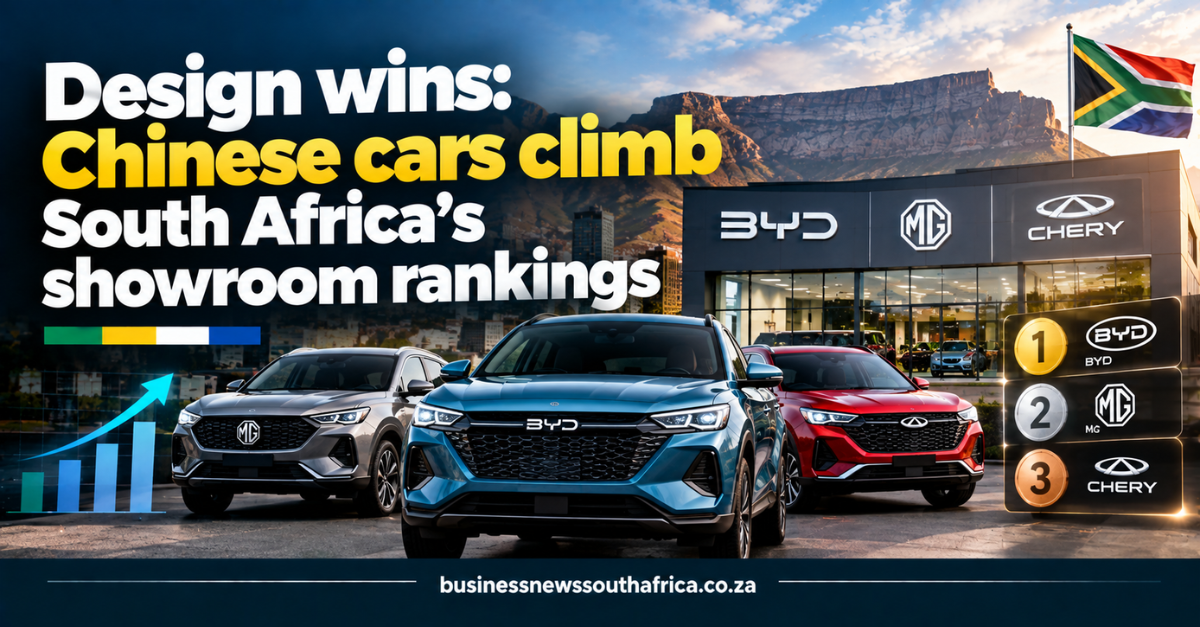
Five Chinese brands were inside the top 15 by sales in August, according to figures published by Naamsa. Chery sold 2 709 units (rank 6), GWM 2 504 (rank 7), Jetour 2 034 (rank 9), Omoda & Jaecoo 1 502 (rank 11) and BYD 860 (rank 15). Together they accounted for 9 609 of the 57 898 vehicles sold that month.
Cress points to a single cause: the recruitment of high-profile global designers. BYD hired Wolfgang Egger, former Audi Group design chief, in 2016; his “Dragon Face” language now appears on every BYD model sold locally. Geely’s design was led for years by Peter Horbury, a veteran of Volvo and Ford, before passing to ex-Bentley director Stefan Sielaff in 2021. Xiaomi brought in Kai Langer from BMW in August 2025 and has consulted Chris Bangle since early 2024.
Even with these design upgrades, Cress stresses that Chinese cars remain a value play. “Competitive pricing and value for money have helped Chinese brands scale in South Africa, but design is becoming the layer that creates a premium perception,” he said. The shift matters because Chinese brands now compete not only with legacy manufacturers but also with each other. With price parity already reached, styling is one of the few ways to win a buyer who is weighing two similarly priced SUVs.
Two newly launched models illustrate the trend. The BYD Surf and the iCaur each carry a distinct design identity and were showcased at this month’s Festival of Motoring. The Surf was one of only four battery-electric cars priced under R400 000, a price bracket that captures about 61 % of new-car sales in the country.
For local dealers, parts distributors and fleet managers, the design shift signals a need to rethink inventory and marketing. Vehicles that look modern can command higher resale values and attract customers who are willing to pay a modest premium for style. Service centres may also see new parts demand as design changes bring different body panels and trim.
In short, Chinese cars are no longer just the cheap alternative; they are becoming brands that South African consumers aspire to own. The next wave of growth will likely depend on how well manufacturers can blend price, design and local trust.
Chinese automakers climbing South Africa’s showroom rankings have generally competed on a combination of price, extended warranty terms and increasingly, styling that no longer trails established Japanese and Korean rivals as visibly as it did even five years ago, a shift design-focused buyers in particular have cited as changing their willingness to consider a Chinese brand for the first time. Design recognition of this kind also matters commercially because a car’s exterior styling remains one of the most influential factors in a South African buyer’s initial shortlist, ahead of a full evaluation of running costs or resale value. naamsa’s own new-vehicle sales data tracks how these design and pricing shifts are translating into actual market share gains. For related coverage, see this site’s Retail and Consumer coverage.
Design-led purchasing decisions have also been reinforced by social media, where a striking exterior design can generate organic sharing and comparison among prospective buyers well before any traditional advertising campaign begins, a dynamic that newer entrants without large marketing budgets have increasingly relied on.