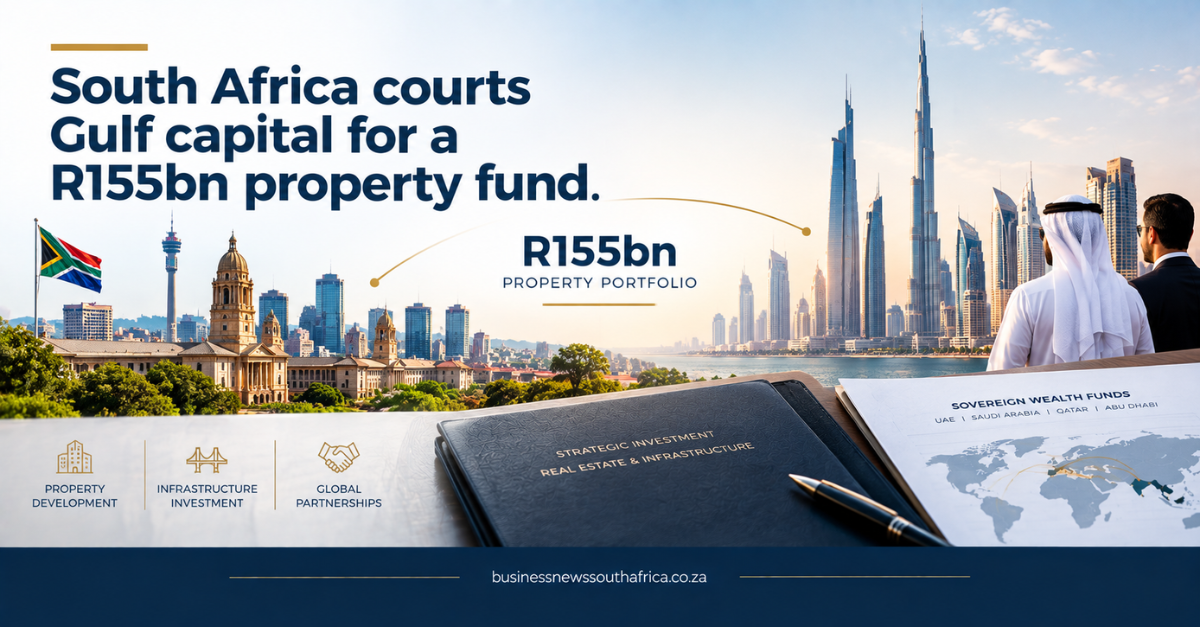
Public Works and Infrastructure Minister Dean Macpherson told Bloomberg TV from Dubai that South Africa is exploring a fundraising vehicle to raise money for a new state-owned property company. The company, announced by President Cyril Ramaphosa in February, will manage a portfolio worth roughly R155 billion (about $9.5 billion), 88 000 buildings and 5 million hectares of land.
The minister said Gulf sovereign wealth funds have offered advice on how to set up the vehicle, but he did not name the funds. He added that South Africa plans to open an office for its infrastructure development agency, Infrastructure South Africa, in Dubai “sooner rather than later”.
Why the move matters to local builders and developers
South Africa estimates it needs about R1.6 trillion in public-sector investment and an additional R3.2 trillion from private companies to meet its infrastructure targets by 2030. The property portfolio is a key part of that pipeline, with a R350 billion construction book slated to start procurement and building work within the next 12 to 18 months.
For small and medium-size construction firms, the prospect of external capital could mean more contracts and a steadier flow of work. A larger pool of funding may also lower the barrier for private developers to partner with the state on mixed-use projects, housing, and commercial upgrades. However, the influx of foreign capital could increase competition for the same projects, especially if Gulf investors bring their own preferred contractors.
From a financing perspective, a dedicated development fund would likely issue debt or equity instruments that are listed on the Johannesburg Stock Exchange. That could give local investors a new way to participate in state-backed property projects, but it also adds a layer of market risk that smaller firms must understand.
Macpherson stressed that the government cannot fund the entire infrastructure pipeline itself. “External funding is going to be important and we know that there’s a big appetite within the Middle East to do that,” he said. The minister’s remarks came as South Africa continues to recover from years of corruption, mismanagement and bailouts of struggling state-owned companies.
While the plan is still in the discussion stage, the next steps include finalising the legal structure of the fundraising vehicle, securing commitments from Gulf investors, and establishing the Dubai outpost. Companies interested in participating should review the upcoming tender documentation and consider using the commercial funding suite to model potential financing scenarios.
In short, the move could unlock new sources of capital for the property sector, but it also introduces new players and financing terms that South African SMEs will need to navigate carefully.