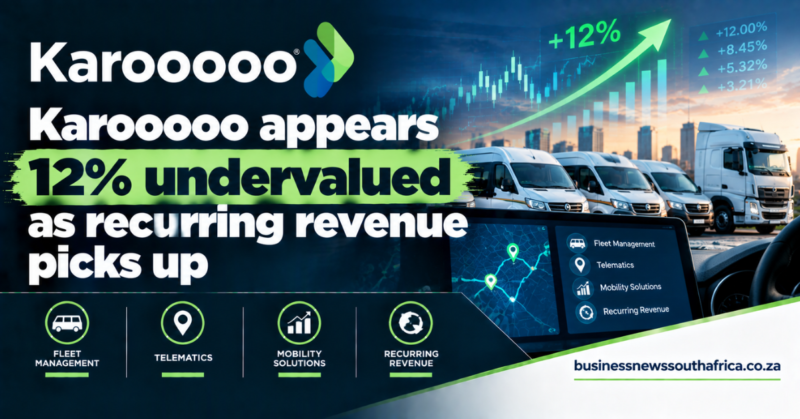
Zak Calisto built Karooooo, the parent of fleet-tracking business Cartrack, into a company worth close to $2 billion without raising a cent of venture capital, and he still owns the majority of it. Speaking on the Louis Furtwaengler YouTube channel, he explained how.
Funding software through upfront enterprise cash flow
Zak Calisto, the founder and chief executive of Karooooo, built the fleet management platform Cartrack without taking money from venture capital firms. Instead of relying on institutional investors, Calisto relied on early structural arrangements with telecommunications companies during the early 2000s. These providers paid upfront fees for two-year data contracts, generating the working capital required to build software and hardware assets.
This reliance on internal cash generation established a discipline of maintaining positive margins from the beginning. Calisto stated that early venture capital often encourages inefficient spending that damages company culture and distorts unit economics. By avoiding external funding rounds, he retained control of his capital allocation strategy throughout the expansion of Cartrack across 24 international markets.
Calisto dropped out of university in the 1980s after deciding that mandatory academic textbooks added little practical value to lecture materials. Karooooo, the holding company for Cartrack, is now headquartered in Singapore and listed on the Nasdaq, a move Calisto described as positioning the business for the next generation: “a great jurisdiction” with “the huge opportunity in Asia”. We have also looked at how the market is valuing Karooooo as its recurring revenue grows.
How did Cartrack grow without venture capital?
Cartrack achieved sustainable growth by acting early on cloud infrastructure before competitors transitioned away from desktop software. Calisto said that moving operational data to centralized servers created an immediate advantage in client onboarding and remote system maintenance.
Calisto noted that migrating early to cloud computing simplified sales, stating, “It was a relatively easy sell because one of the big challenges is to support customers when all the software lies on their desktops.” This technical design eliminated expensive on-site maintenance calls, preserving capital for product distribution and research.
Early exposure to compound mathematics influenced his view on long-term value creation. During his first year studying actuarial science, Calisto focused on annuities and compounding schedules. He applied these financial principles directly to subscription software, prioritizing steady customer retention over rapid customer acquisition that relies on high marketing burn rates.
By managing fixed operating expenses, the business generated internal liquidity without relying on capital raises.
How does Zak Calisto evaluate SaaS businesses?
When assessing software companies, Calisto evaluates historical compound growth rates and operational expenses rather than top-line revenue projections. He noted that high initial growth rates often mask underlying inefficiencies that emerge as customer acquisition costs rise.
“I would look at their historical compound growth rates and their potential future compounding rates. So if somebody’s growing at 80% then they start growing at 60 then they’re growing at 40.”
Zak Calisto
Rather than acquiring competitors to purchase growth, Calisto favors internal operational development. Integrating foreign corporate cultures and redundant legacy systems often destroys value and slows underlying execution.
“I think it’s organic growth. So if you’re doing it organically, it’s you just got to keep on doing the same thing over and over but better.”
Zak Calisto
To demonstrate the potential of internal operational scaling, Calisto shared an example from Karooooo’s past operations. The group acquired a small business generating R1 million in monthly revenue. By distributing its products through Cartrack’s established sales network, the acquired unit expanded its monthly revenue to R60 million within four years.
Navigating international expansion and market entry
Expanding into new regions requires a deliberate pace and direct operational control. Calisto argued against hiring third-party agencies or local joint-venture partners to manage technical distribution. Instead, Karooooo deploys its own employees into new territories to maintain corporate standards and direct customer feedback loops.
He urged founders not to rush geographic expansion, warning that “The best way to expand is slowly. If you try to do it too quickly it’s a problem.” Rushing into unfamiliar markets without understanding local operational norms consumes capital without delivering predictable subscription income.
Maintaining core leadership stability across target territories remains a competitive strength. Furtwaengler put it to him that the most successful African companies he interviews, citing Jumia among them, keep management teams for eight to 20 years. Calisto agreed that the constraint is always people.
Managing teams and operational constraints
Organizational scale introduces managerial friction that founders must address continuously. Calisto explained that finding, training, and retaining aligned staff represents the primary operational bottleneck at every phase of company development.
“The business is all about building teams and that’s the constraint you continuously have to solve.”
Zak Calisto
Retention relies on maintaining an environment free of internal politics where executives lead directly by example. Calisto stated that personal drive in a founder must come from commitment to the operational work itself rather than short-term financial liquidity.
Calisto explained his ongoing dedication to the enterprise, stating, “Well, first of all, Louis, I don’t know how to do anything else, you know? So you get out of bed, you know, you don’t really know how to do anything else.” Managing continuous growth requires consistent execution across all levels of staff over multi-year horizons.
He emphasized that hiring decisions dictate long-term enterprise value, stating, “The most important thing is the people they employ and they need to understand consistency in growth. They’ve got to be consistent.” Creating clear growth tracks for internal teams prevents key technical skills from leaving the firm.
What this means for South African businesses
For a South African owner, the primary lesson from Calisto’s experience is that early profitability provides structural independence. Chasing external equity investments can force management into rapid, inefficient expansion tactics that undermine customer retention and cash flow stability.
Building sustainable software businesses locally requires focusing on unit economics from day one. Generating cash upfront through enterprise contracts or long-term billing agreements allows founders to fund operational expansion internally while retaining ownership control.
Our practical analysis highlights several actionable operational strategies for growing technology companies:
- Prioritise unit economics and positive cash generation before attempting regional market expansion.
- Build direct sales and operational infrastructure rather than delegating customer distribution to third parties.
- Maintain low overhead costs and avoid software complexity that increases ongoing client support expenditure.
- Focus on multi-year compound retention rates over immediate short-term customer acquisition spikes.
Operating a technology platform over two decades relies on managing core internal constraints. Founders who maintain lean cost structures and focus on consistent execution can build scalable, multi-billion-rand enterprises without surrendering control to external financiers.