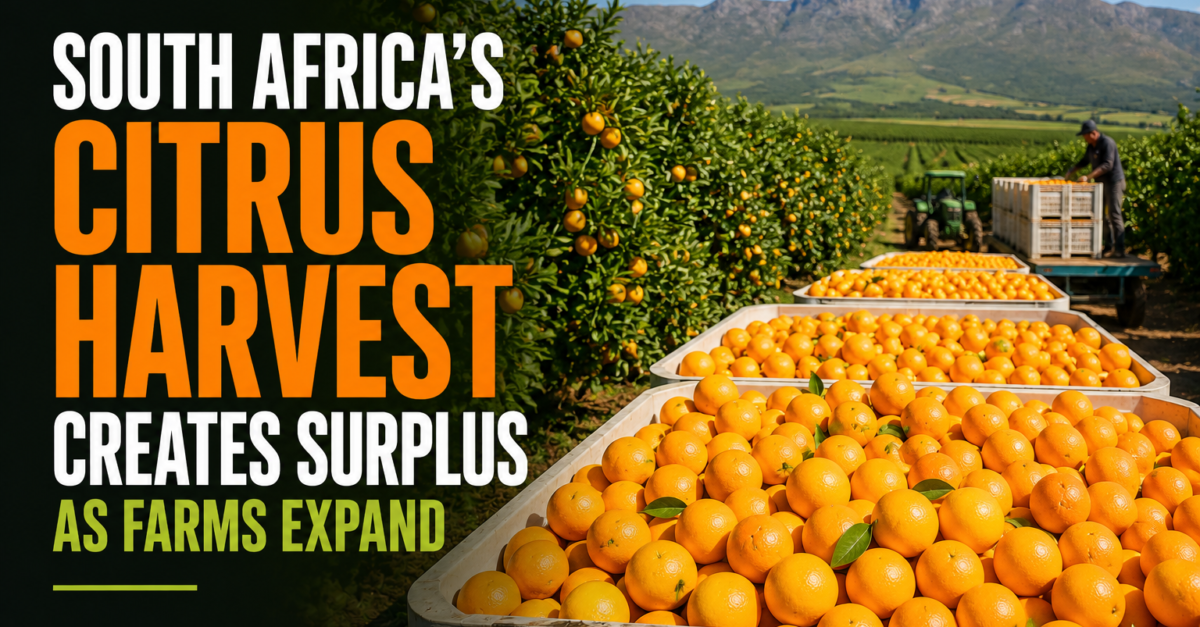
South African citrus farmers have done the thing every grower dreams of and dreads in equal measure: grown more fruit than anyone quite knows what to do with. According to FreshPlaza, the area under citrus trees in South Africa is expanding, producing a larger harvest that is now outstripping current demand, leaving a surplus of oranges, lemons, grapefruits and tangerines that could push farmgate prices lower for growers of every size.
What a surplus actually does to a grower’s bottom line
A surplus simply means more fruit exists than the market can absorb at existing prices, and for smallholder growers dependent on fresh fruit sales, a price drop cuts profit margins sharply and immediately, with little room to absorb the hit. Larger commercial farms have more flexibility, since they can redirect fruit to processing plants making juice, essential oils or canned products, but even that safety valve has limits: if processing capacity is already full elsewhere in the industry, those larger farms face the same downward price pressure with fewer places left to send the excess.
South Africa sits among the world’s top citrus exporters, typically ranking in the global top five, and export markets in the European Union, the Middle East and Asia have historically absorbed most of the country’s crop. When domestic supply outpaces export demand the way it appears to be doing now, growers are left needing to find new buyers, negotiate less favourable terms, or invest in storage facilities to hold fruit longer while waiting for prices, or demand, to recover.
For SMEs sitting anywhere in the citrus value chain, packing houses, logistics firms, juice manufacturers, the surplus is genuinely a mixed bag. Lower fruit prices reduce input costs for anyone processing citrus into juice or other products, but they also intensify competition for whatever processing capacity is available, since every grower with excess fruit is chasing the same limited slots at once. Businesses able to add real value, premium juice blends, niche export varieties, exotic citrus cultivars that command a price premium regardless of the broader glut, are the ones best positioned to weather this kind of price pressure rather than simply absorb it.
The underlying dynamic here is a familiar one in agriculture: expanding a crop’s planted area takes years to show up in actual harvest volumes, which means today’s surplus reflects planting decisions made seasons ago, well before anyone could have known demand would not keep pace. That lag is exactly why oversupply gluts like this one tend to correct slowly rather than quickly, since growers cannot simply uproot trees the way a factory can idle a production line, and the citrus sector will likely be working through this imbalance for at least another season or two before area expansion and demand growth find a new equilibrium.
South Africa’s citrus expansion has been driven partly by the sector’s own export success over the past decade, with strong demand from Europe and Asia encouraging exactly the kind of new plantings now producing this glut. That is the uncomfortable irony sitting underneath this story: the surplus exists largely because citrus farming looked like a genuinely good bet a few years ago, and enough growers made that same rational bet simultaneously that the market has, for now, outrun the demand that justified the expansion in the first place. Growers considering further expansion of their own would do well to treat this current glut as a reminder that a good crop today does not guarantee a good price tomorrow, particularly in a global commodity market where everyone else is watching the same demand signals.
South Africa’s Citrus Growers’ Association has previously flagged exactly this kind of boom-bust planting cycle as a structural risk for the industry, and it is one reason the association and government trade bodies have pushed for diversifying export destinations rather than concentrating growth in a handful of established markets. New market access negotiations, whether into parts of Asia not yet fully opened to South African citrus or expanded quota arrangements with existing trade partners, are the kind of slower-moving policy work that eventually determines whether a surplus like this one becomes a permanent feature of the sector or a temporary imbalance the market absorbs within a season or two.