In a manufacturing park on the outskirts of Johannesburg, the hum of conveyor belts has been steady for weeks, a rare sight in a country where load shedding has become a weekly ritual. The change, according to the African Times, stems from Eskom’s claim that its long-awaited turnaround is now a reality.
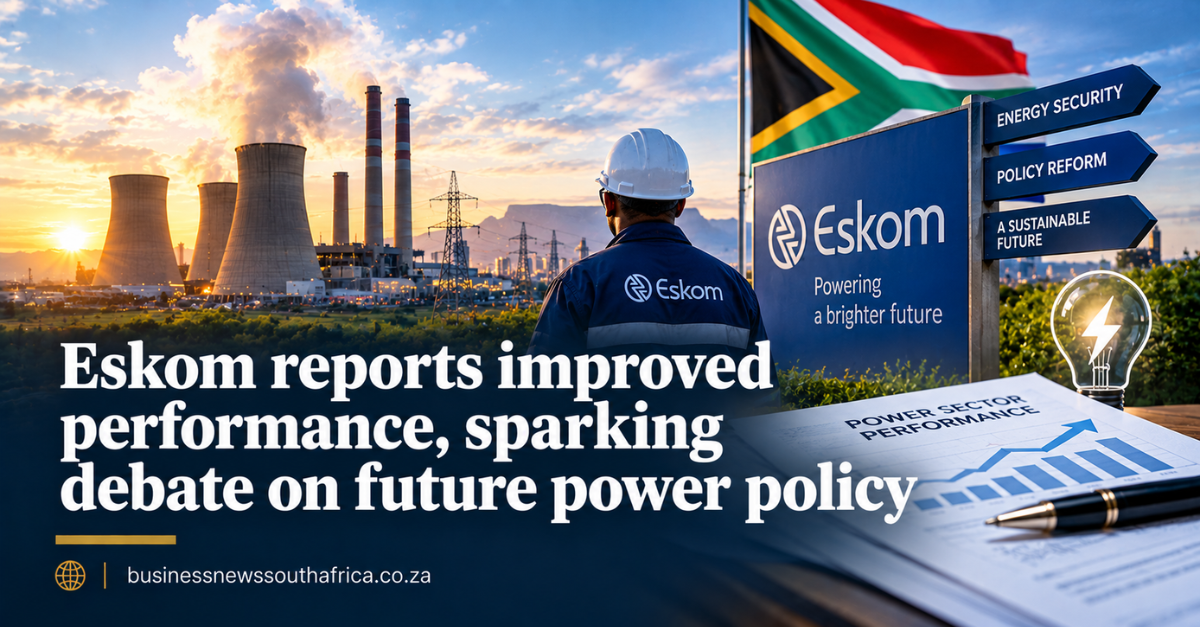
Eskom, the state-owned power generator that supplies roughly 95% of South Africa’s electricity, said its latest financial and operational results show a reversal of the losses that have plagued the utility for years. The company described the improvement as “real” and warned that the next step is to answer a bigger question: can the gains be locked in without further taxpayer bail-outs?
What Eskom means by “turnaround” is a combination of three measurable shifts. First, operating losses, the amount of money the utility spends beyond what it earns from selling electricity, have narrowed. Second, the frequency and duration of load-shedding stages have fallen, meaning fewer scheduled blackouts. Third, the debt-to-equity ratio, a gauge of how much the utility owes compared with its own capital, has moved in a more favourable direction. Each of these metrics is tracked by analysts and investors to judge whether a power utility is on a sustainable path.
Why the shift matters to small businesses
For a small-to-medium enterprise (SME) that runs a workshop, a bakery or an e-commerce fulfilment centre, power reliability is a cost driver. Unplanned outages force owners to buy diesel generators, pay for fuel, and maintain extra equipment, expenses that can eat into thin profit margins. A reduction in load-shedding therefore translates directly into lower operating costs and more predictable production schedules.
Beyond the immediate savings, a stable power supply can affect credit decisions. Banks often view a reliable electricity grid as a sign of macro-economic stability, which can make it easier for SMEs to secure loans for expansion. In that sense, Eskom’s reported improvement could ripple through the broader economy, even if the utility’s balance sheet remains a work in progress.
However, the optimism is tempered by several unanswered questions. Eskom’s debt, still measured in the hundreds of billions of rand, remains a liability that the government may need to service. The utility has also been criticised for its reliance on ageing coal plants, which face pressure from both environmental regulators and the global shift toward renewable energy. The company’s statement did not detail how it plans to fund new generation capacity or upgrade existing infrastructure.
Analysts point out that past turnarounds have sometimes proved short-lived when underlying structural issues were not fully addressed. For example, when Eskom reduced load-shedding in 2022, the improvement was partly due to temporary maintenance deferrals rather than a permanent boost in generation capacity. The current claim of a “real” turnaround, therefore, invites scrutiny of the specific actions that led to the reported gains.
One area that could determine the durability of the improvement is the utility’s approach to renewable energy. The South African government has set a target of 30% renewable electricity by 2030, and Eskom has begun integrating wind and solar farms into its grid. Yet the pace of these projects, and the financing mechanisms behind them, remain unclear. If Eskom can lock in long-term power purchase agreements for renewable output, it may reduce its reliance on coal, lower operating costs, and improve its environmental footprint, all factors that could reinforce the current turnaround.
For SME owners, the practical takeaway is to watch how Eskom’s operational metrics evolve over the next few quarters. If the frequency of load-shedding continues to decline, businesses can plan for longer production runs and potentially defer investment in backup generators. Conversely, if the utility’s debt burden forces another round of tariff hikes, the cost of electricity could rise, squeezing margins once again.
In short, Eskom’s announcement is a signal that the power landscape may be shifting, but the direction and speed of that shift remain uncertain. The utility’s claim of a real turnaround raises a question worth asking: will the improvements be enough to sustain South Africa’s economic growth without further fiscal support?