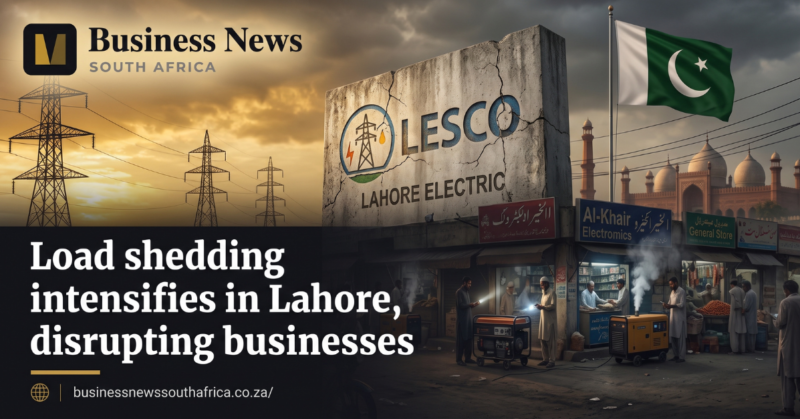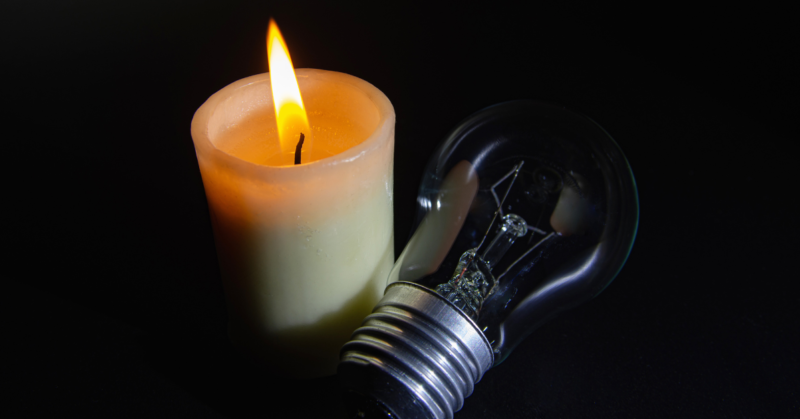
In a brief statement released on 12 September 2026, the Islamabad Electric Supply Company (IESCO) said it will limit the amount of load shedding it imposes on its customers. Load shedding, the deliberate, temporary interruption of electricity supply to balance demand and generation, has been a daily reality for many households and small firms in Pakistan for years.
IESCO’s announcement is a claim by the company; the exact scale of the cutback, the regions affected and the timeline have not been disclosed. The utility did not provide figures on how many megawatts will be saved or how many hours of power will be restored. As a result, the practical impact remains to be seen.
Why load shedding matters for businesses
For a small retailer in Islamabad, an unexpected three-hour outage can mean lost sales, spoiled stock and the need to run a diesel generator, an expense that can eat into thin profit margins. Manufacturing outfits that rely on continuous power for production lines face similar risks: a single interruption can halt a shift, delay deliveries and trigger penalties from larger clients.
In South Africa, where load shedding has been a headline for years, the experience is familiar. Companies there have learned to schedule work around outages, invest in backup generators or even shift to alternative energy sources. The same pressures apply in Pakistan, where the power sector is still grappling with insufficient generation capacity, aging infrastructure and fuel supply constraints.
IESCO is one of 11 distribution companies that deliver electricity from the national grid to end users. Its network covers the federal capital and surrounding districts, serving roughly 2.5 million customers. Historically, the company has struggled to keep the lights on during peak summer months when demand spikes and generation falls short.
Limiting load shedding, if it materialises, could have three immediate benefits. First, households would enjoy more reliable lighting, refrigeration and heating, basic comforts that affect quality of life. Second, businesses could reduce the cost of running diesel generators, which not only cost money but also add to air pollution. Third, a more stable supply could improve confidence among investors looking at Pakistan’s energy sector, potentially encouraging new projects that increase generation capacity.
However, the announcement also raises questions. Load shedding is usually managed by the national grid operator, National Transmission and Dispatch Company (NTDC), which balances supply across the country. A unilateral reduction by a distribution company could strain the overall system unless there is a corresponding increase in generation or a reduction in demand elsewhere. IESCO has not explained how it will manage that balance.
Industry observers note that Pakistan has been pursuing a mix of short-term and long-term solutions to its power shortage. Short-term measures include importing liquefied natural gas (LNG) and using emergency diesel plants, while long-term plans focus on expanding renewable capacity such as solar and wind farms. The success of any load-shedding reduction will depend on how these broader strategies unfold.
For South African SME owners reading this, the story offers a reminder that power reliability is a common bottleneck in emerging markets. While the specifics differ, the principle is the same: when the grid cannot meet demand, businesses either adapt or suffer. Monitoring how IESCO implements its promise could provide useful lessons on the limits of utility-level interventions without systemic upgrades.
Until more details emerge, the claim remains a hopeful note rather than a guaranteed change. Stakeholders, from household consumers to small-scale manufacturers, will be watching closely for any concrete data on restored hours, reduced outage frequency or cost savings.
Why a single distribution company cannot unilaterally fix load shedding
Pakistan’s electricity system separates generation, transmission and distribution into different entities, with the National Transmission and Dispatch Company responsible for balancing supply across the national grid and companies like IESCO responsible only for delivering power to end users within their own territory. That structural separation is exactly why a distribution company promising less load shedding raises the question this piece leaves open: unless total generation available to the grid actually increases, or demand falls elsewhere to compensate, one region’s relief is another region’s larger shortfall, since the underlying shortage has not been solved, only redistributed.
South African readers will recognise the underlying dynamic even where the institutional structure differs: Eskom faced years of exactly this criticism, promising improved supply without always being able to show where the additional generation capacity was actually coming from. For a comparison with Eskom’s own recently reported generation performance, see this site’s report on Eskom’s Energy Availability Factor.