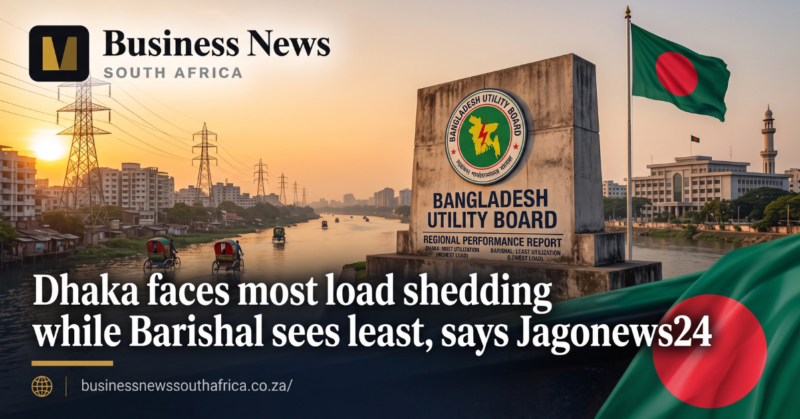
Dhaka is experiencing a genuine power supply crunch, and load shedding, the deliberate practice of cutting electricity to specific areas for a set period, is being deployed more often as the city’s grid struggles to keep pace with demand. Jagonews24.com reported the surge, and while Dhaka sits a long way from Johannesburg, the shape of the story will feel uncomfortably familiar to any South African business owner who lived through the country’s own rotating blackouts.
The immediate effect lands on households losing lighting and refrigeration, and on businesses that need continuous power for production, cold storage and the digital services almost every modern operation now runs on. Small manufacturers, particularly in the textile and garment sectors exporting to Europe and the United States, face higher operating costs if they need to fall back on diesel generators or simply pause production until supply stabilises.
The structural reason Bangladesh keeps having this problem
Bangladesh’s electricity system has been under sustained pressure for years, with demand rising roughly 8% to 10% annually on the back of rapid urbanisation, a growing middle class and expanding industrial activity, growth that would strain almost any grid trying to keep pace. The country still depends heavily on natural gas for about half its generation capacity, and recent dry seasons have reduced gas output while delays in commissioning new coal-fired and renewable plants have widened the gap between what the grid can supply and what the country actually needs. The government has announced plans to add roughly 5 000 megawatts of capacity by 2030, but those projects remain under construction, which is a polite way of saying the fix is years away, not months.
For South African small and medium enterprises, this does not create a direct operational risk unless there is an existing supply-chain link to Bangladeshi manufacturers specifically. It does, however, illustrate a broader pattern worth internalising: unreliable power raises production costs and disrupts delivery schedules for exporters across emerging markets generally, South Africa’s own recent history very much included. There is a genuine silver lining buried in here too, for South African firms offering off-grid solutions, solar-plus-storage systems, diesel-generator maintenance, energy-efficiency consulting, since Bangladeshi companies looking to mitigate future outages represent a real, if distant, market opportunity for exactly the expertise South African firms built out of necessity during their own load-shedding years.
What is confirmed here is simply the increase in load-shedding events in Dhaka, as reported by Jagonews24.com, which attributes the surge to a power supply crunch, its own description of the situation rather than an independently confirmed technical diagnosis. The exact number of outage hours, the specific areas affected, and the timeline for restoring balance to the grid have not been disclosed.
In the end, this is a supply-demand mismatch playing out in exactly the pattern fast-growing economies tend to produce when infrastructure investment lags population and industrial growth. The immediate effect stays local to Dhaka, but South African businesses with trade exposure to Bangladesh should track the situation, and firms already built around energy resilience might reasonably start thinking about whether that expertise travels.
The comparison to South Africa’s own load-shedding years is worth drawing out a little further than the surface similarity suggests. South Africa’s rolling blackouts stemmed largely from ageing generation infrastructure and years of deferred maintenance at Eskom rather than raw demand growth outpacing supply the way Bangladesh’s is; the two countries arrived at a similar-looking symptom, scheduled power cuts, through meaningfully different underlying causes. That distinction matters for anyone trying to forecast how long Dhaka’s crunch might last: a demand-driven shortfall can, in principle, ease once new generation capacity comes online as planned, whereas a maintenance-driven crisis like South Africa’s tends to drag on until the underlying asset base itself is rebuilt, a considerably slower and more expensive fix.