Minister of Electricity and Energy Kgosientsho Ramokgopa used the Africa Green Hydrogen Summit in Cape Town this month to name the first six projects to emerge from South Africa’s national green hydrogen and Power-to-X programme, under a summit theme that made the government’s own scepticism of the sector’s progress explicit: “Moving Africa’s Green Hydrogen Sector from PowerPoint to Gigawatts.”
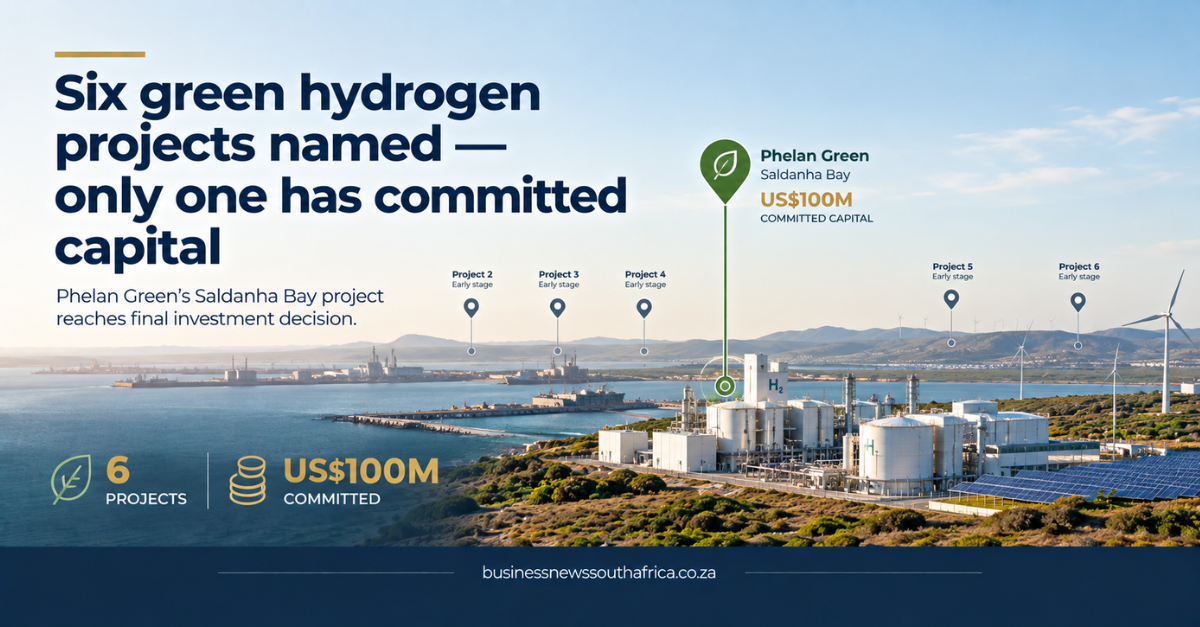
The six projects represent the first output of a standardised assessment process designed to test each proposal’s bankability before it is added to the country’s priority project portfolio, a deliberate response to years of green hydrogen announcements across Africa that generated headlines without construction. Only one of the six has actually reached a final investment decision.
The one project that is actually happening
Phelan Green Group’s electro-sustainable aviation fuel (e-SAF) project in Saldanha Bay is the furthest advanced of the six, with $100 million in equity committed and a final investment decision reached. Construction is expected to begin in the first quarter of 2027, with the first export of e-SAF targeted for the first quarter of 2029. Sustainable aviation fuel is one of the more commercially credible early markets for green hydrogen derivatives, since global airlines face binding regulatory mandates in Europe and elsewhere to blend a rising share of sustainable fuel into their supply, creating real, contracted demand rather than speculative future demand.
The other five, at very different stages
The remaining five projects span a wide range of maturity, which is itself the more honest story than a headline count of six announcements. Hive Energy’s green ammonia project at Coega in the Eastern Cape has completed early preparatory work but still needs further commercial, technical and financing work before it reaches a final investment decision. A hydrogen direct reduced iron project on the West Coast, linking green hydrogen to lower-emission steel production, sits at prefeasibility study stage. The Prieska Power Reserve project in the Northern Cape, targeting the domestic green ammonia market, is at development stage. Green e-Fuels Producers’ proposed Green Methanol Corridor in Gauteng, aimed at European demand, is also at prefeasibility stage. Green Hydrogen Solutions’ smaller-scale Eastern Cape project, aimed principally at domestic demand, has completed front-end engineering design.
Why the staged rollout matters more than the announcement
Government officials have separately indicated a second wave of projects has already been assessed and matured for possible inclusion in the priority portfolio, suggesting this first six is a deliberate opening batch rather than the programme’s full scope. For South African businesses in energy, logistics, ports and heavy industry, the practical takeaway is that green hydrogen remains, for now, a single-project story rather than an emerging sector: Phelan Green’s Saldanha Bay facility is the one project with committed capital and a construction timeline, and the commercial opportunities around it, from construction and logistics contracts to eventual fuel offtake, are the nearest-term ones actually worth planning around.
The other five projects are worth tracking rather than acting on yet. A prefeasibility study can still fail to reach financial close, and South Africa’s own renewable energy procurement history includes projects that took years longer to reach construction than initially announced, or were shelved entirely once financing and regulatory realities set in. Businesses positioning themselves around the green hydrogen and Power-to-X sector should treat the gap between ‘named as a priority project’ and ‘reached final investment decision’ as the single most important distinction in this announcement, since it is the difference between real, contractable near-term work and a multi-year prospect that may or may not materialise.
South Africa’s broader green hydrogen ambitions, and the practical financing and regulatory hurdles still facing the sector, are covered in more depth in our Energy & Infrastructure section.