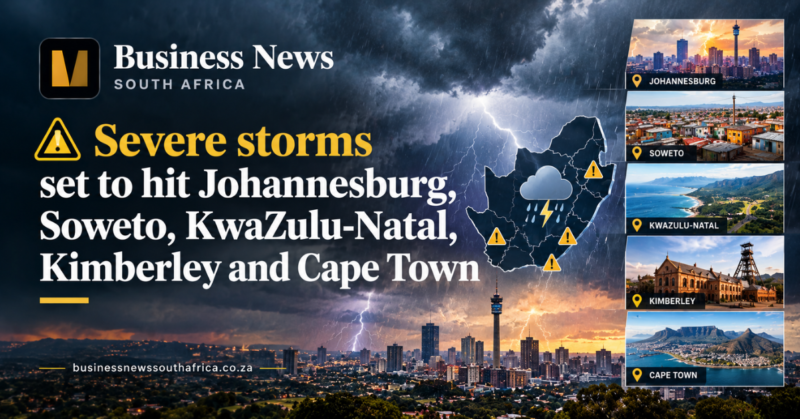
Rain lashes the highveld as clouds spill water over streets that quickly turn into streams. The South African Weather Service (SAWS) has lifted its severe weather warning to orange level 6 for large parts of the interior, signalling the most serious alert in its colour-coded system.
Orange level 6 means the agency expects widespread heavy rain, damaging winds and hail that could cause flooding, road closures and damage to buildings. It is the highest tier before a red alert, which is only issued for life-threatening situations. The warning is therefore a call for immediate action from anyone who could be caught in the storm.
The alert covers most of the North West province, the northern half of the Free State, the northeastern parts of the Northern Cape, as well as Gauteng and the Highveld of Mpumalanga, which sit under an orange level 5 warning. In Johannesburg, the capital of Gauteng, forecasters predict cloudy, cold conditions with temperatures between 10°C and 15°C.
SAWS links the weather to a cut-off low, a detached pocket of cold air that drifts over the region, and expects rainfall of 30mm to 50mm in the affected zones. Winds are forecast at around 40km/h, with gusts that could reach 80km/h. Hail and intense lightning are also part of the mix, raising the risk of roof damage and power outages.
The agency warns that fast-flowing streams and deep water could endanger lives, while flooding of roads, settlements and low-lying areas may force the closure of bridges and thoroughfares. Municipal services such as water and electricity could be disrupted, and small retailers may see foot traffic disappear as shoppers stay indoors. Delivery trucks and supply chains that feed local shops are likely to face delays, a concern for owners who rely on just-in-time inventory.
Robert Mulaudzi, spokesperson for the City of Johannesburg Emergency Management Services, said the wet weather had already made many roads slippery and raised water levels in rivers and streams. He urged residents, especially those in informal settlements, to avoid crossing streams, keep an eye on young children and stay away from drainage systems. Motorists were told to keep a safe following distance and to avoid flooded roads and low-lying bridges.
For business owners, the advice is practical: secure loose stock, check that roofs are clear of debris, and review contingency plans for delivery disruptions. Communicating with staff about travel safety and adjusting opening hours where flooding is likely can reduce the impact on sales and employee wellbeing.
SAWS’s colour-coded system is designed to give clear, escalating signals. Earlier this year, orange level 5 warnings in the same region led to significant delays at major freight hubs, highlighting how quickly logistics can be affected. The current orange level 6 warning is in force until 9 September, and the service will continue to update the public as the system evolves.
What remains unknown are the exact numbers of road closures, the extent of damage to private property and the financial hit to small businesses. Those figures will only emerge after the storms subside and assessments are completed. In the meantime, SAWS and local emergency services advise anyone in the warned areas to stay informed through official channels and to take the recommended precautions.
Why an orange warning, not yet a red one, still demands action
South Africa’s weather-warning colour system is calibrated so that orange levels carry most of the practical decision-making weight, since red alerts are reserved for situations already causing confirmed, widespread harm, by which point prevention is no longer possible. An orange level 6 warning is deliberately the system’s way of saying the window for preparation is still open but closing, which is why emergency services frame their advice at this stage around securing property and adjusting logistics rather than evacuation. For businesses specifically, the practical distinction between an orange and a red warning is the difference between a planned adjustment, moving deliveries forward, securing loose stock, and an unplanned one forced by an emergency already underway, which is consistently the more costly and disruptive of the two.