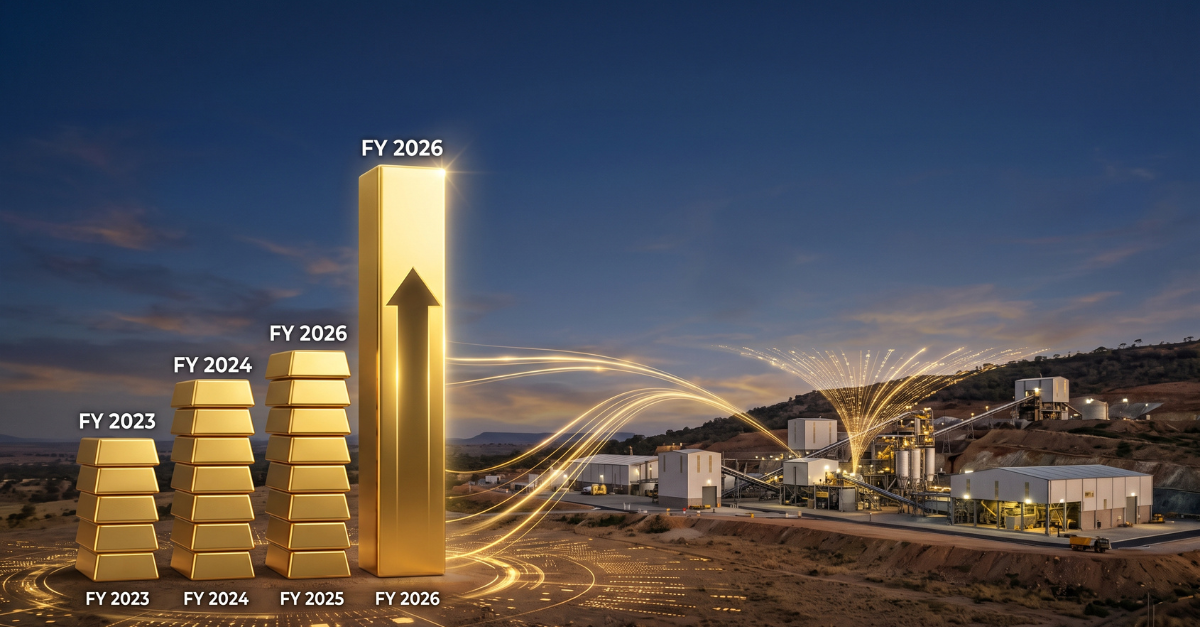
Harmony Gold has told investors it just posted a record half, the kind of announcement that would normally come loaded with numbers, except this one arrived without a single one attached. During an earnings call on 20 August 2026, the company said revenue and profit for the second half of its 2026 financial year reached levels never achieved before, according to a report on Investing.com South Africa, but the transcript stopped short of the actual figures.
Harmony Gold is one of South Africa’s largest gold producers and a JSE-listed entity in its own right. A confirmed record, if the numbers back it up once released, could strengthen its cash flow, support a higher dividend payout, and improve its capacity to fund new mining projects. For small businesses that sell into the mining sector or lean on local economic activity more broadly, a genuinely healthier miner tends to mean steadier contracts and, over time, more stable jobs across its supply chain.
Why the timing of this claim matters
Gold prices have been hovering around US$1,900 an ounce in recent months, a relatively favourable backdrop for producers generally, and a strong earnings report from a major miner in that environment can reinforce investor confidence in the sector as a whole, potentially keeping capital flowing toward exploration and equipment-supply firms that often contract with mid-size operators too.
It is worth being precise about what is and is not confirmed here. This is, at this stage, a claim from Harmony Gold itself, and independent verification will only really arrive once the audited financial statements and analyst reports land. Until then, the announcement should be read as a preliminary indication of performance rather than a settled fact, however confidently it was delivered on the call.
Other South African gold miners have genuinely struggled recently with rising costs and power cuts eating into margins, which is exactly why a confirmed record at Harmony specifically would be worth watching closely. If its numbers do turn out better than peers once verified, it would suggest Harmony’s cost-control measures or newer mining techniques are actually paying off in a sector where most operators are fighting the same headwinds with mixed results, offering a genuine benchmark other South African producers might find themselves measured against once the audited figures are out.
Gold mining in South Africa carries its own particular cost structure worth understanding here: many of the country’s shafts are among the deepest in the world, which drives up electricity and labour costs relative to shallower, newer operations elsewhere on the continent or in Australia and the Americas. A South African miner posting a genuine record despite that structural cost disadvantage would be a meaningfully stronger result than the same headline from a producer without those constraints, which is exactly why the specific numbers, once audited, will matter more than the headline claim does on its own.
South Africa’s gold sector has also spent years managing the after-effects of a workforce and infrastructure built for a different era of mining, from ageing shaft equipment to safety compliance obligations that shallower international operations do not carry to the same degree. Any producer posting genuinely improved results despite that legacy cost base is doing something more impressive than the raw profit number alone suggests, and it is exactly the kind of context that makes verified figures, whenever they land, worth reading in full rather than skimming the headline percentage change.
Investors weighing whether to trust an unaudited claim of a record often look for corroborating signals in the meantime: the gold price backdrop, the company’s own recent operational updates, and how peers in the same basin have performed over the same period. None of those substitute for the audited number itself, but together they at least indicate whether a record claim is plausible given everything else known about the sector right now, rather than an outlier that would need unusually strong internal execution to actually hold up under scrutiny.
This sits alongside coverage of the financing behind Harmony’s own broader strategic shift: see this site’s report on Harmony’s sustainability-linked financing. The JSE’s own SENS archive will carry the detailed figures once Harmony’s full results are filed.