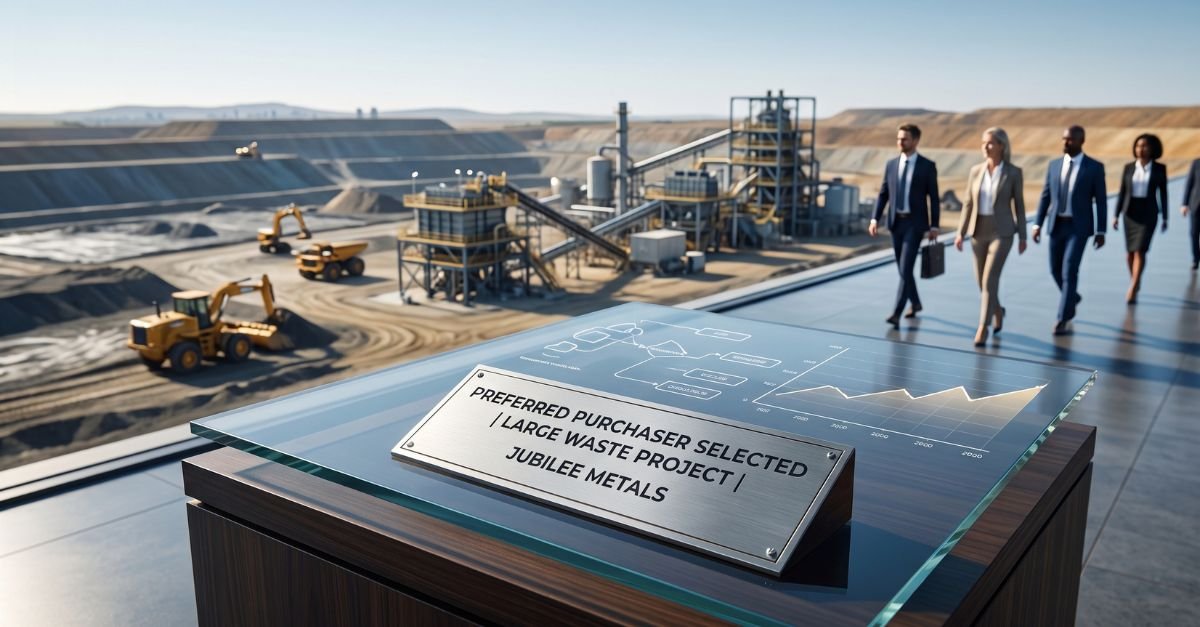
In the shadow of a sprawling waste dump at one of its South African gold sites, Jubilee Metals Group has found someone willing to take the mess off its hands, or at least willing to be first in line to try. The company announced it has identified a preferred purchaser for a large-scale waste management project, according to a statement to Moneyweb, though it offered no details on the size of the deal, the identity of the buyer, or the expected cash flow involved.
In mining jargon, a preferred purchaser is a party given first right of refusal on a future sale of a specific asset or cash-flow stream. The arrangement often functions as a financing bridge: the miner secures a committed off-take or purchase agreement it can use to raise debt or equity, while the purchaser gains early access to a revenue source that will only materialise once the project is actually operational.
Why a waste pile is worth a preferred purchaser in the first place
Jubilee Metals, a London-listed miner with operations centred in the Witwatersrand basin, has been wrestling with the high cost of tailings and waste-rock management for several years now. South Africa’s Department of Mineral Resources and Energy has tightened environmental licences over that same period, pushing the industry toward more sustainable waste-handling solutions, whether that means building new tailings storage facilities, re-processing waste for metal recovery, or converting waste rock into construction material outright.
For a company of Jubilee’s size, market capitalisation in the low hundreds of millions of rand, securing a preferred purchaser can be a genuinely useful strategic move, locking in a future revenue stream that can be pledged as collateral and reducing the need for immediate cash outlays. The announcement stops short of confirming whether the deal will be funded through a loan, a joint-venture equity injection, or a straightforward off-take contract, leaving the actual financial shape of the arrangement an open question for now.
From an SME perspective, the ripple effects could be genuinely tangible. Contractors specialising in earth-moving, civil engineering and tailings-facility construction often win work on projects exactly like this one, and suppliers of monitoring equipment, water-treatment chemicals and specialised steel may see fresh orders follow. Jubilee has not named the preferred purchaser, but the fact that a buyer has already been lined up suggests the project is genuinely moving forward, potentially opening a real window of opportunity for local service providers positioned to bid on the work once tenders start circulating.
The timing here fits a broader pattern across South African mining: companies increasingly look to de-risk capital-intensive projects by partnering with third parties willing to share both the cost and the long-term cash-flow benefit, a structure larger miners have already used for renewable-energy installations and water-recycling plants elsewhere in the sector. Until Jubilee discloses whether the preferred purchaser takes an equity stake, a revenue-share agreement, or a simple purchase-price commitment, investors and suppliers alike are left waiting, though the direction of travel, easing the financing burden of a costly waste-management venture, is clear even while the exact shape of that relief remains hidden for now.
Tailings and waste-rock management has become one of the more expensive, and more regulated, line items in South African mining precisely because decades of historical mining activity left behind waste piles that modern environmental standards no longer tolerate leaving untouched. Turning that legacy liability into a revenue-generating asset, through metal recovery from waste or repurposing material for construction, is exactly the kind of project a preferred purchaser arrangement like this one is designed to fund, converting what used to be a pure cost centre into something closer to a second, smaller mining operation in its own right.