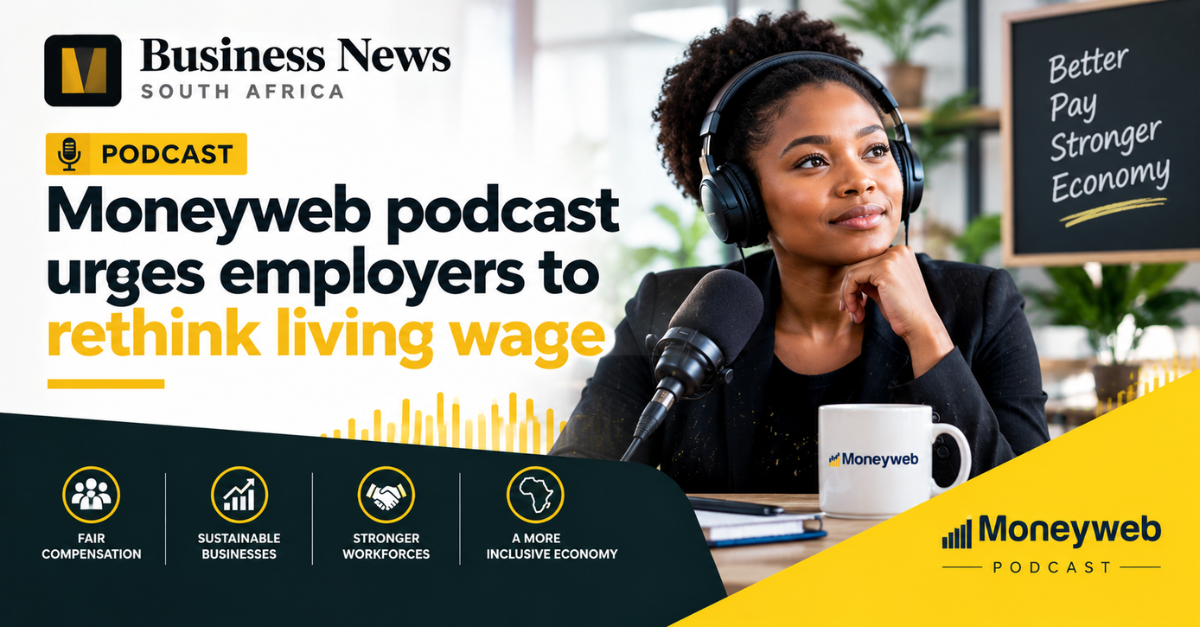
In a recent Moneyweb podcast, three guests unpacked the idea that South African employers may need to rethink what a living wage means for their businesses. The show, hosted by Moneyweb, featured independent analyst Jimmy Moyaha, Ines Meyer, chair of the Living Wage South Africa Network, and Faisal Mkhize from Absa Business.
According to Meyer, a living wage, defined as a pay rate that covers basic household needs such as food, shelter and transport, could strengthen South African businesses by expanding the middle class and creating a more stable consumer base. She argued that when workers earn enough to meet essential costs, they are less likely to change jobs, which can reduce recruitment and training expenses for employers.
Jimmy Moyaha, who examined Sun International’s latest financial results, suggested that the hospitality group’s performance highlights the broader relevance of wage policy. While he did not provide specific profit figures, Moyaha noted that Sun International’s cost structure, including labour expenses, is a key factor in its earnings outlook. He used the company as a case study to illustrate how wage decisions can affect profitability in sectors that rely heavily on frontline staff.
Faisal Mkhize, representing Absa Business, added that the issue of a living wage should have been on the agenda of the recent SADC (Southern African Development Community) summit. He claimed that small businesses, which make up the bulk of South Africa’s formal economy, stand to gain from a broader adoption of living-wage standards, yet they often lack the bargaining power to negotiate higher pay on their own.
The discussion comes against a backdrop of ongoing debate over South Africa’s minimum wage, which is currently set at R23.19 per hour. A living wage, by most estimates, would be higher, roughly R30 to R35 per hour, reflecting the cost of living in urban areas. The gap between the statutory minimum and a true living wage has been a point of contention for labour unions, NGOs and some business groups.
For small and medium-size enterprises (SMEs), the stakes are mixed. On one hand, higher wages could increase operating costs, squeezing thin profit margins. On the other hand, proponents argue that paying a living wage can boost employee morale, lower turnover and stimulate demand for local goods and services, creating a virtuous cycle of growth. Mkhize warned that without policy support, such as tax incentives or wage subsidies, many SMEs may find it difficult to implement higher pay without compromising other aspects of their business.
While the podcast presented a compelling case for re-examining wage structures, it also acknowledged that the concept of a living wage is still evolving in South Africa. Meyer admitted that there is no single, universally accepted calculation for a living wage, and that different regions and industries may require tailored approaches.
In summary, the Moneyweb discussion highlighted three main points: the potential for a living wage to expand the middle class, the impact of wage costs on profitability in labour-intensive sectors, and the need for policy tools to help SMEs adopt higher pay without undue hardship. Whether employers will act on these insights remains to be seen, but the conversation signals that the living-wage debate is moving from academic circles into the boardrooms of South African businesses.
Why the living-wage debate keeps stalling on measurement
The absence of a single, agreed living-wage figure that Meyer acknowledges is not a minor technical gap, it is the central obstacle to turning the concept into enforceable policy: a legislated minimum wage only requires agreement on one national number, while a genuine living wage varies by city, household size and local cost of transport and housing, meaning any serious attempt to legislate it would require far more granular, regularly updated data than South Africa’s statistical infrastructure currently produces for this specific purpose. That measurement gap is precisely why the living-wage conversation has stayed in the realm of employer voluntary adoption and academic debate rather than moving into binding regulation the way the national minimum wage did.
For SMEs specifically, the wage-subsidy idea Mkhize raises has a real precedent worth watching: South Africa’s existing Employment Tax Incentive already reduces the cost to employers of hiring younger workers at lower wage bands, and a similar subsidy mechanism extended toward living-wage adoption would let smaller firms move toward higher pay without absorbing the full cost increase immediately on their own books, the same basic design already tested and running in the youth-employment space.