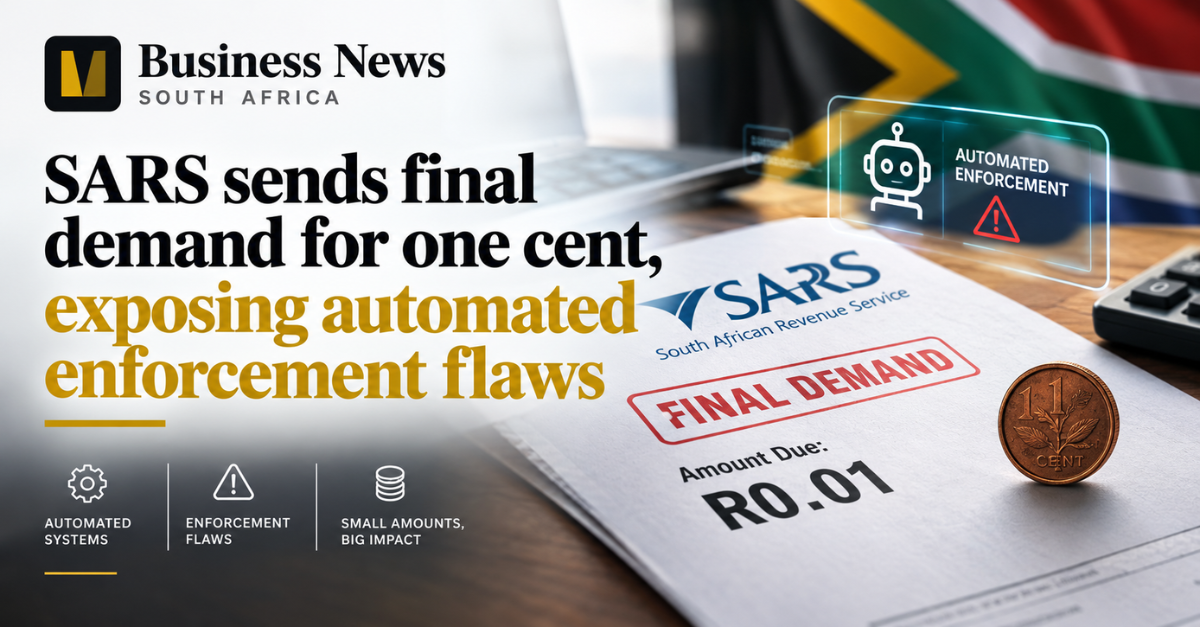
When a taxpayer walked into a SARS branch with a letter demanding payment of a single cent, the scene was almost comic. The letter, which the taxpayer believes was generated by artificial intelligence, ordered payment within ten business days and warned of the agency’s full collection powers.
The immediate stake is simple: even a one-cent claim can trigger the same enforcement tools that SARS uses to recover billions. If the debt is not settled, the agency can instruct a third party, such as an employer, to deduct the amount directly from a salary or bank account, often without a court order. For a small business owner or an individual who relies on a steady cash flow, that automatic deduction can be disruptive.
According to the taxpayer, the demand stemmed from a R50 shortfall on his PAYE (pay-as-you-earn) tax profile, essentially the cost of a cappuccino. The shortfall blocked a refund of R323 000, a sum that the taxpayer had already paid in tax. The incident illustrates how a tiny error can freeze a much larger amount of money.
What a final demand means
A final demand is a formal notice that tells a taxpayer the debt is due and that collection action will begin if it is not paid. It is different from a reminder, which merely asks for payment. The Tax Administration Act normally prevents SARS from starting recovery while a dispute is ongoing, unless the agency believes the taxpayer might hide assets. In a 2022 case, a court found SARS had “failed dismally” by issuing a final demand while a dispute was still being resolved, calling the agency’s conduct an “egregious lack of regard” for constitutional rights.
During the Money Summit, SARS Commissioner Dr Johnstone Makhubu said the agency has recovered from the near-collapse of the State Capture era by using more sophisticated data and technology. In the 2025/26 fiscal year SARS collected more than R2 trillion, its best performance in almost three decades, with revenue growing 8.4 percent, well ahead of the national economy. That same technology appears to have produced the one-cent letter.
The broader picture is that SARS’s push for higher compliance has turned the tax authority into a powerful, data-driven collection machine. While the increase in revenue is a clear win for the treasury, the one-cent demand shows a downside: automated processes can generate absurd errors when human oversight is missing. When the agency sends a final demand for a trivial amount, the threat of enforcement can still be severe, because the law gives SARS the right to seize funds directly.
For small-to-medium enterprises, the risk is not the cent itself but the possibility that a minor clerical mistake could trigger a cascade of actions, blocked refunds, delayed access to export permits, or even a hit to bank credit facilities. In the 2022 case mentioned above, the disputed debt jeopardised the company’s ability to secure export permits and government funding.
Taxpayers who have faced similar errors can appeal the demand, but the process can be time-consuming. The SARS branch staff and the taxpayer’s own accountant were unable to explain why the refund was blocked, and the matter had to be escalated. The incident raises a question for all South Africans: how much confidence can be placed in an automated enforcement system that sometimes fails to recognise a simple human mistake?
Until the agency introduces a more robust review step before issuing final demands, the risk of absurd but legally binding notices remains. For now, the one-cent letter serves as a reminder that even the most advanced data tools need a human check, especially when the consequences can affect cash flow, credit lines, and the ability to do business.