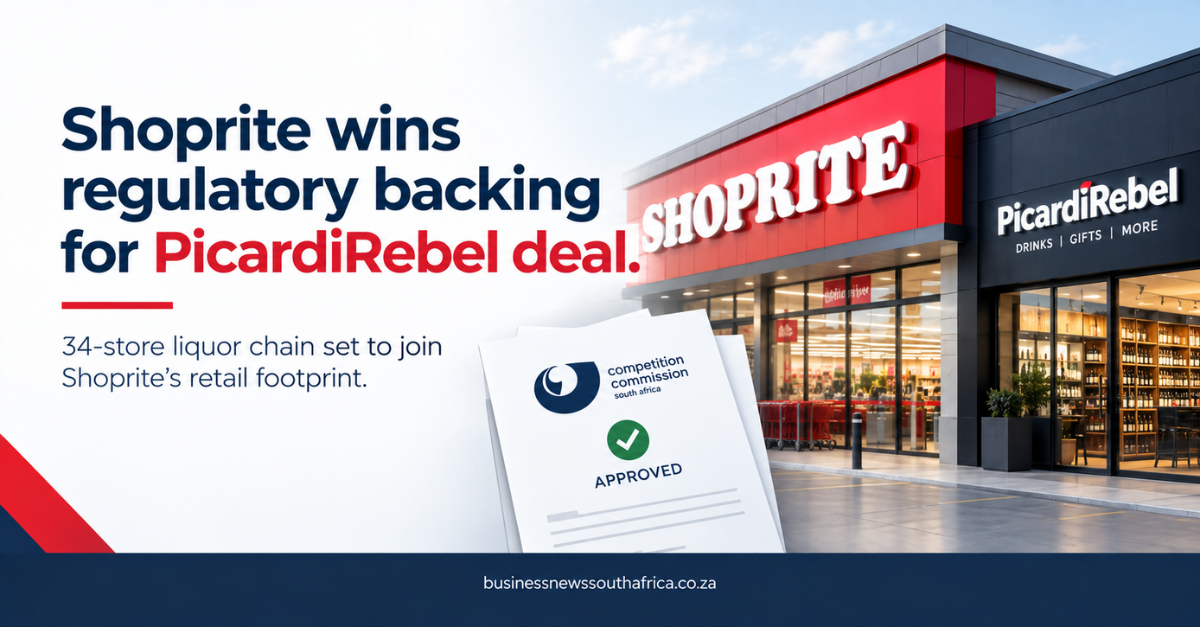
According to news24.com, the Competition Commission has given the green light to Shoprite Holdings Ltd‘s purchase of PicardiRebel, an online grocery platform that has been gaining market share among South African shoppers.
Shoprite, the country’s largest supermarket chain, has been on a multi-year push to strengthen its digital offering. The move follows previous steps such as the launch of its own click-and-collect service and the acquisition of smaller e-commerce players. By adding PicardiRebel’s technology and customer base, Shoprite hopes to speed up delivery times and broaden its reach into urban and peri-urban areas where online ordering is still emerging.
For small-scale grocers and independent retailers, the deal could tighten competition on price and service. Shoprite’s expanded online presence may draw shoppers away from neighbourhood stores that cannot match the convenience of a national retailer’s delivery network. At the same time, the acquisition could open new partnership opportunities, for example, local suppliers might gain access to a larger digital distribution channel.
The Competition Commission’s approval suggests the regulator does not see the deal as creating a monopoly in the online grocery space, a sector that still has room for growth. South Africa’s e-commerce market is projected to grow at double-digit rates over the next five years, driven by increasing internet penetration and a younger, mobile-first consumer base.
Shoprite’s statement, quoted in the news report, frames the acquisition as a strategic step to “deliver a seamless shopping experience for all South Africans”. While the company has not disclosed the purchase price, analysts note that similar deals in the region have ranged from a few hundred million to over a billion rand, depending on the target’s market share and technology assets.
SME owners should watch how Shoprite integrates PicardiRebel’s platform. If the retailer can roll out a robust logistics network, smaller businesses may need to reconsider their own delivery models or explore niche product lines that larger chains are less likely to stock. The development also underscores the importance of digital capability for any retailer that wants to stay competitive in a market where consumers increasingly expect to shop online.
For further reading on competition regulation, see the Competition Commission. More analysis of retail trends can be found in our Markets & Finance section.
PicardiRebel operates 34 stores, including one wholesaler, positioned at the premium end of the liquor market, stocking imported vintage whiskies and specialist wines and serving as the official retailer for the Whisky Live Festival, a different customer base to Shoprite’s own mass-market LiquorShop outlets. The Competition Commission recommended approval subject to conditions addressing public interest concerns, including a requirement that Shoprite commit capital toward refurbishing PicardiRebel stores by a set date, with the deal value itself not disclosed. The Commission found the acquisition unlikely to substantially harm competition, since Shoprite’s LiquorShop stores generally sit alongside or near its supermarkets while PicardiRebel operates as a standalone specialist retailer, meaning the two chains largely serve different shopping occasions rather than competing head to head. Final sign-off still rests with the Competition Tribunal. The Competition Commission’s own merger recommendation sets out the conditions in full. For related coverage, see this site’s Markets and Finance coverage.
Shoprite’s broader liquor strategy has already included the earlier R&A Cellular deal, which the Competition Commission also backed, suggesting a deliberate, sequential build-out of its alcohol retail footprint across different market segments rather than a single opportunistic acquisition.
Premium liquor retail has proven relatively resilient even during periods of broader consumer spending pressure, since higher income shoppers in that segment are less exposed to the interest rate and cost of living squeeze affecting mass market grocery spending.