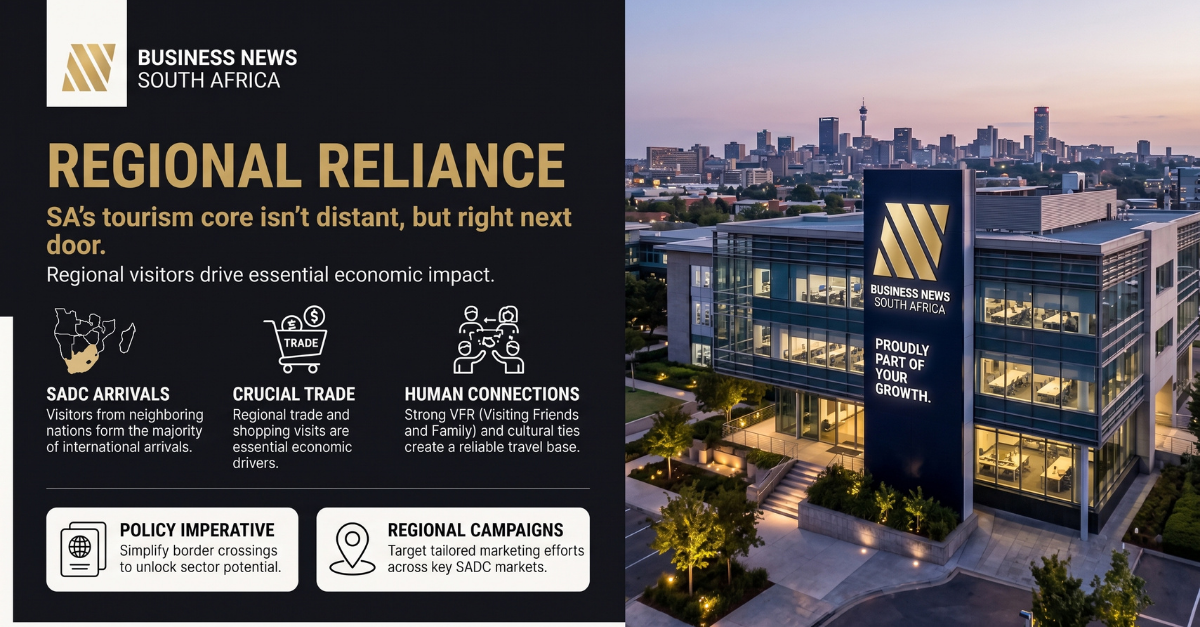
According to tourism-review.com, South Africa’s tourism relies heavily on neighbouring countries, and official arrival figures bear that out.
Statistics South Africa data show 991,696 international tourist arrivals in July 2026, up 12.5% on July 2025. Business Day, citing Stats SA, reported that visitors from the Southern African Development Community (SADC) made up 79.2% of all tourists in July, with Mozambique, Zimbabwe and Lesotho the leading source countries. The Stats SA figures for January to July 2026 also show arrivals from Africa up 14.3% year on year, against 5.7% for overseas arrivals.
That reliance creates both opportunities and risks for South African businesses in the sector. Guest houses, hotels, tour operators and restaurants that serve regional visitors benefit from a large, nearby market. The risk is concentration: any disruption in a neighbouring economy, for example a currency devaluation or a political crisis, can translate into fewer arrivals and empty rooms.
For operators, the practical takeaway is diversification. Many businesses in the sector market to both regional and overseas visitors, and watch exchange rates, border regulations and the political climate of neighbouring countries. A sudden increase in visa fees or a new travel advisory can cut into bookings, which for a small guest house can mean the difference between profit and loss.
Ultimately, the heavy reliance on neighbouring countries is a feature of the market that businesses need to plan around, not a passing trend. Staying attuned to arrival data and border conditions will be as important as offering good service.