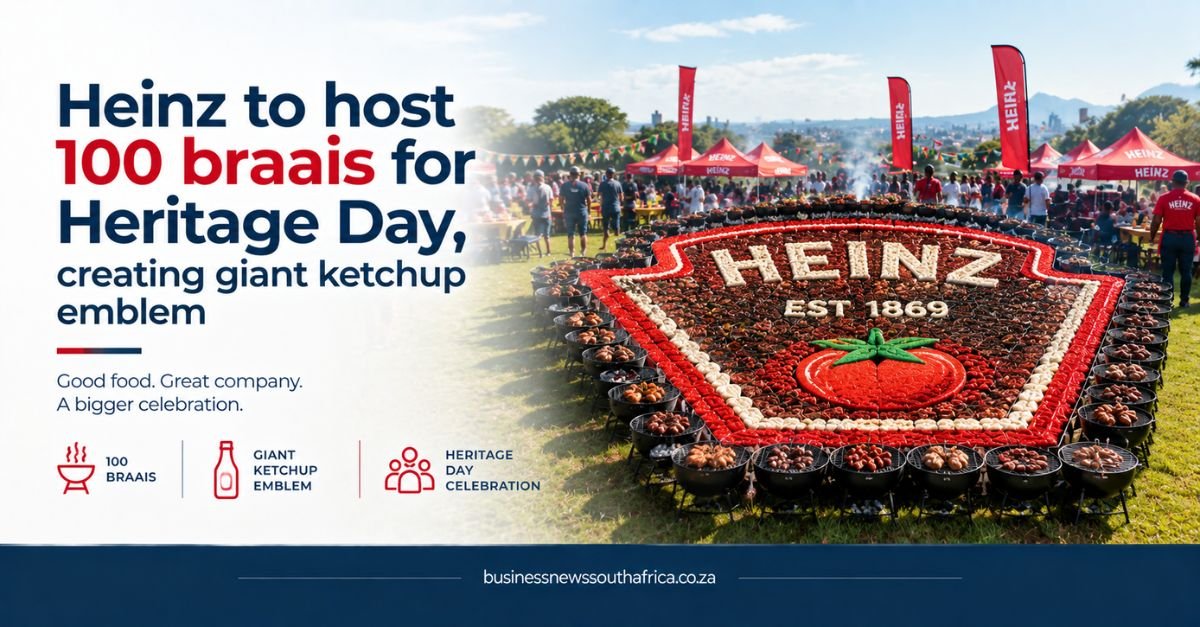
Heinz, the ketchup brand owned by Kraft Heinz, announced a public activation for South Africa’s Heritage Day on 24 September 2026. The event, called Heinz Braai Day, will bring together more than 100 individual braais, South African barbecues, to create a giant Heinz emblem using the brand’s tomato sauce. The communal table will be set up at The River Cabin, and the day will finish with music, food and live entertainment.
Passant El-Ghannam, chief marketing officer (CMO) for the Middle East and Africa region of Kraft Heinz, explained the idea. She said South Africa has a strong and distinctive food culture and that the braai sits at the centre of how people gather. “That is why we chose Heritage Day to celebrate the culture, traditions and togetherness that make South Africa unique, while finding our own place within it,” she said in a statement released to Bizcommunity.
The activation will also feature a live artwork created with Heinz tomato sauce. An artist will paint a map of South Africa and other cultural symbols, turning the sauce into a visual tribute to the nation. The brand hopes the spectacle will embed its heritage, more than 150 years of ketchup history, into the local conversation about food and community.
Why the activation matters for small businesses
For owners of small food outlets, event planners or community groups, the Heinz Braai Day offers a practical example of how a large multinational can use a national holiday to build relevance. Heritage Day, a public holiday that celebrates South Africa’s diverse cultures, is already a busy day for restaurants, street vendors and informal traders who set up pop-up braais. By aligning a brand activation with this existing traffic, Heinz demonstrates a low-cost way to reach a captive audience, simply by adding a visual hook and a shared experience.
SME owners can take three lessons from the campaign. First, choose a cultural moment that already draws people together; the holiday provides a built-in crowd. Second, keep the activation simple, in this case, a sauce-based artwork and a communal table, so that the cost of set-up stays manageable. Third, use the event to generate user-generated content; participants will likely share photos of the giant emblem on social media, extending the reach beyond the physical location.
Heinz is not promising to change the way South Africans braai. As El-Ghannam put it, “We are not here to change anything about the braai. We just want to bring our taste to the table, and let Mzansi discover what it might have been missing.” The brand is positioning itself as a guest at the fire rather than a vendor dictating the menu.
Heritage Day itself is a national celebration recognised by the government. More information about the holiday can be found on the official South African Heritage Day page.
While the exact marketing budget for the activation has not been disclosed, the scale, 100 separate braais and a live sauce artwork, suggests a significant investment in brand visibility. For SMEs, the key question is whether the return on that investment, measured in brand awareness, social media mentions and potential sales uplift, justifies the expense. The answer will depend on how well the event translates into measurable consumer behaviour, something only Heinz will be able to confirm after the fact.
Small business owners interested in replicating a similar approach can explore local event-planning tools and community-engagement guides available on the SME & Entrepreneurship section of Business News South Africa.
Heritage Day and the braai in South African society
Heritage Day was introduced as a way to acknowledge the country’s complex history and to promote unity through shared cultural expression. The holiday encourages South Africans to wear traditional dress, share stories, and prepare foods that reflect the many ethnic groups that make up the nation. Over the years, the braai has become the most recognisable culinary practice associated with the day, because it is a low-cost, informal way of feeding large groups and fostering conversation.
The braai tradition is rooted in the country’s colonial past, but it has been embraced by all communities and is now seen as a symbol of hospitality and togetherness. It is common for families, neighbourhoods and workplaces to organise braais on Heritage Day, and the practice often extends into the evening, creating a festive atmosphere that attracts both locals and tourists. This cultural backdrop makes the day an attractive platform for brands that want to associate themselves with authenticity and community spirit.
How public activations are typically organised in South Africa
Organising a public activation of this size usually involves several steps that are familiar to marketers and event managers. First, a location is secured through a lease or partnership agreement; in this case The River Cabin provides a scenic riverside setting that can accommodate multiple cooking stations and a central table. Second, permits are obtained from local authorities to ensure compliance with health, safety and noise regulations. These permits often require a risk assessment, proof of insurance and a plan for waste management, especially when food preparation is involved.
Third, suppliers are contracted for equipment such as grills, tables, sound systems and lighting. Because the activation relies on a visual element created with tomato sauce, a specialist art supplier may be engaged to provide the necessary tools and protective surfaces. Fourth, a communications plan is drafted to generate buzz before the event, to manage media relations on the day, and to sustain engagement afterwards through social media posts and press releases.
Finally, a measurement framework is put in place. Brands typically track foot traffic, media impressions, social media mentions, hashtag usage and sales data from retail partners. For a campaign that leans heavily on user-generated content, the number of photos shared, the reach of those posts and the sentiment expressed in comments become key performance indicators.
Implications for South African SMEs
For small business owners, the Heinz Braai Day example highlights how a well-timed cultural activation can amplify a brand’s presence without requiring a massive budget. By tapping into an existing celebration, SMEs can reduce the cost of attracting customers because the public is already gathered for the holiday. The communal nature of a braai also means that participants are likely to stay for an extended period, providing opportunities for vendors to sell food, beverages or related products.
In addition, the visual component of the activation , a giant emblem formed from sauce , offers a natural backdrop for photographs. When attendees post those images online, they create free advertising that can reach friends and followers who were not present at the event. Small businesses can replicate this by designing simple, shareable elements such as branded napkins, custom sauces or themed décor that encourage guests to capture and share their experience.
Regulatory considerations are also relevant for SMEs that wish to host similar events. Local municipalities typically require a temporary event permit, which includes stipulations about fire safety, sanitation and crowd control. Compliance with food safety standards is mandatory, and businesses must ensure that any food prepared on site meets the requirements of the Department of Health. Understanding these obligations in advance helps avoid fines or interruptions on the day of the event.
Another practical lesson is the importance of partnership. Heinz’s collaboration with The River Cabin demonstrates how aligning with an established venue can provide infrastructure, security and a built-in audience. Small businesses can seek partnerships with community centres, schools or churches that already host Heritage Day braais, offering to supply a unique element in exchange for exposure.
Measuring success and future outlook
The ultimate test of any activation is whether it translates into lasting brand equity and sales growth. For Heinz, the immediate metrics will likely include the number of participants, the volume of sauce used, media coverage and the reach of social media posts tagged with the campaign’s hashtag. Longer-term indicators could involve changes in market share for ketchup products, increased trial among consumers who previously did not use the brand, and the strength of brand recall when South Africans think about Heritage Day.
For SMEs, success can be measured in more modest terms. Increased foot traffic on the day, higher sales of complementary items, new customer contacts and positive online reviews are all tangible outcomes. By documenting these results, small business owners can build a case for future activations and demonstrate to investors or lenders that community-focused marketing delivers a return on investment.
Looking ahead, the trend of integrating cultural celebrations with brand experiences is likely to continue. As consumers become more discerning and seek authentic connections with the brands they support, marketers will need to design activations that respect local traditions while offering a fresh perspective. The Heinz Braai Day initiative provides a concrete illustration of how a global brand can honour South African heritage, engage a broad audience and deliver a platform for smaller players to learn and participate.