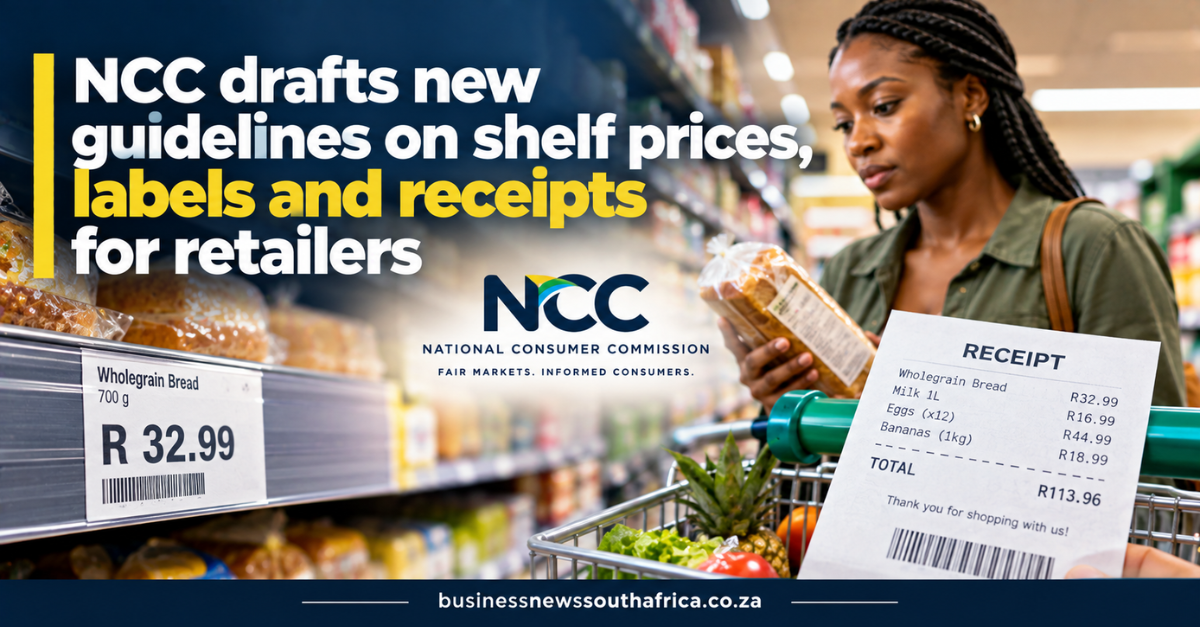
In a typical spaza shop on the outskirts of Johannesburg, a customer reaches for a packet of biscuits only to find no price tag, no label and no printed receipt after purchase. That scene, the National Consumer Commission (NCC) says, is far from rare.
The NCC has now gazetted draft guidelines that spell out how prices, product descriptions and sales records must be presented by every retailer, from large chains to informal traders. The draft is open for public comment for 45 days, giving suppliers, importers, manufacturers, distributors, retailers and service providers a chance to weigh in before the rules are finalised.
Why does this matter to a small shop owner? The commission’s own monitoring between July 2024 and March 2026 uncovered “widespread non-compliance” with the Consumer Protection Act (CPA). Inspectors found that many suppliers failed to disclose prices, omitted VAT from displayed amounts, and issued receipts that did not contain the information required by law. In the NCC’s words, those failures “limit consumers’ ability to exercise their right to choose and make informed purchasing decisions.”
What the draft actually says
A product description must, where applicable, include a clear, legible price shown in South African Rand (R) that includes VAT and any mandatory charges. The displayed price must match the amount charged at the till. A higher charge is only allowed if the displayed price contains an “inadvertent and obvious error” or if the price has lawfully changed before the transaction is completed.
Hidden charges, such as undisclosed booking fees, service fees or administration fees, are prohibited. Both online and physical suppliers must disclose all additional charges before payment is completed.
Every transaction must be accompanied by a sales record (receipt). The receipt must contain the supplier’s full name or registered business name, its VAT registration number and other details prescribed by the CPA.
Importantly, the NCC stresses that the guidelines do not replace the CPA. They are not binding on the NCC, the National Consumer Tribunal or the courts, but anyone interpreting the Act must take them into account. The commission will still use discretion and consider other factors on a case-by-case basis.
For small retailers, the practical impact is clear: price tags need to show the full price including VAT, receipts must be printed with the correct business details, and any extra fees must be disclosed up front. Failure to comply could invite investigations, fines or legal action under the CPA.
While the guidelines add an administrative layer, they also promise a more level playing field. Consumers will be able to compare prices more easily, and honest traders may benefit from increased trust. For spaza shops that have operated with informal pricing, the change could mean investing in signage, label printers or point-of-sale software, an expense that may be mitigated by the NCC’s public-comment period, which allows businesses to flag undue burdens.
Stakeholders who wish to comment can submit their views via the NCC’s website before the 45-day deadline. The full draft guideline is available on the commission’s portal.
As the retail landscape evolves, the NCC’s move signals that the government is willing to enforce the CPA more rigorously, especially where informal traders have historically slipped through the regulatory net.
Retailers looking for practical help can use the Business News South Africa compliance-document generator to draft internal policies that align with the new draft.
Clearer rules on shelf pricing, labelling and receipts are aimed at closing a long-standing consumer complaint: a shelf price that does not match what is actually charged at the till, a discrepancy that has periodically drawn National Consumer Commission scrutiny across major retail chains. For small retailers specifically, updated compliance requirements around receipts and labelling can carry a real implementation cost, since point-of-sale systems and printed signage may need updating to match new formatting or disclosure requirements once the guidelines are finalised. The National Consumer Commission’s own guideline consultations carry the draft rules in full. For related coverage, see this site’s Retail and Consumer coverage.