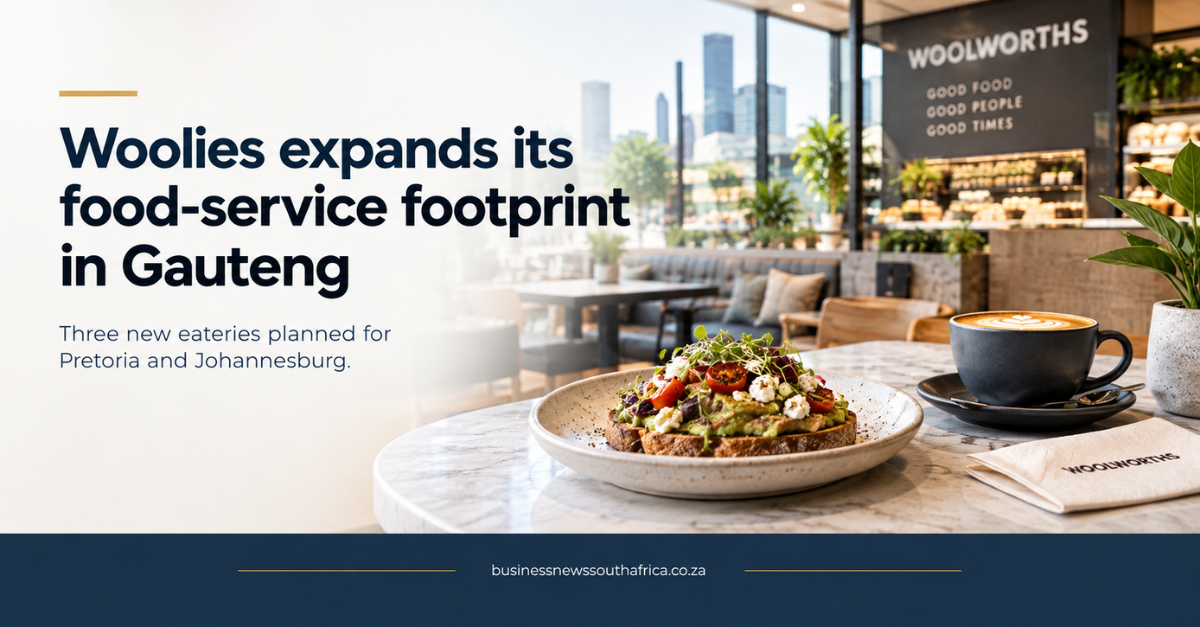
In the bustling corridors of a Gauteng shopping centre, a new table is being set for Woolworths. The retailer has confirmed that it will launch two Woolworths Cafes (WCafes) and one Woolworths Now Now sit-down outlet in the second half of 2026. Both concepts sit under Woolworths’ Food Services division, a high-growth business the group says is central to its strategy.
“At Woolworths, WCafes, Now Now branches, Coffee hatches and tuckshops all form part of our broader Food Services division; a high-growth business that continues to play a central role in our strategy,” the company told BusinessTech. The statement adds that expanding the Food Services offering is a “key driver of new revenue streams, supports our efforts to attract new customers, and helps grow our share of spend among existing customers.” These are company claims until independently verified.
Why the food focus matters
Woolworths’ 2026 financial results showed a 5.7% increase in turnover for its Food division, contributing to an overall turnover of R84.5 billion, a 4.3% year-on-year rise. EBITDA, the earnings before interest, tax, depreciation and amortisation, grew 2.8% to R8.9 billion. While headline earnings per share (HEPS, profit per share stripped of one-off items) rose to R2.82 from R2.68, basic earnings per share fell slightly to R2.63. The numbers suggest that food is the segment out-performing the rest of the business.
For small-scale café owners and takeaway operators, Woolworths’ move signals intensified competition in the premium-quick-service space. The Now Now concept, launched in 2017 as an express takeaway with an order-ahead app, targets busy office workers and commuters, a demographic that many independent operators also chase. The new sit-down format may pull foot traffic away from local cafés, especially in malls where Woolworths already has a strong presence.
At the same time, the expansion reflects a broader trend among South African retailers. Chains such as Pick n Pay and Checkers have been adding food courts and ready-to-eat sections to boost store visits and increase basket size. Woolworths’ emphasis on “convenient, high-quality food experiences” aligns with consumer demand for quick yet wholesome meals, a demand that has grown since the pandemic reshaped eating habits.
Woolworths operates more than 230 WCafes across the country, either inside or adjacent to its stores. The brand prides itself on sourcing ingredients exclusively from Woolworths, including free-range eggs, sustainably farmed produce and 100% African organic Arabica coffee beans from Ethiopia and Tanzania. The new outlets will add to this footprint, but the company has not disclosed the exact locations beyond the province.
From an investor perspective, the Food Services expansion is a bet on a segment that has delivered better margins than clothing or homeware. The group’s recent reorientation around food, highlighted in its annual report, suggests that future capital allocation will continue to favour new cafés, express takeaways and related concepts.
Whether the new eateries will translate into measurable market-share gains remains to be seen. Independent operators can expect heightened pressure on pricing and service speed, but they may also benefit from the overall uplift in consumer expectations for quality food on the go.
Woolworths’ announcement was first reported by BusinessTech. The retailer is listed on the JSE, and further corporate details are available on its website. For more coverage of retail trends, see our Retail & Consumer section.
Regulatory and operational backdrop
Any new food-service outlet in South Africa must navigate a set of statutory requirements that apply to all retailers. These include compliance with the Foodstuffs, Cosmetics and Disinfectants Act, which governs safety, labelling and hygiene standards. Municipal authorities also issue trading licences that stipulate operating hours, waste management and fire safety measures. While the specific timelines for approvals vary by location, the process typically involves health inspections, building plan reviews and proof of compliance with occupational health and safety regulations.
For a retailer of Woolworths’ scale, the advantage lies in having dedicated internal teams that manage these approvals across multiple jurisdictions. Smaller operators often rely on external consultants or local chambers of commerce to guide them through the same steps. Understanding the regulatory framework is therefore essential for any business owner who wishes to expand or launch a new concept, because delays or non-compliance can result in fines, temporary closures or reputational damage.
Supply-chain considerations
The Food Services division sources a large proportion of its raw materials from its own procurement network. This model provides greater control over quality, price stability and traceability, which are increasingly important to consumers who demand transparency about where their food originates. For independent cafés, supply-chain resilience can be a double-edged sword. On one hand, larger retailers can negotiate bulk discounts that are out of reach for small operators. On the other hand, the emphasis on locally sourced, ethically produced ingredients creates market opportunities for regional producers who can meet the standards set by big chains.
In practice, a new WCafe or Now Now outlet will require a detailed rollout plan that aligns inventory levels with projected footfall, especially during the initial months of operation. Seasonal fluctuations in demand for fresh produce, coffee beans and bakery items are managed through forecasting tools that integrate point-of-sale data with supplier lead times. Business owners who wish to compete on quality must therefore invest in similar data-driven inventory practices, even if on a smaller scale.
Consumer behaviour and macro-economic context
South Africa’s retail landscape has been shaped by a combination of high unemployment, inflationary pressures and a growing middle class that values convenience. Over the past decade, the proportion of household expenditure allocated to food away from home has risen steadily, reflecting urbanisation and changing work patterns. The pandemic accelerated this shift, as many consumers became accustomed to ordering ahead, using contactless payment and seeking ready-to-eat options that do not compromise on nutrition.
For a business owner, these trends translate into a clear signal: the market rewards concepts that can deliver speed, consistency and perceived value. Woolworths’ focus on premium ingredients and a seamless digital ordering experience is a direct response to these consumer expectations. Independent operators can differentiate themselves by emphasizing niche offerings, such as specialty diets, local flavours or community-focused events, which larger chains may find harder to replicate quickly.
Strategic implications for South African retailers
The decision to expand Food Services aligns with a broader strategic pivot that many South African retailers have undertaken. By integrating food and beverage experiences within traditional retail formats, companies aim to increase dwell time, cross-sell other product categories and capture a larger share of the consumer’s total spend. This approach also mitigates the impact of e-commerce disruption, as food service cannot be fully replicated online and often drives foot traffic to physical stores.
From a financial perspective, food-related operations typically generate higher gross margins than apparel or homeware, due in part to the premium pricing that can be applied to freshly prepared meals and specialty coffee. The higher margin profile supports the allocation of capital towards store refurbishments, technology upgrades and marketing campaigns that reinforce the brand’s lifestyle positioning.
What this means for small business owners
Small-scale café owners should view Woolworths’ expansion as both a challenge and an opportunity. The increased competition may compress price points and raise the bar for service speed, prompting owners to reassess their cost structures and operational efficiencies. At the same time, the heightened consumer focus on quality and convenience can create a spill-over effect, encouraging more shoppers to seek out premium food options across the market.
Practical steps for independent operators include reviewing their supply contracts to ensure competitive pricing, investing in staff training to maintain consistent service standards, and leveraging digital tools such as mobile ordering or loyalty programmes to retain customers. Engaging with local business associations can also provide collective bargaining power when negotiating with suppliers or navigating municipal regulations.
Ultimately, the success of Woolworths’ new outlets will depend on how well they resonate with the target demographic and how effectively they integrate with the broader Woolworths ecosystem. For the wider South African retail sector, the move underscores the importance of food as a growth engine and highlights the need for agility, compliance and customer-centric innovation in an increasingly competitive environment.