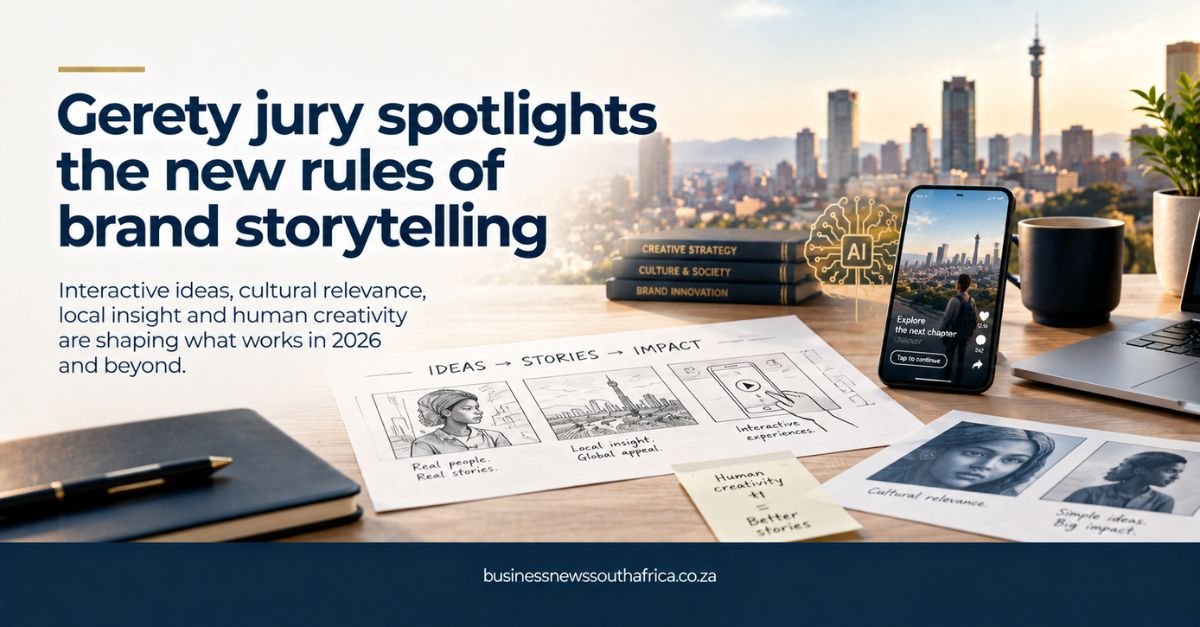
In a modest conference room, a panel of seasoned marketers gathered to judge the 2026 Gerety Grand Jury, a competition named after the copywriter who coined the iconic line “A diamond is forever”. The jury, chaired by Danette Breitenbach, managing editor of Bizcommunity, included Brenda Khumalo, founder of Lobengula Advertising South Africa; Imen Ghardi, managing director and owner of Doze Agency in Tunisia; Colette Osibo, chief executive officer of Accelerate Media Group, Nigeria; and Sandra Amachree, head of communications-marketing at The Heineken Company, Nigeria.
According to the announcement, the panel praised work that blended interactivity, entertainment, story-based insights, cultural awareness and local relevance. Two examples highlighted were the “Kit Kat Heist” and “The Count, SickKids” campaigns, both of which used playful narratives to engage audiences while delivering a clear brand message.
For South African small and medium-size enterprises (SMEs), the jury’s observations matter more than a trophy on a shelf. The trends they identified point to concrete ways that limited-budget marketers can stretch their reach. Interactive elements, such as quizzes, augmented-reality filters or user-generated content challenges, can turn a passive viewer into an active participant, increasing recall without the need for costly media buys. Story-based insights, where a brand’s message is woven into a relatable narrative, help cut through the noise of daily advertising clutter.
Why cultural and local insight is no longer optional
The panel stressed that campaigns which reflected local culture resonated more deeply. Colette Osibo noted that audiences in Nigeria responded strongly to content that spoke their language and referenced familiar settings. The same principle applies in South Africa, where a brand that acknowledges regional dialects, music styles or community values can earn goodwill that translates into sales.
SME owners can apply this by involving local creators, using vernacular in copy, or simply aligning campaign themes with community events. The cost of commissioning a local influencer or a community-based video is often a fraction of a national TV spot, yet the authenticity payoff can be far higher.
Interactive storytelling also dovetails with the rise of short-form video platforms such as TikTok and Instagram Reels. The “Kit Kat Heist” used a playful heist scenario that invited viewers to guess the outcome, prompting shares and comments that amplified the brand’s reach organically. For a small business, a similar approach, a short, witty video that asks a question or sets up a challenge, can generate user interaction and free word-of-mouth promotion.
While the jury’s examples came from multinational brands, the underlying tactics are scalable. A local bakery could launch a “secret recipe hunt” on Instagram, rewarding participants with a free pastry. A boutique fashion label might create an AR filter that lets users try on a virtual garment, driving traffic to an online store.
Beyond creative ideas, the Gerety Grand Jury underscores the importance of measurement. The panel highlighted that winning entries paired storytelling with clear metrics, click-through rates, engagement time, or conversion lifts, to prove business impact. Small firms should set simple KPIs from the outset, such as a target number of video views or a percentage increase in newsletter sign-ups, to justify marketing spend.
For entrepreneurs who wonder whether these insights are relevant to their bottom line, the answer is yes. In a market where advertising budgets are tight and consumers are increasingly skeptical, a well-crafted story that invites participation can deliver a higher return on investment than traditional static ads.
How the Gerety Grand Jury fits into the wider marketing ecosystem
The Gerety Grand Jury is part of a broader tradition of industry awards that celebrate excellence in communication and creative execution. Such awards serve several functions. First, they provide a benchmark for best practice, allowing agencies and brands to see how peers are solving common challenges. Second, they generate publicity for the winners, often resulting in additional media coverage and client interest. Third, they create a learning platform where judges share insights that can be applied across sectors.
In South Africa, the marketing and advertising sector operates under a framework that encourages self-regulation through bodies such as the Advertising Standards Authority. While the jury itself is not a regulator, its emphasis on cultural relevance and ethical storytelling aligns with the broader industry commitment to responsible communication. For SME owners, this alignment means that adopting the jury’s recommendations also supports compliance with prevailing standards on truthfulness, non-discrimination and respect for cultural diversity.
Digital transformation has reshaped how South African businesses reach consumers. Mobile penetration is high, data costs have fallen, and social media usage continues to grow. These conditions create a fertile environment for the interactive tactics highlighted by the jury. Brands that invest in mobile-first content, leverage platform-specific features, and encourage user participation are better positioned to capture attention in a crowded digital landscape.
Practical steps for South African SMEs
1. Conduct a quick cultural audit. Identify the languages, music genres, festivals or community stories that are most relevant to your target market. Use this insight to shape the tone and visual language of your campaign.
2. Choose a single interactive element that fits your budget. A simple quiz hosted on a landing page, a hashtag challenge on TikTok, or an Instagram poll can provide the engagement boost the jury described without requiring a large production team.
3. Build a narrative around a problem or desire that your audience experiences. Frame your product or service as the solution within that story, and keep the plot concise enough for short-form video consumption.
4. Partner with a local creator who already has credibility with your audience. Provide them with a brief that includes the cultural touchpoints you identified, and let them inject their own style.
5. Define two or three measurable outcomes before launch. Track them using the analytics tools built into the platforms you use, and be prepared to adjust the creative or distribution tactics based on early performance.
6. Repurpose successful content. A short video that performs well can be edited into a series of still images for Facebook, turned into a GIF for WhatsApp, or compiled into a longer form for YouTube, extending its lifespan and reach.
Why the lessons matter for the South African economy
SMEs are a cornerstone of the South African economy, providing a significant share of employment and contributing to GDP growth. Their ability to market effectively influences not only individual business success but also the broader health of supply chains and local communities. By adopting the interactive, culturally aware approaches championed by the Gerety Grand Jury, SMEs can compete more effectively against larger players, retain customers, and stimulate demand for locally produced goods and services.
Moreover, the emphasis on measurement helps SMEs build a data-driven mindset. When small businesses can demonstrate the impact of their marketing spend, they are better positioned to secure financing, attract partners and scale operations. This creates a virtuous cycle where improved marketing performance fuels business growth, which in turn contributes to job creation and economic resilience.
In summary, the 2026 Gerety Grand Jury offers more than recognition for creative excellence. It provides a roadmap for South African SMEs to harness interactivity, storytelling and cultural relevance as cost-effective levers for growth. By following the practical steps outlined above, small business owners can translate the jury’s insights into real-world results, turning limited resources into meaningful market impact.
Watch the full jury discussion for a deeper dive into the winning work: Bizcommunity article. For more SME-focused marketing guidance, see our SME & Entrepreneurship hub.