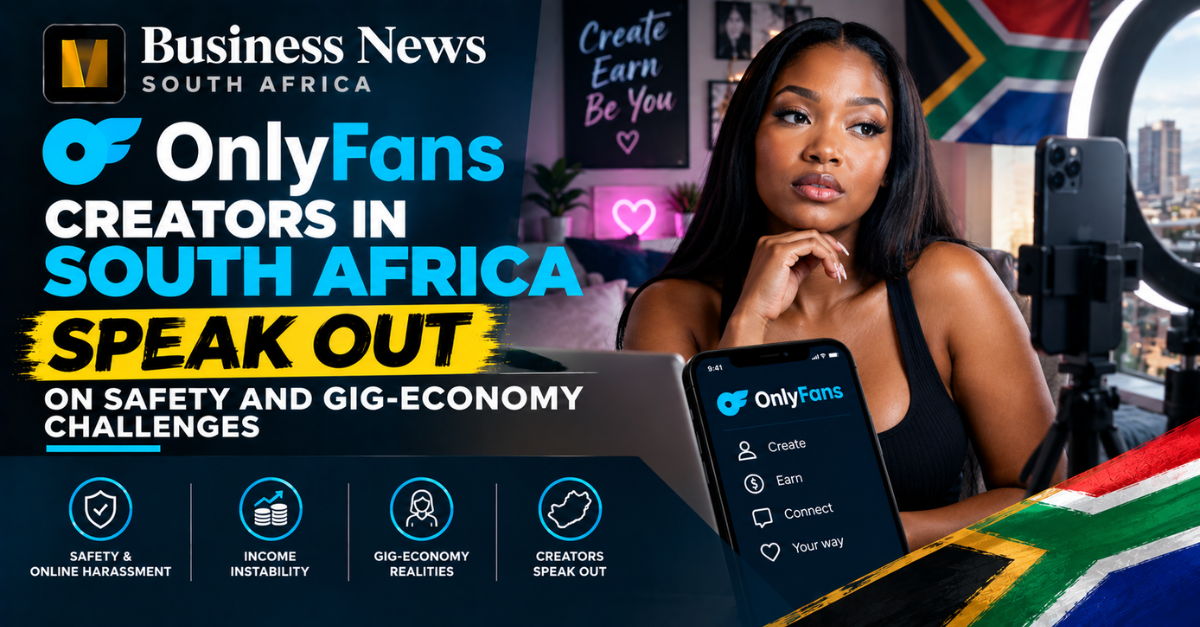
OnlyFans, the subscription-based platform best known for adult content, has become a source of income for a growing number of South Africans. According to an article in The Conversation, creators on the site say they face a mix of personal safety concerns, payment difficulties and an unclear regulatory environment.
For a creator, the term “creator” simply means someone who produces and uploads content that subscribers pay to view. In the case of OnlyFans, the content is often sexual in nature, which places the work in the broader category of sex work, a sector that is legal in South Africa but not uniformly regulated. The article notes that many users treat their OnlyFans activity as a gig-economy job, meaning they work on a flexible, short-term basis rather than as a full-time employee.
One of the main issues highlighted is personal safety. Creators report receiving unwanted contact, threats or attempts at blackmail when their identity is exposed. The Conversation points out that the platform’s anonymity features can be bypassed, leaving users vulnerable. This risk is amplified by the fact that South Africa has a high rate of gender-based violence, making any exposure potentially dangerous.
Payment is another pain point. OnlyFans pays creators in foreign currency, usually US dollars, which must be converted to rand. The article explains that the conversion process can be slow and costly, especially when banks flag the transactions as high-risk. Some creators say they have been unable to withdraw funds for weeks, forcing them to rely on informal channels that carry their own risks.
Legal uncertainty also looms large. While sex work is de-criminalised, the law does not specifically address digital platforms that host adult content. The Conversation says that creators are unsure whether they need a licence, whether they are liable for tax on earnings, or how to protect themselves if a dispute arises. This lack of clear guidance makes it harder for creators to treat OnlyFans as a stable side-business.
For small business owners and entrepreneurs, the story offers a glimpse into the realities of digital side-hustles that sit outside traditional employment structures. It shows that while platforms like OnlyFans can provide a fast route to cash, they also bring hidden costs, legal, financial and personal, that are rarely discussed in mainstream business advice.
Industry observers note that the challenges faced by OnlyFans creators echo those of other gig-economy workers in South Africa, such as ride-hailing drivers and freelance designers, who also grapple with platform-driven payment delays and limited regulatory protection. The Conversation suggests that clearer policy guidance could help creators manage risk and plan for the future, much as it would for any small-scale digital entrepreneur.
In the meantime, creators are taking matters into their own hands. Some are forming informal networks to share safety tips, while others are exploring alternative payment routes that bypass traditional banks. These grassroots solutions illustrate how digital workers often have to become their own support system when formal structures fall short.
Overall, the article paints a picture of a growing digital labour market that sits at the intersection of sex work, technology and the gig economy. For anyone considering a side-hustle on a platform that operates across borders, the South African experience offers a cautionary tale about the importance of safety, reliable payment and legal clarity.
Why platform-based sex work sits in a genuine regulatory blind spot
South Africa decriminalised the sale of sex in the sense that individual sex workers cannot be prosecuted for consensual adult transactions, but that framework was built around in-person, physical-world sex work, not a subscription platform headquartered abroad that pays creators in foreign currency. The result is a genuine gap rather than an oversight anyone can quickly close: banks assessing an OnlyFans payout have no settled regulatory category to apply it to, which is precisely why creators report transactions being flagged as high-risk and funds being frozen for weeks at a time, a friction that has nothing to do with whether the underlying activity is legal.
For anyone running a small business built on a foreign-currency platform payout, whether OnlyFans, a freelance marketplace, or an overseas e-commerce storefront, the underlying lesson generalises well beyond adult content specifically: a South African bank’s compliance systems are tuned to flag unfamiliar cross-border income patterns first and ask questions later, and a business owner earning this way should expect to spend real time proving legitimacy to their own bank, not just to a platform or a client.