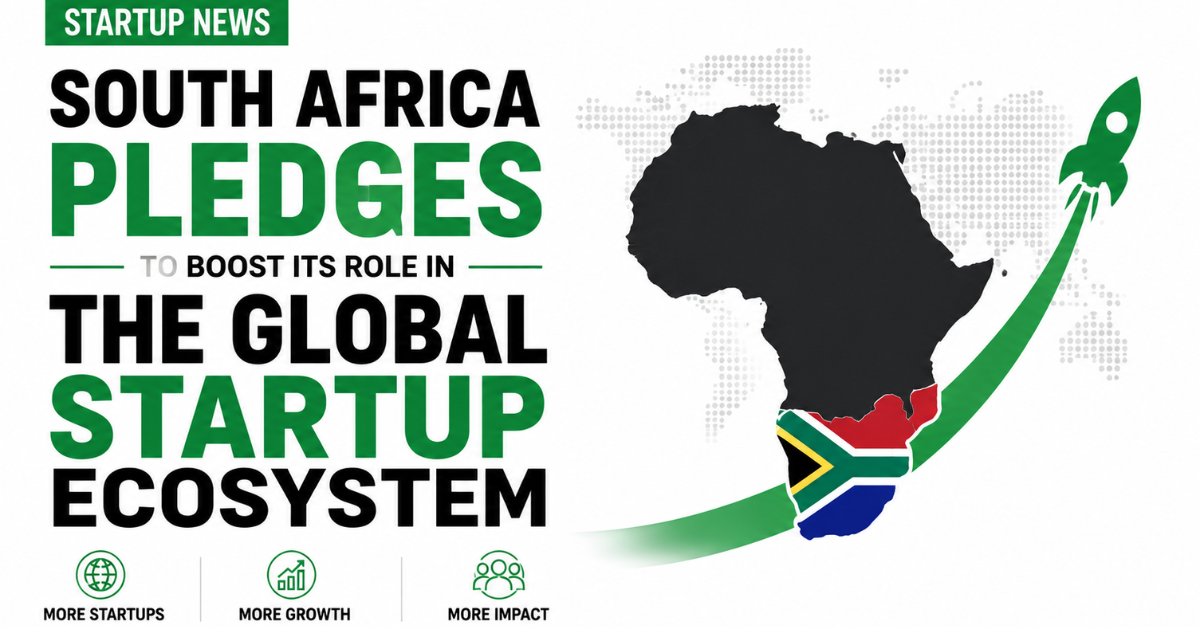
The Cape Times reported that South Africa aims to shape the future of entrepreneurship in the global startup ecosystem. The statement, issued by government officials, signals a renewed focus on nurturing home-grown innovators and attracting foreign investment.
For owners of small and medium enterprises, the announcement matters because it could translate into more funding programmes, mentorship networks and regulatory reforms designed to lower the barriers to starting and scaling a business. In plain terms, the government is promising to create a friendlier environment for the kind of high-growth ventures that can generate jobs and export revenue.
What the government is proposing
The plan, as outlined in the brief, includes a suite of measures that are familiar to anyone who follows South Africa’s innovation policy. These include expanding the reach of the Department of Small Business Development’s funding schemes, increasing tax incentives for early-stage investors, and bolstering the capacity of technology hubs such as the Innovation Hub in Pretoria and the Cape Town Science Centre. A tax incentive, for example, is a reduction in the amount of tax a company must pay if it meets certain criteria, in this case, investing in start-ups that meet a set of growth thresholds.
Another element is the creation of a national mentorship platform that would pair seasoned entrepreneurs with first-time founders. Mentorship, in this context, means experienced business leaders offering advice, contacts and practical help to newer companies, often in exchange for a small equity stake or a fee.
While the details of the funding amounts and timelines were not disclosed in the source, the emphasis on “shaping the future” suggests a long-term strategy rather than a one-off grant. The government’s language also hints at a desire to position South Africa alongside other recognised startup hubs such as Nairobi, Singapore and Berlin.
Why it matters now
The timing of the announcement coincides with a period of both opportunity and challenge for South African start-ups. On the opportunity side, the country’s young, digitally-savvy population has produced a wave of fintech, health-tech and agritech ventures that have attracted attention from international venture capital firms. On the challenge side, persistent issues such as load-shedding, scheduled power cuts that disrupt business operations, and a shortage of growth-stage capital continue to hamper scaling.
For an SME owner, the government’s push could mean easier access to capital at the seed and series-A stages, where many businesses currently rely on personal savings or informal loans. It could also mean clearer rules around equity financing, which often confuse founders who are unfamiliar with terms like convertible note (a short-term debt that can turn into equity) or SAFE (Simple Agreement for Future Equity, a contract that gives investors the right to purchase shares later).
How this fits with broader policy
The initiative aligns with the National Development Plan, which sets a target of creating one million jobs by 2030, a goal that many policymakers believe can be accelerated through a vibrant start-up sector. It also dovetails with the Department of Trade, Industry and Competition’s broader industrial strategy, which seeks to diversify the economy away from traditional sectors such as mining and agriculture.
In practice, the success of the plan will depend on execution. Past programmes have sometimes faltered due to bureaucratic delays or a lack of coordination between national and provincial authorities. The current announcement does not provide a timeline for rollout, nor does it name a specific agency that will oversee the implementation, leaving some uncertainty for businesses that may be waiting for concrete support.
What SME owners can do now
While the details are still emerging, entrepreneurs can prepare by strengthening their business plans, ensuring they have robust financial reporting and building networks within existing incubators and accelerators. Demonstrating a clear path to profitability will make any future government-backed funding more accessible.
In short, the government’s stated ambition to shape the global startup ecosystem could bring tangible benefits for South African SMEs, but the real impact will hinge on how quickly and effectively the promised measures are put into practice.