When a boutique retailer in Cape Town tried to launch a shopping app using a generic template, the software forced the store to redesign its checkout flow, inventory system and loyalty programme to fit the app, not the other way round. The experience is a reminder that off-the-shelf software often dictates how a business works, rather than supporting its existing processes.
According to BusinessTech, Cirrus Bridge is a South African software and artificial intelligence (AI) consultancy that builds custom mobile applications for Android and iOS. The company operates teams in South Africa and the Netherlands and counts global brands such as Bayer, Safari Collection, HODL OTC and MTD Networx among its clients.
A custom mobile application is software that is designed specifically for a single business, taking into account its unique workflows, branding and customer experience. By contrast, off-the-shelf products are pre-packaged solutions that many companies share, often requiring the buyer to adapt its operations to the software’s limitations.
“In our experience, the most important part of an app development project is developing a strong initial plan,” said Cirrus Bridge co-founder and chief executive officer Mikhail Edwards. “With this in place, the rest of the project becomes much easier.” Edwards is referring to the upfront analysis that the firm conducts for every project, a step that aims to identify the problem the software must solve before any code is written. Accurate scoping, he says, helps avoid expensive mid-project surprises such as hidden technical debt or unexpected integration work.
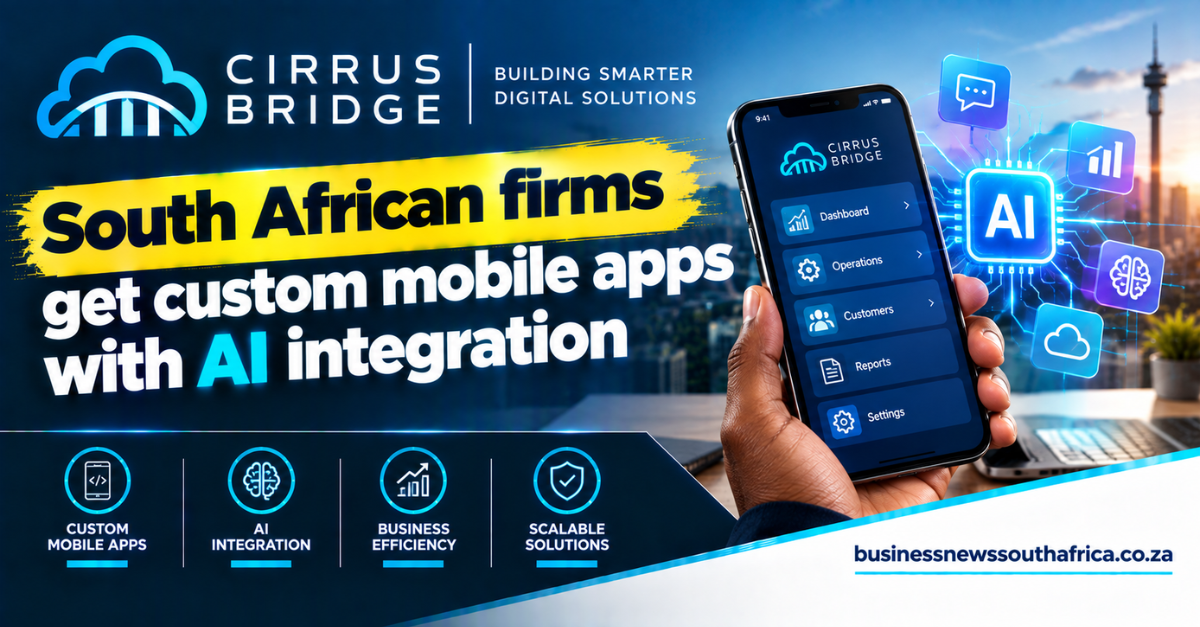
Beyond basic functionality, Cirrus Bridge positions AI as a core add-on. AI, short for artificial intelligence, refers to computer systems that can perform tasks that normally require human intelligence, such as recognising images, understanding natural language or predicting trends. The consultancy offers to embed AI features like chatbots (automated conversational agents), machine learning models (systems that improve from data), sentiment analysis (software that gauges emotional tone) and image recognition into the apps it builds. By doing so, clients can sidestep the high cost of hiring separate developers to retrofit AI after the app is live.
The firm’s AI credentials were highlighted when it won the TechBehemoths 2025 award for AI Services, a claim reported by BusinessTech. While the award’s criteria are not detailed in the source, the accolade signals that the company is recognised within the tech community for its AI work.
A concrete illustration of Cirrus Bridge’s capabilities is its work on HeadsUp, a web-based tool that gathers employee feedback through short, frequent pulse surveys. The consultancy built the app to integrate with existing HR systems, support manual data uploads and generate actionable sentiment analysis at the individual, manager and team levels. According to the source, the project helped HeadsUp expand its reach in the HR technology market.
Why the service matters for South African businesses
South Africa’s technology sector has been growing as firms across retail, finance and hospitality accelerate digital transformation. For small and medium-size enterprises, the challenge is twofold: they need a mobile presence to stay competitive, yet they often lack the in-house expertise to develop and maintain a bespoke app. Hiring a full-time development team can be prohibitively expensive, especially when AI capabilities are required.
Outsourcing to a specialist like Cirrus Bridge offers a middle ground. The consultancy handles the entire lifecycle, from design and development to hosting, support and even marketing, allowing businesses to focus on their core operations. The company also offers a free consultation, giving prospective clients a chance to see the proposed development process before any money changes hands.
However, the source warns that delays can be costly. “The longer you wait, the more it will cost to catch up with your competitors,” the BusinessTech article notes, echoing a common sentiment among digital-first firms that speed to market is a competitive advantage.
For South African SMEs weighing the decision, the key take-aways are clear: a custom app can align technology with business needs, AI integration can future-proof the solution, and an upfront planning phase can reduce the risk of surprise expenses. As the market for mobile commerce and on-the-go services expands, firms that invest in a well-scoped, locally built app may find themselves better positioned to compete with both domestic and international players.