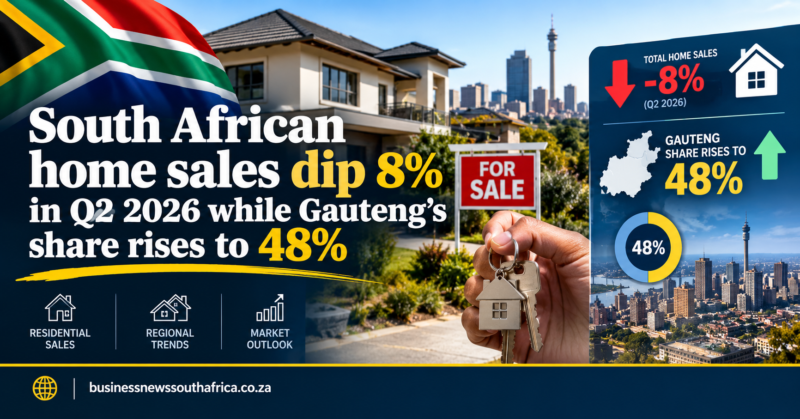
According to BusinessTech, a growing number of South Africans are leaving Gauteng in search of more reliable municipal services, and the bulk of that demand is concentrating on towns along the Western Cape’s Garden Route.
Stephan Potgieter, chief executive of BetterHome Group and BetterBond, described the shift as moving from a pandemic-driven “lifestyle” rush to a strategic, service-driven relocation model. “Buyers are no longer just looking for a view. They are looking for functional infrastructure, efficient service delivery, financial sustainability, and educational opportunities,” he said. The comment underscores that the primary stake in this trend is the buyer, individuals and families who need dependable electricity, water and road networks, as well as developers who must align projects with municipal capacity.
John Loos, senior property sector strategist at FNB Commercial Property Finance, added that the Western Cape continues to outperform other provinces on factors that matter to skilled professionals and businesses: municipal service delivery, infrastructure management, water security, electricity reliability, governance and well-maintained public spaces. While Cape Town’s price levels have pushed many buyers beyond reach, the Garden Route offers a mix of affordability and service quality that is attracting both permanent residents and investors.
Price ranges on the Garden Route
George, the commercial hub of the region, has freehold homes (ownership of both land and building) starting at roughly R2.5 million, though the supply at that level is limited and sales are swift. Apartments range from about R1.5 million to R6 million, and larger three- to four-bedroom houses can command up to R10 million. Luxury estates such as Kingswood and Oubaai exceed R10 million, while properties in the Fancourt development have sold for more than R50 million.
Mossel Bay offers a broader spectrum, with new freehold homes priced between R3.2 million and R35 million depending on location and specifications. Modern three-bedroom homes can be found for under R4 million, and luxury apartments start at roughly R2.995 million.
In Knysna, Gordon Shutte, area principal for Pam Golding Properties, noted a shift from holiday-home dominance to permanent residency. Sectional-title apartments (ownership of a unit within a larger building) generally cost between R1.2 million and R4 million, while freehold homes fall between R2.3 million and R8 million.
Plettenberg Bay continues to attract both holiday-home buyers and year-round residents. Around 800 residential units are in various stages of development and the town sells about 500 units annually. Vacant plots range from R1.3 million to R4 million, and luxury homes can reach R42 million. Wilderness, known for its quieter, nature-focused lifestyle, has homes priced from roughly R4 million to R35 million.
The underlying driver of these moves is Gauteng’s ongoing struggle with service delivery. Load-shedding, water restrictions and municipal financial stress have been widely reported, and they erode confidence among both households and businesses. Without reliable electricity and water, the cost of operating a home or a small enterprise rises sharply, making distant towns with stable services more attractive.
For developers, the trend presents both opportunity and risk. High demand can accelerate sales, but limited supply of affordable freehold land means competition for suitable sites is intense. Municipalities that can demonstrate sound financial management and invest in infrastructure are likely to capture a larger share of the inbound flow.
From a broader economic perspective, the migration could reshape regional labour markets. Skilled professionals relocating to the Garden Route will need local employment opportunities, prompting municipalities to focus on diversifying their economies beyond tourism. The long-term impact will depend on whether the Western Cape can sustain its service advantage while expanding job creation.
For buyers weighing the move, the decision now hinges less on scenic appeal and more on the reliability of basic services, the quality of schools and the financial health of the local government. As Potgieter put it, “High-performing municipal governance is directly dictating residential property purchases.”
Read more about property trends in the Property section.