Black Friday is on 27 November, and for a shop the risk is at the till as much as in the price. A promotion only works if the discount, any loyalty reward and the payment all go through together when the queue is long. We put three questions to Rory Bosman, Chief Sales and Marketing Officer at Ecentric Payment Systems.
The figures behind the questions
- Tap to pay: in Discovery Bank’s Black Friday 2025 spend trend report, nearly two-thirds of its clients’ in-store card transactions were tap-to-pay on smart devices. That describes Discovery’s own customers, not every shopper.
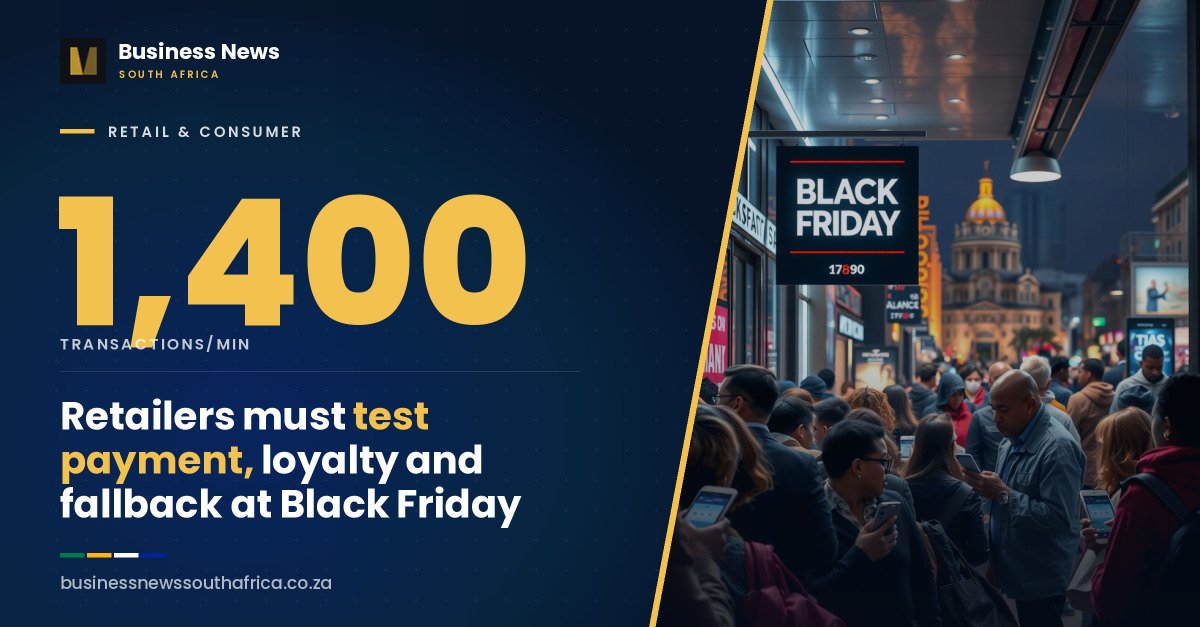
- Peak volume: Ecentric’s live dashboard showed more than 1,400 transactions approved every minute on Black Friday 2025, according to IOL’s Cape Argus report. It is Ecentric’s own figure for peak activity.
- Loyalty: the 2025/26 Truth and BrandMapp loyalty whitepaper found that 85% of the economically active consumers it surveyed take part in loyalty programmes, using 10.4 programmes on average. 40% want to be rewarded instantly, and 28% said they will use loyalty programmes more to cut costs.
- Buy now, pay later: the Online Retail in South Africa 2026 report says buy now, pay later providers perform strongest on purchases of R800 to R8,000, and add little below about R300.
What should a retailer check in its payment set-up in the week before Black Friday?
Rory Bosman, Ecentric: Check the full checkout process, from the promotional price through to payment and any loyalty reward or voucher. These need to work together when the store is busy.
Test the fallback arrangements too. Staff should know how to continue accepting payments if the normal connection or point-of-sale system fails, and the retailer should check that transaction records synchronise correctly afterwards. Confirm separately which loyalty functions remain available during an interruption.
Finally, make sure staff know who to contact for support and how to handle an interrupted transaction without immediately asking the customer to pay again.
What do loyalty rewards at checkout change about how shoppers pay?
Rory Bosman, Ecentric: Rewards give shoppers another source of value to use towards a purchase, depending on the programme’s rules. An immediate discount or redeemed reward can reduce the amount they need to pay, while earning points gives them value for a future visit.
The experience matters. When loyalty is integrated with checkout, customers can be recognised and rewarded as part of the purchase. If it requires several extra steps or the reward does not apply as expected, it can slow down the queue and create frustration.
Retailers should make it clear what customers can earn or redeem and ensure that the advertised benefit works at the till.
What goes wrong most often at the till on the day, and how do retailers prevent it?
Rory Bosman, Ecentric: The problems retailers should prepare for include unresponsive payment terminals, connection failures and payments that become difficult to trace after an interruption. During busy periods, these can hold up queues and leave staff uncertain about whether a sale has been completed.
Retailers can reduce the disruption by testing their payment systems and fallback arrangements ahead of time, preparing staff to use them and checking that transaction records remain intact. Keeping payments moving is only part of the job; the business must also be able to account for those payments once normal service returns.
What this means for a shop this week
Rory Bosman’s answers come down to a short checklist, in our words. Run a test sale through the whole process, including a loyalty reward or voucher. Practise the fallback if the connection drops. Give staff a support number and a rule never to ask a customer to pay twice without checking the first attempt. Our guide to business bank accounts, cards and payment terminals covers what card machines cost, our Black Friday guide to the Consumer Protection Act covers advertised prices and returns, and our festive season trading playbook covers cash, stock and staffing.