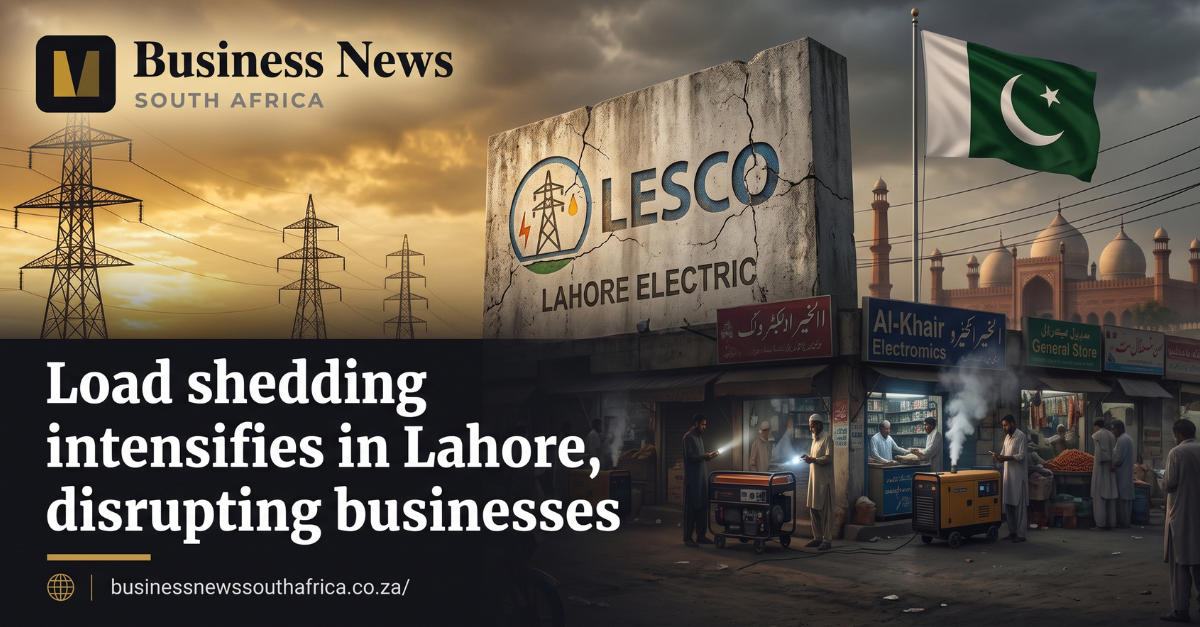
Mid-morning in Lahore, shop owners flip switches and stare at dark aisles as the lights go out. According to Pakistan Connect, the city is experiencing a new wave of electricity load shedding, planned power cuts that utilities use to balance supply and demand when the grid cannot meet consumption.
Load shedding (planned power cuts to balance supply and demand) is not new to Pakistan, but the frequency and duration have risen sharply in recent weeks. The utility responsible for distribution in the region has warned that the cuts will continue until the supply gap is narrowed.
Why the cuts are happening
The utility cites three main reasons. First, generation capacity, the total amount of electricity that power plants can produce, is falling short of peak demand, especially during the hot summer when air-conditioner use spikes. Second, fuel supply constraints, particularly shortages of imported liquefied natural gas (LNG) and domestic coal, limit the output of thermal plants that provide the bulk of the country’s power. Third, the transmission network, the high-voltage lines that move electricity from generators to consumers, is strained by ageing infrastructure and bottlenecks that prevent power from reaching Lahore efficiently.
These factors are compounded by the sector’s chronic financial stress. Distribution companies carry large arrears, known as circular debt, which reduces their ability to purchase fuel and maintain equipment. While the government has announced plans to inject cash and accelerate new generation projects, the timing of those measures does not match the immediate shortfall.
For small and medium-size enterprises (SMEs) in Lahore, the impact is tangible. Retail shops lose sales when lights go out, manufacturers face production delays, and service providers incur extra costs for backup generators or battery storage. The unpredictability of the cuts makes it harder to schedule staff and manage inventory, eroding profit margins that are already tight in a high-inflation environment.
Pakistan’s power sector has struggled with similar cycles for years. Recent tariff hikes aimed at reducing the debt burden have made electricity more expensive for consumers and businesses alike. At the same time, the country is pursuing renewable projects, solar farms in the south and wind farms in the west, but those plants are still ramping up and cannot yet offset the shortfall from thermal sources.
What is confirmed is that Lahore is currently under load-shedding schedules issued by the distribution utility. The utility’s statement attributes the cuts to generation shortfalls, fuel supply issues and transmission constraints. Independent verification of the exact magnitude of the shortfall is not yet available, and the timeline for any new capacity coming online remains uncertain.
Businesses are adapting by investing in diesel generators, negotiating flexible work hours and exploring solar-plus-storage solutions where feasible. The outlook will depend on how quickly the government can resolve the fuel supply bottleneck and fund new generation projects. Until then, Lahore’s entrepreneurs will have to plan around the darkness.
A familiar playbook for South African businesses
The specific mix Pakistan Connect describes, generation shortfall, fuel-supply constraint and an ageing, strained transmission network, sitting on top of a utility carrying large arrears, is close to a checklist of the same structural problems that have driven Eskom’s own load-shedding over the past decade. South African SMEs that have already built contingency plans around generators, solar-plus-battery systems and flexible staffing schedules are, in effect, running a playbook Lahore’s businesses are now being forced to adopt in real time. The deeper lesson for any business operating across emerging-market grids is that circular debt, an operator owing more than it can collect, tends to be the root financial problem underneath the visible symptom of blackouts, and fixing the blackouts durably usually requires fixing the utility’s balance sheet first.