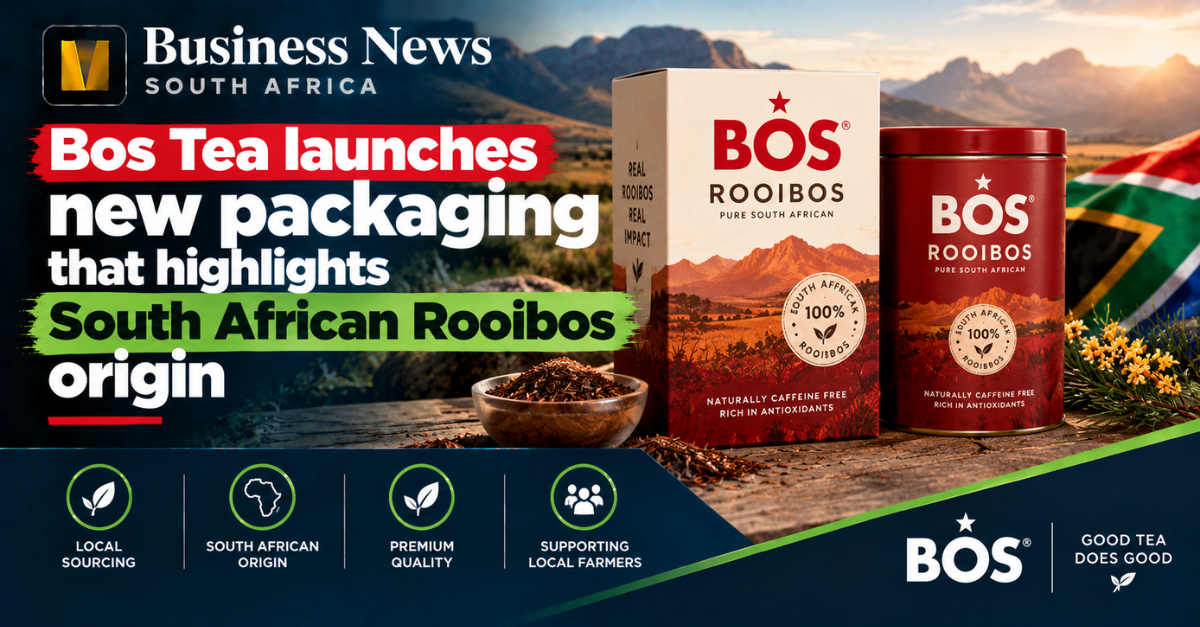
In the tea aisle of a Checkers store in the Western Cape, a freshly designed Bos Tea box catches the eye with its deep green hue and a stylised map of the Cederberg mountains. The new look is more than a colour change, it is meant to tell a story about where the tea comes from.
According to Maura van Styrum, head of marketing at Bos, “At Bos, unapologetically South African heritage runs through our brand DNA. This new tea design is a bold, distinctive nod to that heritage and a call for all of us to keep celebrating where we come from.” The company says the tea inside has not been altered; each box still contains single-origin (sourced from one region) organic Rooibos in plant-based tea bags.
Single-origin means the rooibos is harvested only in the Cederberg, the sole place on earth where the plant grows naturally. By foregrounding that geography, Bos hopes to differentiate its product from other rooibos brands that may blend leaves from multiple areas.
The packaging refresh follows a Gold award at the Food & Home Awards for Bos Tea’s previous design. It arrives during Heritage Month, a period when many South African brands highlight local culture and history.
Beyond the visual shift, Bos points to its sustainability credentials. The rooibos is Rainforest Alliance certified, a label that indicates farming practices aimed at protecting biodiversity, ecosystems and fair working conditions. The tea is also organic, meaning no synthetic pesticides or herbicides are used.
A key part of the story is the supply farm, Klipopmekaar Rooibos Farm. Bos says the farm has been practising regenerative agriculture for more than a decade and now holds climate-positive status, it stores more carbon in the soil than it emits through its operations. According to the brand, it is the only rooibos farm in the world with that claim.
For small and medium-sized FMCG companies, packaging has become a platform for brand storytelling. It must protect the product, convey legal information and, increasingly, communicate values such as local heritage and environmental responsibility. Bos’s refreshed box attempts to combine those elements in a single visual package.
The new boxes are being rolled out in Checkers and Spar stores across the Western Cape and are also available through the Bos Tea online shop. While the look has changed, the company stresses that the familiar flavour profile remains the same, offering consumers a recognised product wrapped in a design that foregrounds its South African roots.
Why packaging is a commercial decision, not a design one
A redesign is one of the few changes a consumer brand can make that every single customer will notice, whether or not the product inside has changed at all. Shoppers navigate a supermarket shelf largely by colour block and silhouette rather than by reading, and a box they no longer recognise at a glance can be walked past by exactly the loyal buyers a refresh was meant to reward. That is why brands undertaking one usually hold at least one strong visual asset steady, and why the reassurance that the tea itself is unchanged tends to appear so prominently in the announcement.
Origin claims carry their own commercial logic. When a crop can only be grown in one place, geography becomes something a competitor cannot copy, and putting it on the front of the pack turns a supply chain fact into a reason to pick one box over another. The trade off is that origin messaging only works where shoppers already attach some value to the place, which is why heritage linked marketing clusters around the moments in the retail calendar when that association is already front of mind.
Certification marks sit in a similar category. Independent schemes exist because a claim about farming practice is invisible in the finished product and a buyer has no way to verify it at the shelf. What a third party label supplies is verification by someone with no stake in the sale. For a smaller producer the cost and administrative load of certification is real, which is part of why these labels function as a competitive position rather than a basic requirement.
For the rest of the sector the more instructive detail is where the boxes are going. Listings in the major grocery chains are the scarcest resource in South African fast moving consumer goods, and a redesign that fails on shelf puts more at risk than a marketing budget. It puts the shelf space itself at risk.