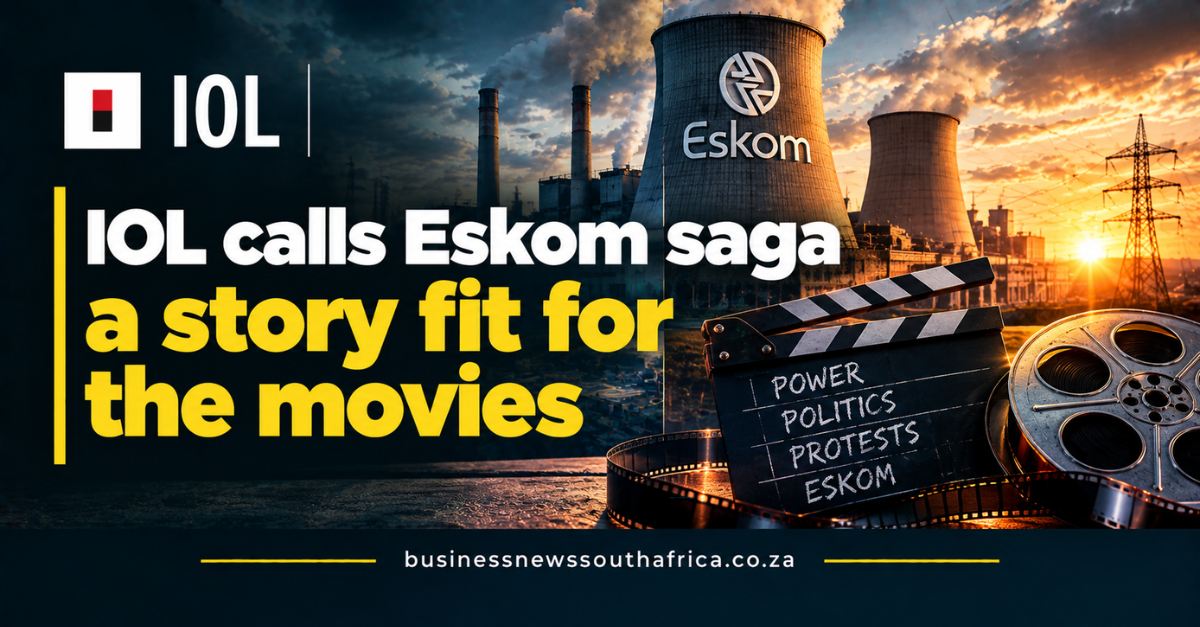
In the dim light of a Johannesburg workshop, a diesel generator coughs to life as the lights flicker off. The scene could be lifted from a thriller, and the IOL editorial team thinks so. “The Eskom story deserves to be made into a movie,” the outlet wrote, highlighting a saga that has become part of everyday business life.
Eskom, the state-owned power utility, supplies roughly 95% of South Africa’s electricity. Load shedding, the practice of deliberately cutting power to certain areas to keep the national grid from collapsing, has become a regular feature since the utility’s financial and operational problems deepened in recent years. Load shedding means scheduled blackouts that can last from a few minutes to several hours, depending on the severity of the supply shortfall.
Why the drama matters to small firms
For small and medium-size enterprises, the impact is immediate and costly. A bakery that loses power during peak hours throws away dough, a retailer cannot process card payments, and a service provider may miss deadlines because computers shut down. Many SMEs have turned to diesel generators, which add a recurring expense of R5 000 to R15 000 per month, depending on usage. The cost of fuel, maintenance and the environmental toll can erode profit margins that are already thin.
Beyond the direct expense, the uncertainty of when power will return forces managers to keep extra inventory on hand, tie up cash in safety stock, and schedule production around unpredictable outages. That kind of planning overhead is rarely built into a small business budget.
Some owners are looking ahead to longer-term solutions. Solar panels with battery storage are gaining interest, especially in provinces where sunshine is abundant. The upfront capital outlay can be high, a 10 kW system can cost around R150 000, but the reduction in diesel spend and the ability to operate during load-shedding periods make it an attractive proposition for forward-thinking entrepreneurs.
Government policy also plays a role. The Department of Mineral Resources and Energy has announced a series of reforms aimed at stabilising Eskom’s finances, but progress has been slow. Until the utility can reliably meet demand, the risk of load-shedding will remain, and SMEs will continue to bear the brunt.
That is why the IOL comparison to a movie feels apt. The characters, politicians, executives, and everyday business owners, each have a part to play in a plot that twists between hope and setback. For the small business owner reading this, the story is not just entertainment; it is a daily reality that shapes cash flow, staffing decisions and long-term investment plans.
In the end, the narrative may not have a neat ending any time soon. But recognising the stakes can help entrepreneurs plan more deliberately, whether that means budgeting for backup power, exploring renewable options, or lobbying for clearer policy direction. The drama continues, and the next scene could be the one where a small firm finally finds a sustainable way to keep the lights on.
The broader energy landscape
South Africa’s electricity system is heavily reliant on coal-fired generation, a legacy of decades of investment in large thermal power stations. This reliance creates a structural vulnerability because coal plants require significant water, skilled labour and regular maintenance, all of which have become more difficult to secure in recent years. The national grid therefore operates close to its capacity limits, and any shortfall in generation quickly translates into the need for load shedding.
In addition, the country has a growing renewable energy sector that is still in the process of being integrated into the main grid. Solar and wind projects are expanding, but the pace of connection is moderated by the need for grid stability, storage solutions and regulatory approvals. For businesses, this transitional phase means that the certainty of supply cannot yet be taken for granted, and contingency planning remains essential.
Regulatory framework and policy response
The Department of Mineral Resources and Energy oversees the licensing of generation assets, the setting of tariffs and the enforcement of compliance with national energy policy. Its reforms aim to improve governance, attract private investment and reduce the fiscal burden on the state. While the policy direction is clear, the implementation timeline is often extended by the need for stakeholder consultation, environmental impact assessments and the alignment of multiple government departments.
One of the key regulatory tools is the Integrated Resource Plan, which outlines the projected mix of generation sources over a multi-year horizon. The plan is intended to guide investment decisions, ensure that capacity additions are matched to demand growth and provide a roadmap for the gradual de-carbonisation of the sector. For small business owners, the plan signals where future opportunities may arise, such as the potential for community-owned solar schemes or partnerships with independent power producers.
Financial pressures on the utility
Eskom’s balance sheet reflects a combination of legacy debt, ongoing operational costs and the need to fund new infrastructure. The utility’s tariff structure is designed to recover costs over time, but frequent adjustments can create uncertainty for commercial customers who must factor electricity price volatility into their budgeting. Moreover, the cost of maintaining aging plant equipment adds to the pressure to find alternative sources of power.
Because Eskom is a state-owned entity, its financial health is closely linked to national fiscal policy. Government support may take the form of guarantees, direct injections of capital or the restructuring of debt, but each of these measures carries implications for the broader economy. When the utility struggles, the ripple effects are felt across the supply chain, from manufacturers of electrical components to service firms that depend on reliable power for their operations.
Implications for the supply chain
When load shedding occurs, the impact is not limited to the business directly affected. Suppliers may experience delayed orders, logistics providers can face route disruptions, and customers may receive goods later than expected. The cumulative effect can erode confidence in the reliability of South African markets, making it harder for small firms to secure contracts with larger partners who demand consistent delivery schedules.
Furthermore, the need for backup power creates a secondary market for diesel fuel, generators and maintenance services. This market can become competitive, driving up prices and reducing the margin that businesses can achieve on their core activities. Companies that are able to negotiate favourable terms for fuel or that invest in more efficient generator technology can gain a modest advantage, but the overall cost pressure remains a significant challenge.
Strategic options for SMEs
Beyond the immediate response of purchasing a generator, many entrepreneurs are evaluating a range of strategic options. Energy efficiency measures, such as upgrading lighting to LED, installing variable speed drives on equipment and improving insulation, can reduce the overall load and therefore the frequency of generator use. While some of these measures require upfront investment, the payback period can be shortened when the cost of diesel is high.
Another avenue is participation in demand-side response programmes, where businesses agree to reduce consumption during peak periods in exchange for financial incentives. These programmes are still developing, but they offer a way for small firms to contribute to grid stability while receiving compensation that can offset part of the energy bill.
Access to financing is a critical factor in enabling any of these strategies. Commercial banks, development finance institutions and specialised green-energy funds provide loans or lease arrangements that spread the cost of renewable installations over several years. The terms of such financing are often linked to the projected savings from reduced diesel consumption, making the business case more robust.
Future outlook
Looking ahead, the trajectory of South Africa’s power sector will be shaped by the balance between investment in new generation capacity, the pace of renewable integration and the effectiveness of policy reforms. If the utility can stabilise its operations and attract private capital, the frequency and severity of load shedding may gradually decline. In that scenario, small businesses would benefit from a more predictable operating environment and could shift focus from short-term survival tactics to longer-term growth initiatives.
Conversely, if the challenges persist, the reliance on diesel generators and the associated cost burden will continue to weigh heavily on profit margins. In such a context, the ability to adapt quickly, to diversify energy sources and to engage with policy discussions will become a competitive differentiator for entrepreneurs.
Ultimately, the story of Eskom and load shedding is more than a headline; it is a lived experience for thousands of South African business owners. By understanding the underlying mechanisms of the electricity market, the regulatory landscape and the financial dynamics at play, entrepreneurs can make more informed decisions. Whether that means budgeting for backup power, investing in solar with battery storage, improving energy efficiency or seeking out innovative financing, the goal remains the same: to keep the lights on and the business moving forward.
For related coverage of Eskom’s own recent operational performance, see this site’s report on Eskom’s Energy Availability Factor.