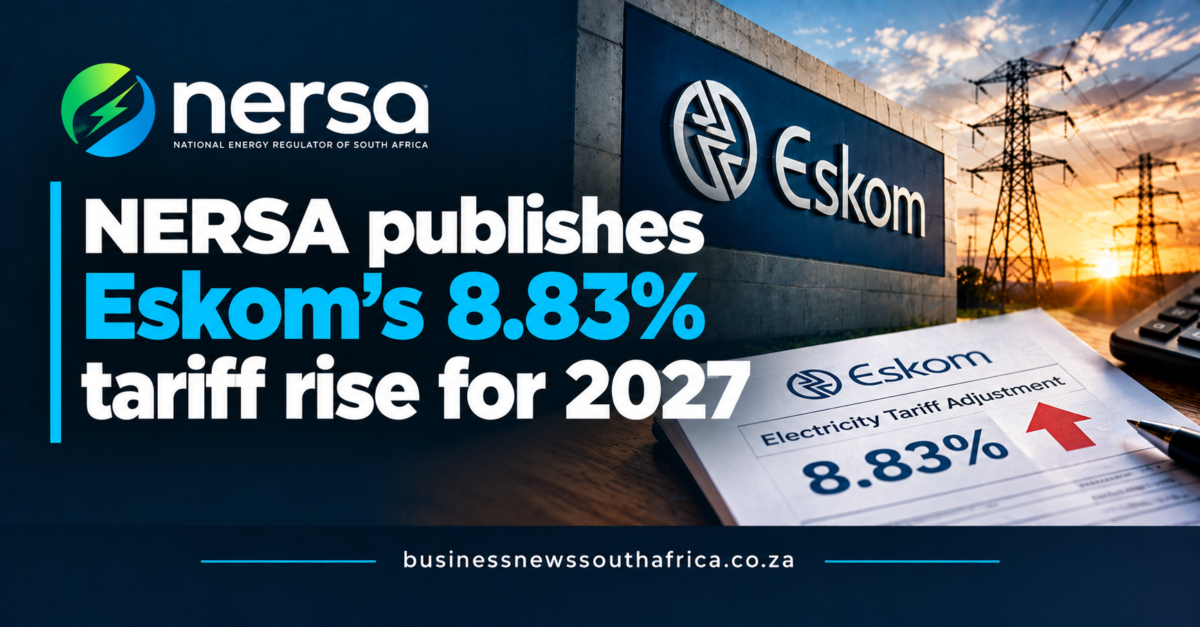
When the National Energy Regulator of South Africa (NERSA) released its gazette on the upcoming electricity tariff, the headline was stark: Eskom’s rates will rise by 8.83% in 2027. For a small-to-medium enterprise that already budgets tightly around power costs, that percentage translates into a noticeable hit to the bottom line.
TERS (tariff, the price per kilowatt-hour that utilities charge) is set by NERSA after it reviews Eskom’s cost-recovery model. The regulator’s role is to balance the utility’s need to fund maintenance and new capacity with the affordability of electricity for consumers and businesses. The 8.83% figure is the regulator’s official proposal; it is not yet law, and it will only become binding after the public comment period closes.
Businesses can submit observations, objections or supporting arguments during the consultation window, typically 30 days from the gazette date. NERSA publishes a “have your say” notice precisely to invite that feedback. According to the regulator’s standard process, once the comment period ends it will consider the submissions, possibly adjust the increase, and then issue a final decision.
Why the increase matters for SMEs
Electricity is a fixed cost for most South African firms, especially those in manufacturing, retail and hospitality where machines or climate control run around the clock. An 8.83% rise means that a business paying R1.50 per kilowatt-hour today could see that price climb to roughly R1.63 by 2027, assuming no other changes. For a medium-sized plant that consumes 500 000 kWh a year, the extra cost would be around R65 000 annually, a sum that can erode profit margins in a competitive market.
The timing is also significant. Eskom has been under pressure to stabilise supply after years of load-shedding, and the regulator’s approval of a higher tariff is partly intended to fund new generation and network upgrades. While the extra revenue may eventually improve reliability, the immediate effect is higher bills for every customer, from a corner shop in Durban to a mining contractor in the Witwatersrand.
For comparison, Eskom’s last major tariff adjustment, approved in 2023, was a 10% increase. That hike sparked a wave of price-adjustment clauses in commercial leases and prompted many SMEs to renegotiate supplier contracts. The current 8.83% rise is slightly lower, but it arrives at a time when inflation is still above the Reserve Bank’s target, meaning households and businesses alike are already feeling pressure on disposable income.
What can an SME do now? The first step is to model the impact on cash flow. Finance managers should update their budgeting spreadsheets with the projected per-kilowatt-hour price and assess whether any cost-saving measures, such as demand-side management, solar-plus-storage projects or renegotiated power-purchase agreements, become financially viable. Secondly, firms should consider submitting a comment to NERSA, highlighting any sector-specific hardships or suggesting alternative cost-recovery mechanisms.
Finally, keep an eye on the final decision. NERSA’s ultimate ruling will be published in the government gazette, and the approved tariff will be reflected in Eskom’s next billing cycle. Until then, the 8.83% figure remains a proposal, albeit one that carries weight given the regulator’s track record of endorsing Eskom’s cost forecasts.
How NERSA actually arrives at a tariff number like this one
An annual Eskom tariff increase is not set by negotiation or by political preference, it is calculated under NERSA’s Multi-Year Price Determination methodology, which works backward from Eskom’s allowed revenue, the amount regulators calculate the utility needs to cover operating costs, maintenance, debt servicing and a permitted return, and divides that figure by the electricity Eskom expects to sell. When sales volumes fall, as they have during years of load shedding and rising self-generation by large users, the same allowed revenue has to be recovered from fewer units sold, which pushes the per-unit tariff up even if Eskom’s own costs have not risen by the same percentage.
For a small business, that mechanism explains why tariff increases have consistently outpaced general inflation for over a decade: a shrinking sales base is doing as much work in the calculation as rising costs are. For related coverage of a municipality responding to the same underlying pressure by taxing self-generated power instead, see this site’s report on a new municipal solar usage levy.