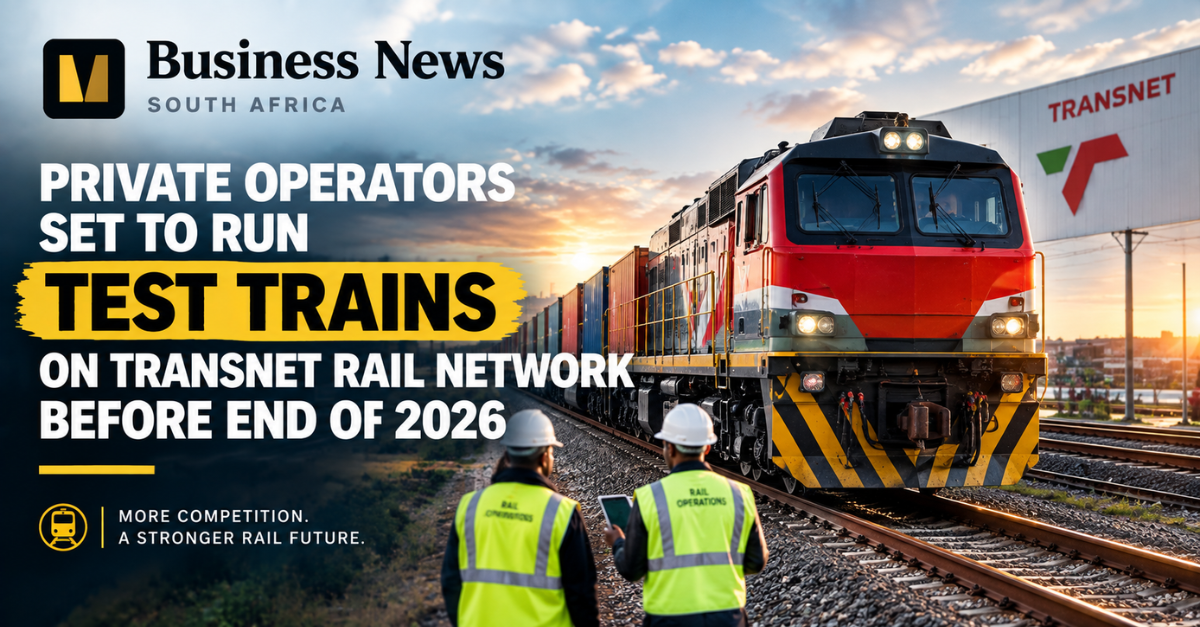
In the early hours of a quiet morning, a private locomotive chugged along a Transnet line, signalling the first public run of a train that does not belong to the state-owned freight giant. The sight was confirmed by Moshe Motlohi, chief executive of Transnet Rail Infrastructure Manager (Trim), who told Moneyweb that two private operators will run test trains before the calendar year ends.
Motlohi explained that after closing applications for interested firms at the end of February 2025, Trim selected 11 companies for rail slots, the specific time-windows and routes allocated for train movements, on a conditional basis. The two operators closest to approval are “almost done” with the safety checks required by the Rail Safety Regulator, meaning they will be the first to move wagons on the network.
Rail slots are awarded only after the regulator confirms that a company’s locomotives and wagons meet Transnet’s infrastructure standards and that safety permits are in place. The initial test runs will be short, with one or two trips a day, and will not fully utilise the awarded capacity. Motlohi expects a third operator to be added before February 2027.
Transnet’s rail system stretches 20 953 km and carries most of South Africa’s iron ore and coal exports. Over the past five years, cargo volumes have fallen by more than a third because of mismanagement, theft and vandalism. When the network falters, export shipments stall, affecting manufacturers, mining firms and the broader economy.
Phase 1 of the reform will allocate 2.1 megatonnes (Mt) of rail capacity to private parties on five of Transnet’s six corridors. The north corridor, the line from Ermelo to Richards Bay, is excluded for now because it lacks sufficient slot capacity and suffers from frequent cable theft. This corridor is the most problematic for coal exports, a key revenue stream for the country.
Funding the reform
Motlohi estimates that R70 billion will be needed over the next five years to bring the network up to a reliable standard. Trim plans to raise part of the money itself by charging access fees, payments from private operators for the right to run trains on the tracks. A second source could be government support through the Budget Facility for Infrastructure (BFI), a Treasury-run fund that co-finances projects with private capital. The third option is to raise debt in capital markets, a step Motlohi said would be pursued responsibly and within financial limits.
Transport Minister Barbara Creecy has set a volume target of 250 Mt for the rail network by 2030, up from the current 167.9 Mt. The last time volumes exceeded 200 Mt was in 2017. Motlohi believes that, if funding is secured, aggressive upgrades could help meet the minister’s goal.
For logistics companies and exporters, the opening of the network could mean more competition on freight rates and the possibility of shifting cargo from road to rail, reducing transport costs and road wear. Small and medium-sized enterprises that rely on bulk shipments may eventually benefit from more reliable schedules, but they will have to navigate the new access-fee structure and meet safety standards.
The road ahead is not without obstacles. Private firms must still pass rigorous safety assessments, and the north corridor remains off-limits for now. Funding remains a question mark, with Trim yet to confirm how much of the R70 billion will be raised through each channel. Stakeholders will be watching closely as the first test trains roll out, because the success or failure of this experiment could reshape South Africa’s freight landscape for years to come.
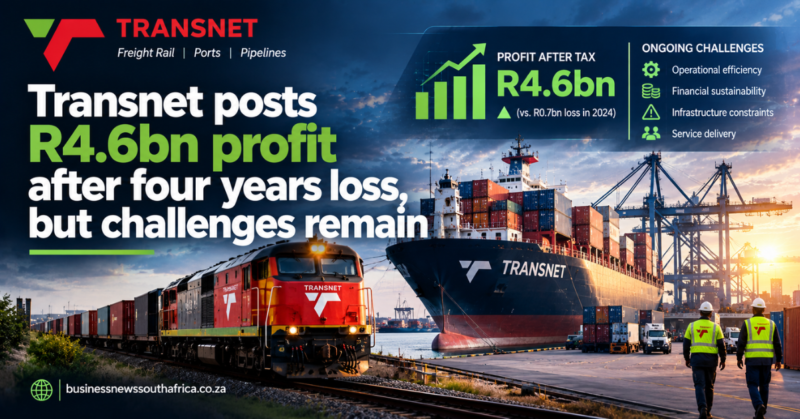
The R70 billion funding question sits inside a wider pattern at Transnet: the freight and rail utility posted a R4.6 billion profit last year after four straight years of losses, a turnaround that still leaves it short of the balance sheet strength needed to self-fund a rail network this size without private capital or Treasury support.