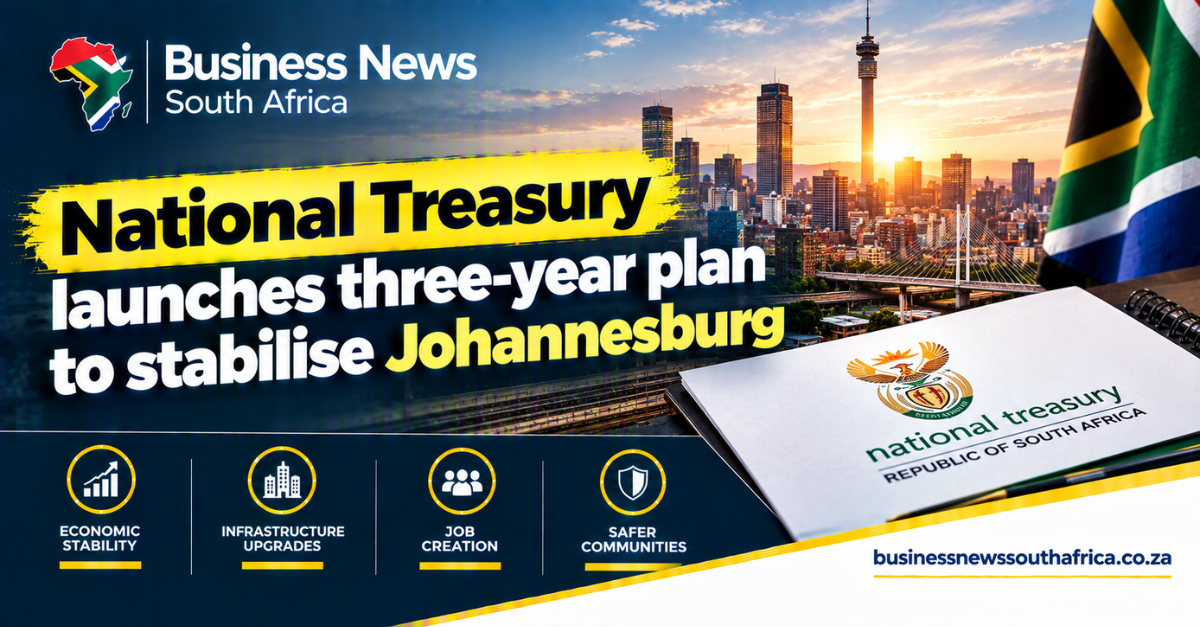
Finance Minister Enoch Godongwana announced at a Development Bank of Southern Africa (DBSA) results event that the National Treasury will lead a three-year intervention to stabilise the Johannesburg municipality.
The city, which generates roughly 15% of South Africa’s economic output, has been unable to pay its bills or deliver reliable basic services because of years of political instability and financial mismanagement. That situation directly affects small retailers, contractors and other local enterprises that depend on water, electricity and road maintenance to stay open.
Godongwana said the Treasury’s support will continue through the 4 November municipal elections and will remain in place even if a new administration takes over after the vote. The plan will be coordinated with the DBSA and other relevant institutions, although the exact mechanisms have not yet been disclosed.
The DBSA, a state-owned development finance institution, reported a 47% rise in profit to R7.8 billion for the year to March, underscoring the government’s broader focus on using development finance to address municipal distress.
What the plan means for local businesses
For SMEs operating in Johannesburg, the Treasury’s involvement could improve the reliability of water and electricity supplies, reduce the frequency of service interruptions and create a more predictable environment for paying municipal rates. However, the city’s municipal credit risk, the risk that it will default on its debts, remains high, meaning that any improvement may be gradual.
Business owners should watch for announcements on specific projects, such as road repairs or upgrades to water infrastructure, as these will signal where the Treasury’s funds are being directed. They should also stay alert to possible changes in tax collection practices, which could affect cash flow in the short term.
Johannesburg’s governance and finances have been under sustained strain for several years, marked by frequent changes in mayoral leadership, ageing water and electricity infrastructure, and a rising debt burden owed to Eskom and Rand Water for bulk services. National Treasury interventions in distressed municipalities typically come with conditions attached to any support, drawing on powers set out in the Municipal Finance Management Act, and previous interventions elsewhere in the country have focused on ring-fencing revenue collection and restructuring debt repayment schedules rather than simply transferring cash.
For businesses operating in the city, the practical stakes are significant: unreliable water and electricity supply, and potholed roads left unrepaired for want of budget, raise the cost of doing business and have been cited by several companies as a factor in relocation decisions. A credible multi-year stabilisation plan, if properly implemented, would be watched closely by ratings agencies and investors as a signal of whether South Africa’s largest metro can arrest a decline that has already dented its own credit rating. The National Treasury’s own municipal finance disclosures carry further detail once the plan is formally published. For related coverage, see this site’s Regulatory and Policy coverage.
Previous national interventions in distressed South African municipalities have generally taken years rather than months to show results, since fixing revenue collection systems, renegotiating bulk supply debt and rebuilding technical capacity inside a metro’s own administration cannot happen on the same timeline as a single budget cycle. Analysts covering local government finance have also cautioned that political instability, if council coalitions keep shifting before a plan can be fully implemented, remains one of the biggest risks to any multi-year turnaround effort in Johannesburg specifically.
Ratings agencies reviewing South Africa’s own sovereign credit profile have previously flagged metro-level dysfunction as a downside risk, since national government has in the past had to step in when a major city’s failures threatened service delivery on a scale that could not be ignored politically.