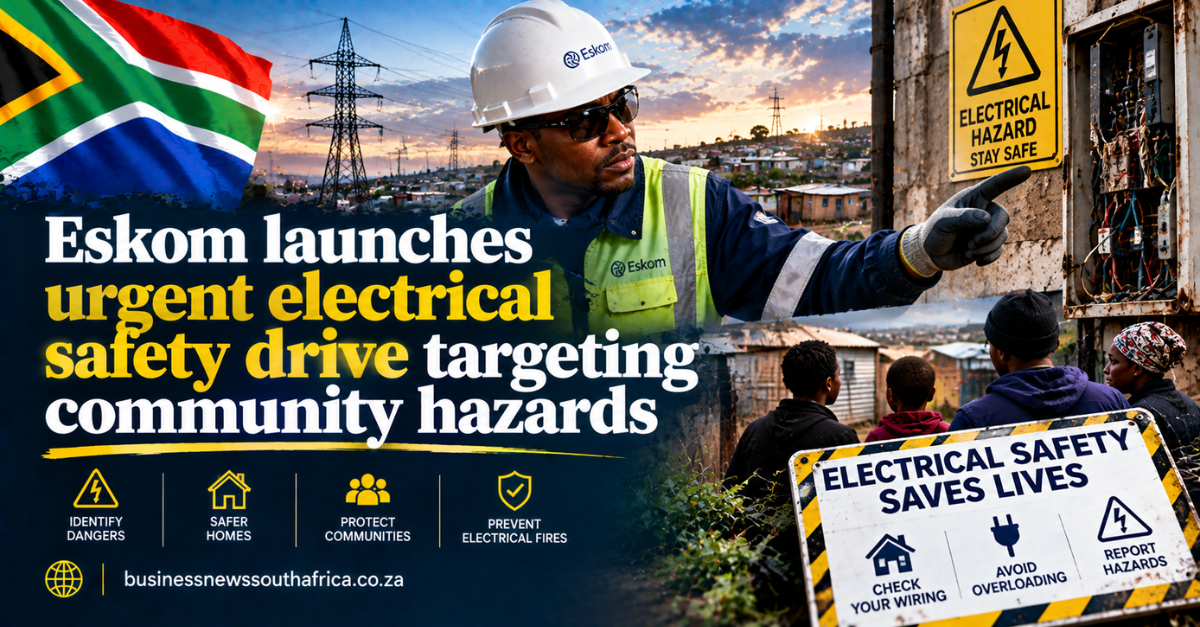
In a brightly coloured flyer that landed on kitchen tables across Gauteng, Eskom warned that a single stray spark could set off a fire, cause a power outage or even endanger lives. The message, titled “One Spark Can Change Everything”, is part of a new electrical safety campaign aimed at households and small businesses that rely on the national grid.
The utility describes the campaign as a series of community workshops, printed guides and radio spots that explain how to spot faulty wiring, keep electrical equipment away from water and report illegal connections. A “spark” in this context means any unintended electrical discharge, for example, a loose wire touching a metal pipe, that can ignite a fire or trigger a short circuit.
For owners of small enterprises, the stakes are clear. A fire caused by faulty wiring can destroy inventory, halt production and lead to costly insurance claims. Even a brief outage can mean lost sales, especially for retailers that depend on point-of-sale systems. Eskom’s own statement notes that the utility has seen a rise in fire incidents linked to illegal connections and overloaded circuits in informal settlements.
While Eskom is the only source for the campaign’s launch, the broader context is familiar to anyone who has dealt with South Africa’s power challenges. Load-shedding, the scheduled rolling blackouts that the utility imposes when supply falls short of demand, has pushed many businesses to install backup generators. Those generators, if not properly wired, add another layer of risk. The campaign therefore includes a checklist for safe generator installation, reminding users to use correctly rated cables and to keep fuel stores away from heat sources.
Community leaders in townships such as Soweto and Khayelitsha have been invited to host “electrical safety days”. During these events, Eskom engineers will demonstrate how to test a plug for continuity, a simple test that shows whether a wire is broken or intact, and how to use a residual-current device (RCD), a safety switch that cuts power when it detects a leak of current to the ground.
According to the advert, the utility expects the campaign to reach at least 500 000 households over the next six months. It also asks residents to report suspicious wiring to the Eskom call centre, which operates 24 hours a day. The call centre can dispatch a field team to inspect and, if necessary, disconnect illegal connections that pose a fire hazard.
For SMEs, the message carries a practical call to action: audit your premises, replace ageing cords, and ensure that any electrical work is carried out by a qualified electrician. The cost of a professional inspection is modest compared to the potential loss from a fire or prolonged outage.
Critics have pointed out that Eskom’s own infrastructure suffers from ageing assets and delayed maintenance, which also contribute to electrical faults. However, the utility’s campaign does not claim to fix the grid; it focuses on reducing preventable incidents that originate on the consumer side.
In the meantime, the advert urges anyone who sees a spark, a flickering light or a burning smell to act immediately, either by switching off the power at the main board or by calling the emergency line. The underlying premise is simple: a small, preventable mistake can have far-reaching consequences for a neighbourhood’s safety and for the utility’s ability to keep the lights on.
Electrical safety campaigns aimed at communities typically focus on illegal connections, exposed cabling in informal settlements, and unsafe household wiring practices, all of which become more dangerous during periods of load shedding as households increasingly turn to alternative power sources, generators, gas heaters and improvised wiring setups, that carry their own fire and electrocution risks if not properly installed. Eskom has previously linked a meaningful share of electrical fatalities and fires nationally to illegal connections specifically, which both endanger the people making them and create broader network instability that can affect legitimate, paying customers on the same local grid. Eskom’s own electrical safety guidance outlines the specific risks this kind of community campaign targets. For related coverage, see this site’s Energy and Infrastructure coverage.