Imagine two neighbours: one walks into an MTN shop, chats with a sales rep and leaves with a contract signed on paper; the other opens an app on a phone, taps a few buttons and is online within minutes. That split is no accident. Ernst Fonternel, MTN’s Chief Consumer Officer, says the telecom market can no longer be divided only by age or income, it is now split by how people want to interact with their provider.
Traditional telecoms built a single, powerful brand, invested heavily in the radio-access network and tried to serve everyone from the same storefront. The downside is that a one-size-fits-all experience struggles to please customers who either crave face-to-face service or demand a fully digital journey. Fonternel calls this a “two-engine” model: one engine for brick-and-mortar shoppers, another for digital-first users.
Why a separate digital brand?
Launching a new product across an existing customer base can be slow, costly and risky. Legacy systems are built around human interaction, call centres, physical stores and paper contracts, and retrofitting them for a self-service model often means compromising on speed or quality. A parallel digital business can experiment with new pricing, bundles and support channels without forcing the whole organisation to change.
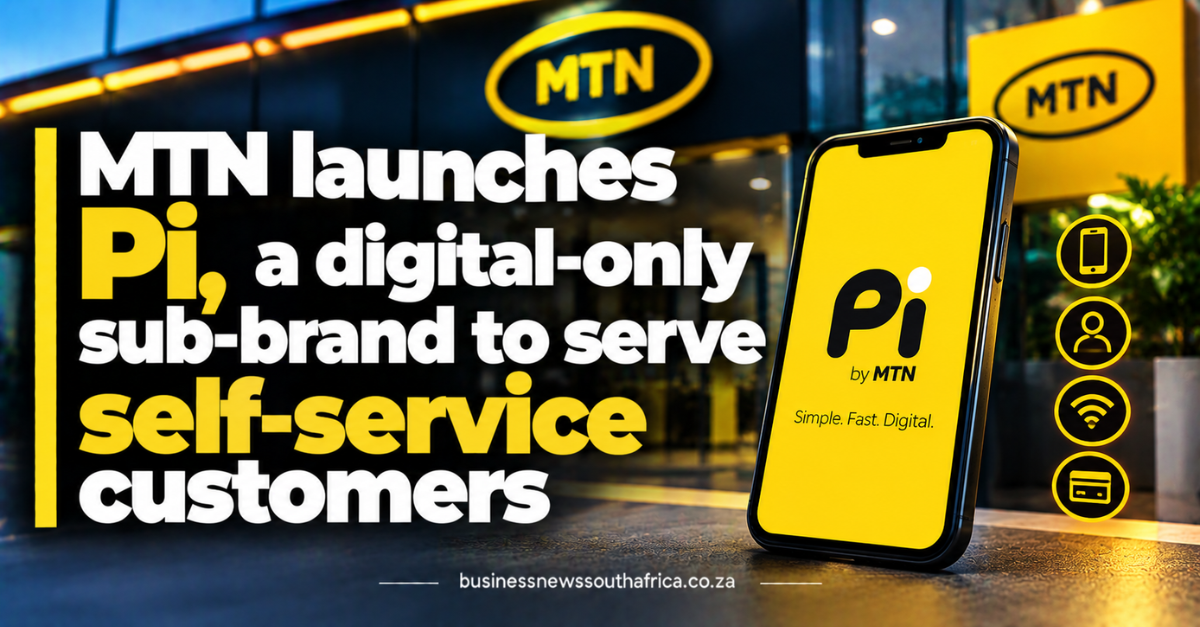
MTN’s answer is Pi, billed as South Africa’s first digital network operator (DNO). Unlike a mobile virtual network operator (MVNO), which rents capacity from another carrier, Pi runs on MTN’s own network infrastructure. That gives it the flexibility of a start-up while retaining the reliability of a major operator.
According to MTN, Pi is built as a platform where customers can discover, buy, pay for and manage mobile or home connectivity entirely online. The company says the platform will later support more tailored voice-data combos, dynamic billing and other services that would be harder to roll out through the legacy MTN brand.
These claims are company statements and have not been independently verified by a regulator or third-party analyst.
For small and medium-size enterprises, the shift matters. A digital-only brand can reduce the time spent on contract negotiations, lower acquisition costs and provide real-time usage data that helps businesses plan their connectivity spend. An SME that needs a few extra gigabytes for a short-term project can upgrade instantly through an app, rather than waiting for a store visit or a call-centre appointment.
The broader South African telecom market is feeling pressure from rising data consumption, load-shedding-related battery usage and a growing appetite for on-the-go services. The Communications Authority (ICASA) continues to liberalise spectrum allocation, encouraging operators to innovate. While MTN is not the only player experimenting with digital sub-brands, other carriers have launched app-only offers, Pi is the first to position itself as a full-stack DNO.
Behavioural segmentation, grouping customers by how they want to engage rather than by demographic traits, is becoming a core strategic tool. AI and analytics can turn the data generated by a digital platform into personalised offers, such as automatically suggesting a data boost before a known weekend spike. Fonternel notes that this moves segmentation from broad groups toward individual-level predictions.
The two-engine approach does not mean the traditional MTN brand will disappear. Instead, it allows the legacy business to keep serving customers who value human interaction, while Pi can chase the fast-moving, digitally comfortable segment. For entrepreneurs, the lesson is clear: the future of connectivity may lie in platforms that let you control every aspect of the service without stepping into a shop.
As the digital engine gains traction, MTN will need to ensure the two brands do not cannibalise each other and that data privacy standards keep pace with the richer behavioural insights. The company’s next steps, whether to expand Pi’s product range or to integrate AI-driven recommendations, will shape how South African businesses access and pay for connectivity in the years ahead.
Read the full MTN statement here.