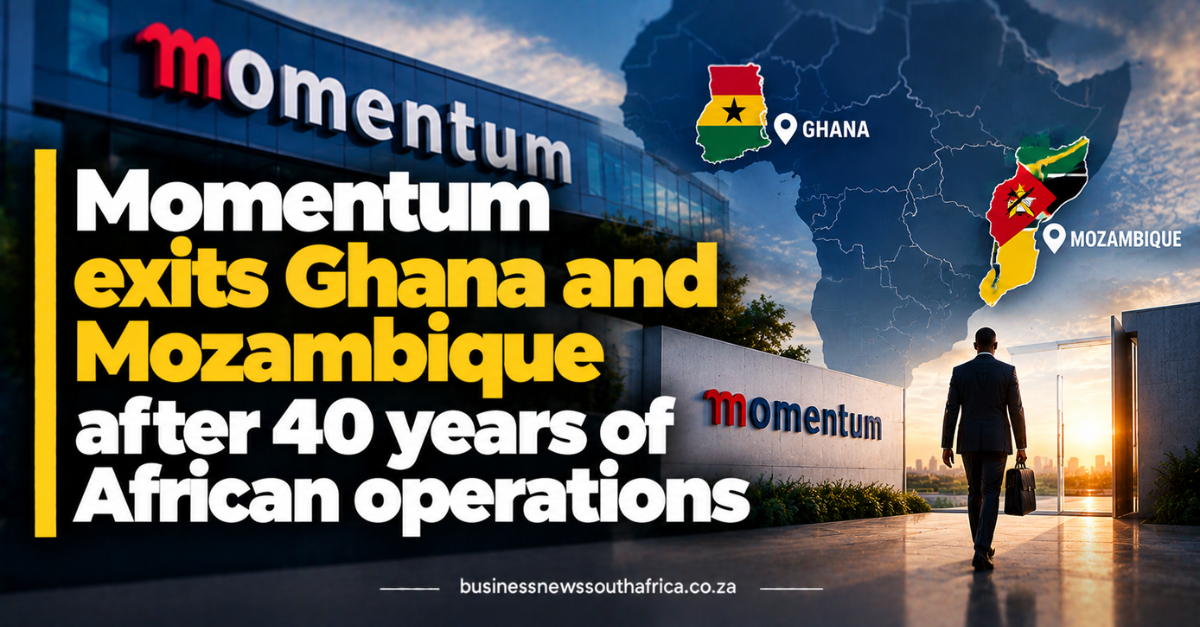
When the lights went out in the Accra office of Metropolitan Life Insurance Ghana, the empty desks marked the end of a 19-year chapter for one of South Africa’s biggest insurers. Momentum Group, the parent of the Metropolitan brand, confirmed that the sale of its Ghana operations, Metropolitan Life Insurance Ghana, Metropolitan Pensions Trust Ghana and an 85% stake in Metropolitan Health Insurance Ghana, was finalised on 9 September 2025. The buyer, emPLE Insurance Ghana, now inherits a portfolio that once covered life, health and pension products across the country.
For local insurers and small-to-medium enterprises (SMEs) that relied on Metropolitan’s underwriting capacity, the change could mean a reshuffle of pricing, product availability and service levels. Momentum’s exit removes a major South African player from the market, potentially opening space for home-grown firms to expand their footprint. At the same time, the transition may create short-term disruption for policyholders who will need to adjust to a new administrator.
Momentum’s retreat from Ghana was part of a broader pull-back from Africa. The group also announced the completion of its Mozambique exit on 31 August 2026, after classifying Momentum Mozambique Limitada as a disposal group held for sale under IFRS 5, the accounting standard that governs assets held for sale. The Mozambique business, which had evolved from a health-care management solution in 2005 to a premium health-insurance provider, was sold at a fair value that exceeded its carrying amount, meaning no impairment loss was recorded.
Financial backdrop
Momentum’s African pull-back coincided with a stronger overall performance for the group in the year to 30 June 2026. Normalised headline earnings, a measure of profit that strips out one-off items to give a clearer view of recurring performance, rose 13% to R7.06 billion, while normalised headline earnings per share increased 18% to 530 cents. Basic earnings per share, the profit attributable to each share before normalisation, grew 16% to 516.2 cents. The improved results allowed the board to lift the ordinary dividend to 230 cents per share, a 31% increase on the previous year, and to signal a willingness to consider share buy-backs or special dividends.
Momentum did recognise a R1 million profit on the Ghana disposal, but the transaction also triggered a R187 million loss in the income statement due to a foreign-currency translation reserve, the accounting impact of converting the sale proceeds from Ghanaian cedi to rand.
For SME owners, the dividend boost and potential share-buy-back signal that Momentum is consolidating capital to fund growth in its core South African markets. The group’s focus on “stronger opportunities” suggests it will double-down on domestic life and health insurance, a sector where many small businesses depend on affordable group policies for their staff.
Momentum’s African exits are not an isolated phenomenon. Over the past few years, several South African insurers have re-evaluated their cross-border strategies, weighing the cost of regulatory compliance and currency volatility against the upside of market share. While the source does not name other firms, the broader trend reflects a cautious approach to expansion in markets where economic headwinds and foreign-exchange risk can erode returns.
For local insurers in Ghana and Mozambique, the departure of a well-capitalised foreign competitor could be a mixed blessing. On one hand, they may capture customers looking for continuity of service; on the other, they must be prepared to meet the underwriting standards and product breadth that Metropolitan once offered. SMEs that rely on group health or pension schemes should engage with their new provider early to avoid lapses in coverage.
Momentum’s restructuring also underscores the importance of clear communication during divestments. The group’s statements, that the fair value less costs to sell exceeds the carrying amount and that no impairment loss was recognised, are technical assurances that the exits will not dent the balance sheet. However, the human side, job losses, transition of policyholders, and the reshaping of the insurance landscape, will play out over months.
Readers interested in the regulatory implications can follow the BusinessTech report for the full announcement, and explore more stories in the Retail & Consumer section.