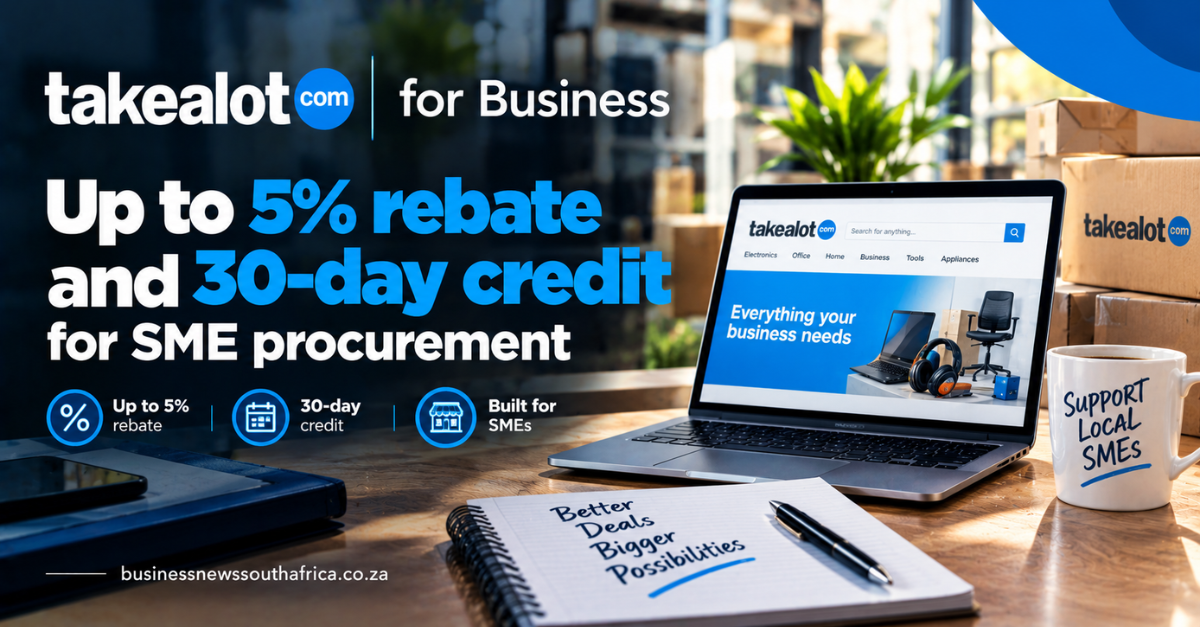
Finance teams at small and medium enterprises often end the month juggling dozens of invoices, missing VAT numbers and surprise fees. Takealot for Business promises to end that chaos by turning procurement into a single, monthly process.
Why traditional procurement can become a bottleneck for SMEs
In a typical South African SME, purchasing is spread across multiple suppliers, each with its own payment terms, invoicing format and delivery schedule. The finance department must reconcile every purchase order, match it to a delivery receipt, verify the VAT registration number of the supplier and then file the invoice for payment. When a business works with ten or twenty different vendors, the amount of paperwork can quickly exceed the capacity of a small accounting team. Errors such as missing VAT numbers often trigger penalties from the South African Revenue Service, while delayed payments can strain relationships with key suppliers.
The regulatory backdrop of VAT and invoicing
South Africa’s value-added tax system requires that every tax invoice contain specific details, including the supplier’s VAT registration number, the buyer’s reference, a description of the goods or services and the amount of tax charged. Failure to capture these details correctly can lead to a rejected input tax claim, which reduces the amount of tax a business can recover in its monthly return. For SMEs that file VAT returns on a bi-monthly basis, a single missing number can mean a loss of cash that would otherwise be reclaimed from the tax authority.
Cash-flow management and the appeal of credit terms
Cash-flow timing is a critical concern for businesses that operate on thin margins. Many suppliers demand payment on delivery or within a short net-30 window, which forces the buyer to allocate cash that might be needed for payroll, inventory replenishment or other operational expenses. Access to a 30-day credit facility allows a company to hold onto cash longer, align outgoing payments with incoming revenue and reduce the need for short-term borrowing. In an environment where interest rates can be high, a cost-free credit line is especially valuable.
The service works like a traditional online shop but adds two features aimed at cash-flow management. First, a 30-day credit (pay the invoice thirty days after it is issued) replaces the need to pay upfront. Second, every order generates a single tax invoice that automatically includes the company’s internal reference number, turning a pile of paperwork into one reconciled line item.
Consolidated invoicing as a tool for efficiency
When all purchases are aggregated onto one monthly statement, the finance team can process a single invoice rather than dozens. This reduces the time spent on data entry, lowers the risk of duplicate payments and simplifies the audit trail. A consolidated invoice also makes it easier to apply internal cost-centres, allocate spend to projects and generate management reports that show exactly where money is being used.
Businesses can choose a prepaid model, where they request a cost estimate, pay via EFT and receive a site-credit voucher, or the 30-day credit model, which consolidates all sellers into one monthly invoice. Both models carry the same promise: no hidden fees, no interest and no surprise charges.
Understanding the rebate structure and its financial impact
Spend as little as R5 000 per month and the platform starts paying a rebate of up to 4 % of total spend, credited as Takealot credit. The headline claim is up to 5 % back, meaning high-volume users could see cash-back in the range of R7 500 on a R250 000 monthly spend. That translates to R90 000 a year, turning a procurement cost centre into a modest revenue source. For an SME that typically operates on a profit margin of ten percent, an additional R90 000 can fund a new hire, support a marketing campaign or be reinvested in inventory.
The added value of TakealotMORE Premium
New customers also receive six months of free TakealotMORE Premium when they spend R5 000 in their first month. The subscription provides unlimited free delivery, exclusive deals and additional savings, a further incentive for companies to shift their buying onto the platform. Unlimited free delivery removes a variable logistics cost that can add up quickly, especially for businesses that order bulky items such as office furniture or IT equipment.
Eligibility criteria that keep the service within reach
Eligibility is straightforward: a valid South African business registration number and a good standing with Takealot. There are no setup fees, no hidden costs and no credit checks, making the offer accessible to startups in Cape Town as well as national enterprises with multiple branches. By removing the need for a formal credit assessment, the platform lowers the barrier for businesses that may not have an extensive credit history but still require reliable procurement support.
Strategic implications for SMEs looking to modernise
For SMEs, the real impact is threefold: reduced administrative burden, improved cash-flow flexibility and a measurable rebate on everyday spend. Retail & consumer firms looking to streamline procurement now have a single vendor that aligns with their workflow rather than forcing them to adapt. The ability to manage spend through a digital dashboard also supports better decision-making, as managers can see real-time data on purchasing trends, category performance and rebate accumulation.
Broader trends in digital procurement for South African businesses
Across the country, more companies are adopting cloud-based procurement solutions that promise transparency, automation and integration with existing accounting software. The shift is driven by the need to reduce manual errors, comply with tax regulations and gain competitive advantage through cost savings. Platforms that combine e-commerce convenience with financial services are emerging as a hybrid model that addresses both the buying and the paying aspects of procurement.
How the model aligns with South African tax compliance
Because each monthly invoice includes the buyer’s internal reference number and complies with the statutory requirements for a tax invoice, businesses can file their VAT returns with confidence. The single invoice also contains a breakdown of the VAT component for each purchase, which simplifies the calculation of input tax. This alignment reduces the likelihood of a query from the tax authority and helps maintain a clean compliance record.
Potential challenges and considerations for adoption
While the consolidated approach offers many benefits, businesses should assess the impact on their internal controls. Centralising all spend onto one platform means that any error in the monthly statement could affect multiple cost centres at once. Companies are advised to implement a review process that verifies the aggregated totals against departmental budgets before authorising payment. Organisations that rely on supplier-specific contracts should confirm that the terms offered through the platform meet their negotiated conditions.
Conclusion: a pragmatic step towards financial efficiency
The combination of a 30-day credit line, automated tax invoicing and a tiered rebate structure creates a compelling proposition for South African SMEs that want to reduce paperwork, protect cash flow and capture tangible savings. By eliminating hidden fees, interest charges and credit checks, the service lowers the entry threshold for businesses of all sizes. The added six-month premium subscription further enhances the value proposition by removing delivery costs and unlocking exclusive deals. For owners who are looking to modernise their procurement process without compromising compliance, the platform offers a practical and measurable path forward.