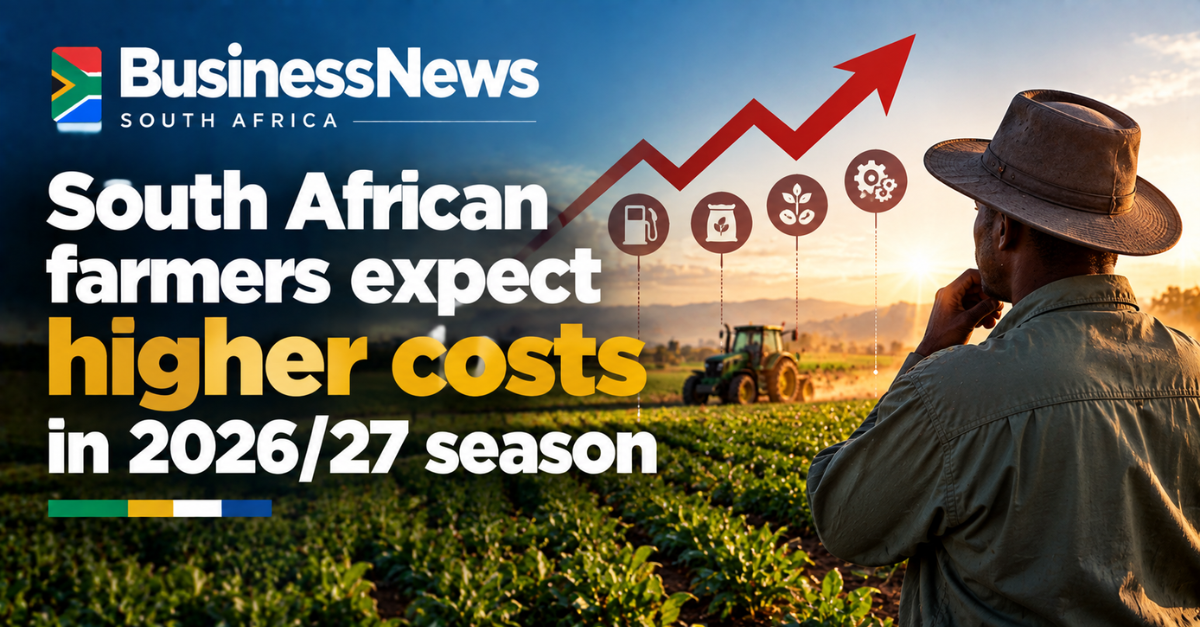
Wandile Sihlobo wrote in his Substack post that South African farmers are bracing for a costly 2026/27 season, signalling that the upcoming year will be tougher on farm budgets.
The term “costly season” typically refers to higher expenses for items such as fertiliser, diesel, electricity and labour. Fertiliser prices have been volatile worldwide, while diesel has risen in line with global oil markets. Electricity tariffs have increased as the national utility adjusts rates to cover the cost of maintaining the grid amid ongoing load shedding, and many farms rely on diesel generators to keep operations running.
In addition to energy and input costs, climate variability adds another layer of expense. Drought-prone regions may need to invest in irrigation, while water restrictions can limit planting windows, forcing farmers to adopt more expensive water-saving technologies.
These cost pressures squeeze profit margins, which could lead to higher food prices for consumers and reduced competitiveness for exporters. The sector contributes roughly 2.5% of South Africa’s gross domestic product and employs a significant share of the rural workforce, so any erosion of profitability reverberates through the broader economy.
Farmers and agribusiness owners may need to revisit budgeting plans, explore alternative energy sources such as solar, and consider water-efficiency measures. Tools like the commercial funding suite can help identify financing options for such investments.
For a deeper look at the agricultural sector’s role in the national economy, see the latest data from Statistics South Africa. Ongoing policy updates from the Department of Agriculture and electricity pricing information from the National Energy Regulator of South Africa provide further context.
Read more about related trends in the Agri-Business section.
Where these cost pressures tend to hit hardest
Wandile Sihlobo is the chief economist of the Agricultural Business Chamber of South Africa (Agbiz) and one of the country’s most closely followed agricultural commentators, which is part of why his season-ahead warnings carry weight beyond a single newsletter post. Historically, input cost spikes hit smaller commercial farmers harder than large-scale operations, since bigger farms can negotiate bulk pricing on fertiliser and diesel and have more capital buffer to absorb a bad season without needing emergency financing. Government support schemes such as the Land Bank’s production loans and provincial drought-relief programmes exist specifically for years like the one Sihlobo is describing, though uptake has historically lagged need due to application complexity, a gap several provincial agriculture departments have said they are working to close.
Sihlobo has previously flagged that South Africa’s summer grain producers, in particular maize and soybean farmers in the Free State and North West, tend to feel input cost increases first, since their planting decisions for the new season are made months before harvest revenue arrives, leaving a longer window of exposure to rising fertiliser and fuel prices than farmers with shorter production cycles.
Agricultural cooperatives and input suppliers have in past high-cost seasons offered extended payment terms to farmers facing cash-flow strain at planting time, an option worth exploring for smaller operations before turning to higher-interest short-term credit.
Solar-powered irrigation and borehole pumping have become increasingly common investments among commercial farms seeking to reduce both diesel dependence and exposure to load-shedding disruptions during the critical planting and growing windows.
Whatever the final shape of the season’s costs, farmers who budget conservatively now will be better placed to absorb any further surprises than those who wait for firmer numbers before adjusting their plans.
Agricultural economists generally advise farmers to lock in fertiliser and fuel prices as early in the season as possible when a costly year is being forecast, since input prices for these commodities tend to climb further as planting season approaches and demand peaks across the sector simultaneously.