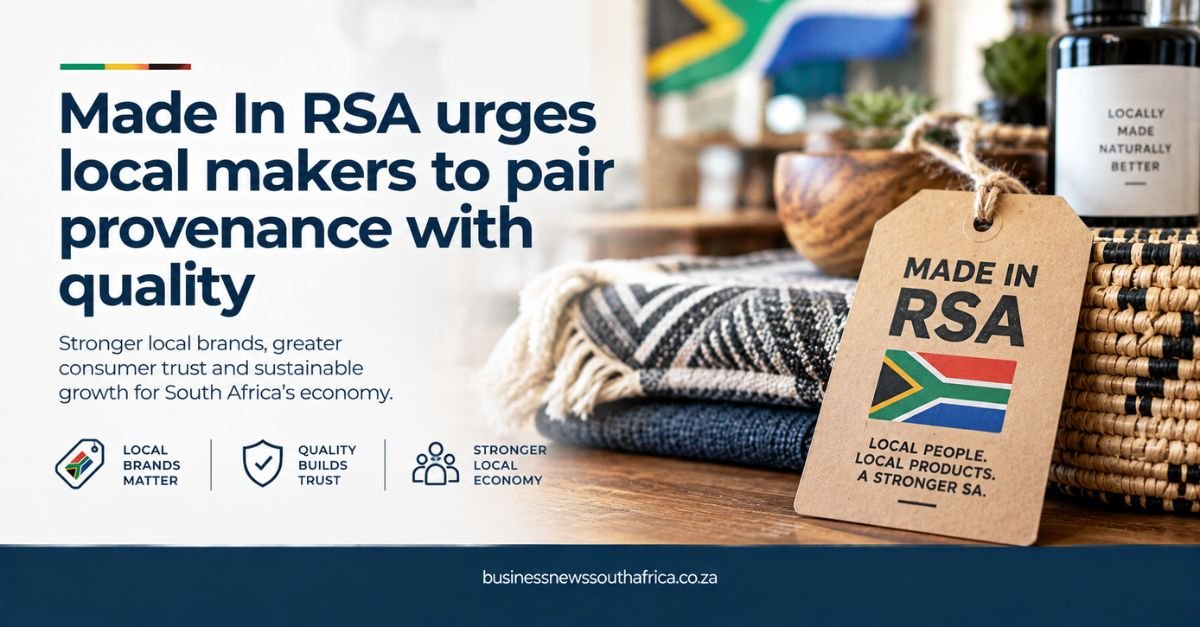
During Heritage Month, Nick Dreyer, founder of Made In RSA, warned that South African retailers and manufacturers cannot rely on patriotic sentiment alone to move sales. He argues that the label “Made in South Africa” will only add value if the product already meets consumer expectations for design, quality and price.
Dreyer, who previously built the Veldskoen shoe brand, says the market has shifted. “Consumers are sophisticated and have enormous choices. They are not going to buy something simply because you tell them it was made down the road,” he told Bizcommunity. This observation is a claim from the company and has not been independently verified.
The practical implication for small and medium enterprises (SMEs) in the apparel and broader consumer goods sectors is clear: invest in product development before marketing provenance. Dreyer explains that Made In RSA aims to become a mark of desirability, a seal that signals a product is well designed, well made and relevant, with the South African origin acting as a bonus rather than the primary selling point.
He points to several challenges that local manufacturers face. Global supply chains can produce millions of units at lower cost, while many South African makers struggle with fabric sourcing, machinery, skilled labour and working capital. “Price is unquestionably one of the biggest challenges,” Dreyer says. However, he cautions against trying to become the cheapest producer worldwide. “The answer isn’t for South African manufacturers to become the cheapest manufacturers in the world. We probably won’t win that race,” he adds.
Instead, Dreyer proposes a focus on differentiated products and strong branding. By scaling successful local brands, the manufacturing ecosystem can benefit from larger volumes, which in turn improve capability and competitiveness. This creates a potential virtuous cycle: higher consumer demand drives larger production runs, which lower per-unit costs and raise quality standards.
Made In RSA also seeks to lower the cost of market entry for smaller makers. The platform offers shared visibility, e-commerce infrastructure and collective marketing, allowing individual brands to reach customers they might not find on their own. “If we can bring exceptional South African brands and products together under one destination, suddenly the customer has a reason to engage that is bigger than any individual product,” Dreyer says.
For entrepreneurs weighing whether to join the platform, the message is pragmatic. The company is prepared to accept lower margins in the short term to build demand and support local manufacturing. Yet the ultimate test remains competition with imported alternatives. “The fit, fabric, design, packaging, photography, website and service all need to compete with the best brands a consumer experiences anywhere in the world,” Dreyer notes.
SME owners can use this insight to reassess their go-to-market strategy. Rather than positioning a product solely on its South African origin, they should ask whether the item would still sell if the label were removed. If the answer is yes, the provenance can then be layered on as an additional selling point.
For readers looking for practical help, the commercial funding suite offers templates to secure working capital, a common hurdle mentioned by Dreyer. More stories on local manufacturing trends can be found in the SME & Entrepreneurship section.
Heritage Month as a catalyst for local pride
Heritage Month, observed each September, provides a national platform for celebrating the diverse cultures, histories and contributions that shape South Africa. The timing of Dreyer’s comments aligns with a broader public conversation about how cultural celebration can translate into economic opportunity. While the month encourages citizens to reflect on shared identity, it also prompts businesses to consider how that identity can be expressed through products and services. The challenge, as Dreyer points out, is moving beyond symbolic gestures to tangible value creation.
Understanding the “Made in South Africa” label
The “Made in South Africa” label is governed by standards that require a certain proportion of a product’s value to be added within the country. These standards are intended to protect consumers from misleading claims and to ensure that the label carries credibility. For manufacturers, compliance means documenting sourcing, production steps and final assembly. The label can therefore serve as a trust signal, but only when the underlying product meets expectations. Dreyer’s argument reflects the reality that the label alone cannot compensate for shortcomings in design, durability or price competitiveness.
Why product development matters more than patriotism
Product development encompasses everything from concept ideation to prototype testing, material selection, manufacturing processes and final quality assurance. In a market where imported alternatives are often perceived as offering superior design or lower price, South African SMEs must invest in these stages to create offerings that stand on their own merit. When a product satisfies the core criteria of functionality, aesthetic appeal and affordability, the “Made in South Africa” badge becomes an enhancer rather than a crutch.
For many SMEs, the path to robust product development is hindered by limited access to advanced machinery, skilled designers and reliable suppliers. Collaborative initiatives, such as shared design studios or joint procurement groups, can mitigate these constraints. By pooling resources, smaller firms can achieve economies of scale that would otherwise be out of reach, allowing them to meet the quality thresholds demanded by discerning consumers.
The role of collective platforms in scaling visibility
Platforms like Made In RSA function as digital marketplaces that aggregate a variety of local brands under a single online roof. This aggregation creates network effects: as more brands join, the platform attracts a larger audience, which in turn benefits each individual brand through increased traffic and sales potential. The shared e-commerce infrastructure reduces the need for each SME to build its own website, manage payment gateways or handle logistics independently. Moreover, collective marketing campaigns can amplify the reach of each participant, delivering a level of exposure that would be costly for a single company to achieve.
Beyond visibility, such platforms can provide data insights that help brands refine their product offerings. By analyzing shopper behavior, conversion rates and feedback, manufacturers can identify which attributes resonate most with consumers. This feedback loop supports continuous improvement, aligning product development with market demand and reinforcing the value of the “Made in South Africa” designation.
Strategic steps for SME owners
1. Conduct a product audit , evaluate whether the item would still sell without the provenance claim. Identify gaps in design, quality or price and prioritize improvements.
2. Map the supply chain , understand where each component originates and explore local alternatives that could enhance the “Made in South Africa” claim while maintaining cost efficiency.
3. Leverage collective resources , consider joining platforms that offer shared marketing, logistics and technology services. This can lower entry barriers and accelerate market penetration.
4. Invest in brand storytelling , consumers increasingly seek authentic narratives. Highlight the craftsmanship, cultural relevance and sustainability aspects of the product to create emotional connections.
5. Monitor competitive benchmarks , regularly compare product attributes against both local and imported competitors to ensure that the offering remains relevant and compelling.
6. Secure financing for growth , use tools such as the commercial funding suite to obtain working capital for inventory, equipment upgrades or marketing initiatives.
By following these steps, SMEs can transform the “Made in South Africa” label from a mere statement of origin into a strategic asset that signals quality, relevance and cultural resonance.
Why the conversation matters for South African business owners
The broader economic context underscores the importance of Dreyer’s message. The manufacturing sector remains a cornerstone of employment and export potential, yet it faces intense pressure from global competitors. For business owners, the ability to differentiate through design, quality and price while leveraging a credible local origin label can be a decisive factor in sustaining growth. Moreover, aligning product strategy with national initiatives such as Heritage Month can enhance brand goodwill and open doors to government-supported programs that encourage local production.
In summary, the shift from patriotic marketing to value-driven branding reflects a maturation of the South African consumer market. Entrepreneurs who internalize this shift and invest in the fundamentals of product excellence are better positioned to capture both domestic loyalty and international interest. The “Made in South Africa” badge, when paired with a product that truly meets consumer expectations, can become a powerful differentiator that supports the long-term resilience of the country’s manufacturing ecosystem.