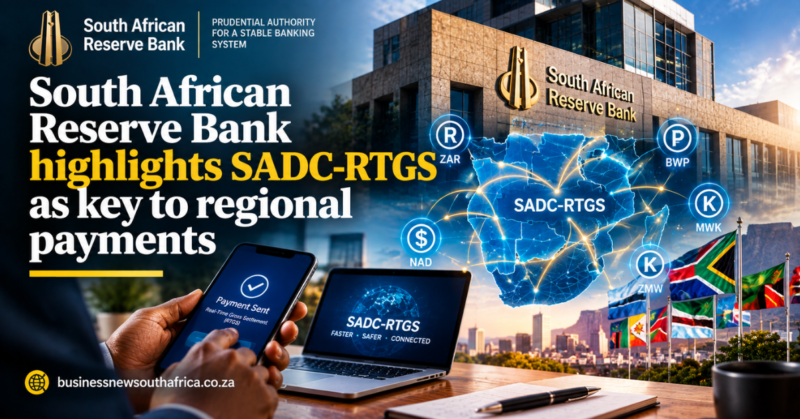
When a small retailer in Johannesburg checks the cash register at the end of the day, the speed at which the bank clears a card payment can feel like a hidden cost. A recent statement from the South African Reserve Bank (SARB) puts that hidden cost under the spotlight by announcing a major overhaul of the country’s payment system.
The SARB, South Africa’s central bank, said it will introduce a series of changes to the infrastructure that moves money between banks, known as the payment system. In banking jargon, a payment system is the network that settles transactions, from a consumer buying groceries with a card to a company receiving an overseas invoice. The bank did not disclose the exact technical adjustments, but the language used, “major changes”, suggests a shift that could affect transaction speed, fees and the way businesses interact with their banks.
For an SME owner, the practical question is whether the changes will mean money arrives faster, costs less to move, or requires new software. The SARB’s statement did not answer those questions, leaving businesses to wait for further guidance. What is clear is that the central bank is responding to a landscape where digital payments have grown rapidly, while the country still wrestles with load-shedding and a need for more resilient financial infrastructure.
Why the payment system matters to small businesses
Most small and medium enterprises (SMEs) rely on electronic funds transfer (EFT), the electronic movement of money between bank accounts, to pay suppliers and receive customer payments. EFT is part of the broader payment system that the SARB oversees. Faster settlement can improve cash flow, a critical factor for businesses that operate on thin margins. Conversely, higher transaction fees can erode profit.
In the past, South Africa’s payment system has been criticised for being slower than those in some neighbouring countries. The introduction of real-time gross settlement (RTGS), a system that settles high-value payments instantly, was a step forward, but many lower-value transactions still run on batch processing that can take hours or days. If the SARB’s announced changes include expanding real-time capabilities to a wider range of payments, SMEs could see a reduction in the time it takes for a card sale to appear in their bank account.
Another area of interest is the cost structure. The SARB sets the framework for fees that banks charge each other for processing payments. A revision of that framework could lead to lower fees for businesses, but it could also shift costs elsewhere, for example to the end-user. Without the details, SMEs should prepare for the possibility of both outcomes.
Regulatory compliance is another hidden cost. New payment rules often require banks to upgrade their systems, and those upgrades can be passed on to customers in the form of new reporting requirements or security standards. Small businesses that already struggle with bookkeeping may need to allocate resources to meet any new compliance obligations.
While the SARB’s announcement is a signal that change is coming, the lack of specifics means that business owners should stay alert for follow-up communications from their banks and from the central bank itself. In the meantime, the best preparation is to review current payment processes, understand where delays or fees are highest, and be ready to adapt when the new system goes live.
In the broader picture, the overhaul reflects a global trend where central banks are modernising payment infrastructure to keep pace with digital commerce. South Africa’s move aligns with efforts in other African markets to create faster, more inclusive payment networks. For SMEs, the promise of a more efficient system is appealing, but the reality will depend on how the SARB’s plans translate into everyday banking practice.