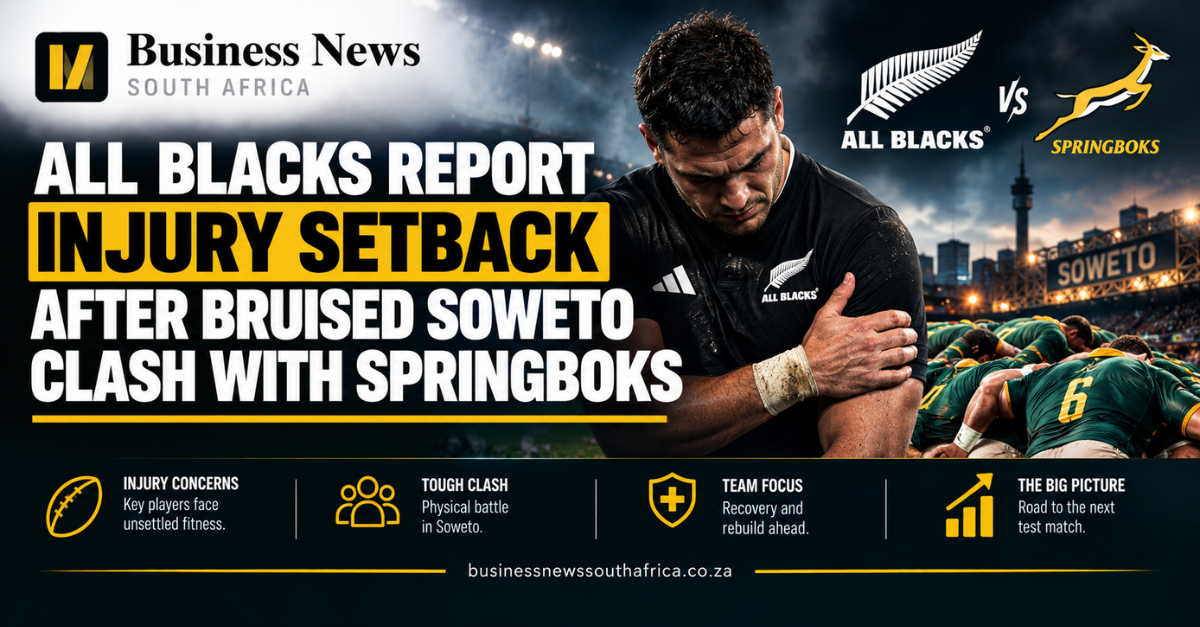
In the early afternoon at a packed Soweto stadium, the Springboks celebrated a hard-fought win while the All Blacks limped off with an additional injury on their books, according to a short Flashscore bulletin.
The bulletin, which offered no further detail beyond the headline, simply noted that the New Zealand side suffered “another injury setback” after the bruising showdown. No player name, injury type or match score was disclosed, leaving fans and analysts to fill in the gaps.
For South African businesses that rely on big-ticket sport events, from stadium vendors to hotels and broadcasters, the news carries a mixed set of implications. The Springboks, South Africa’s national rugby team, are a magnet for domestic tourism. A home test in Soweto typically draws thousands of out-of-province visitors, filling hotel rooms, filling restaurant tables and boosting sales of merchandise. The match also commands premium advertising rates on television and radio, a revenue stream that feeds both the national broadcaster and private media houses.
When the opposition, in this case the All Blacks, New Zealand’s national side, lose a key player, the narrative around the series can shift. Injuries to star players often dampen the excitement for a portion of the viewing audience, which can translate into lower ratings and, consequently, reduced advertising spend. For SMEs that sell ad space or rely on sponsorship deals tied to viewership numbers, a dip in audience interest can affect cash flow.
Conversely, the very fact that the All Blacks are dealing with injury concerns can heighten local interest. South African supporters may see a better chance of a Springboks victory, prompting a surge in ticket sales for the next leg of the series. Retailers near the stadium, from street food stalls to souvenir shops, could see a short-term boost as fans flock to celebrate a potential home win.
What the injury means for the local economy
Rugby remains one of South Africa’s most lucrative sports exports. The 2023 Rugby World Cup, which South Africa won, generated an estimated R1.2 billion in direct economic activity, according to the Department of Sports, Arts and Culture. While a single test match does not approach that scale, the cumulative effect of a series can be significant. Hotels in Johannesburg reported occupancy spikes of up to 20 percent during previous Springboks-All Blacks tests, and local transport operators saw similar lifts.
If the All Blacks are forced to reshuffle their line-up, the series may become more unpredictable, a factor that broadcasters often market as “must-watch”. That unpredictability can keep advertising rates stable, even if a marquee player is missing. However, without concrete details on the injury, it is difficult for businesses to gauge the exact impact.
For small-scale caterers and event staff, the immediate concern is staffing. A match that draws a full house requires extra hands for security, food service and cleaning. Any change in expected attendance, up or down, can leave these workers either over-staffed or scrambling for last-minute hires. The uncertainty surrounding the All Blacks’ injury roster adds a layer of risk to planning.
From a financial-services perspective, the rugby market is also a niche for betting operators. An injury to a key All Blacks player can shift odds, influencing betting turnover. Operators that have a strong presence in South Africa may see a short-term swing in volume, which can affect their revenue reporting for the quarter.
In the absence of specifics, the safest approach for SMEs is to monitor official team communications and match-day reports as they emerge. The All Blacks’ management typically releases a squad update within 24 hours of a confirmed injury, and the Springboks’ press office will likely comment on any strategic adjustments.
Until then, the headline serves as a reminder of how tightly sport, media and local commerce are intertwined. A bruised pitch in Soweto can ripple through hotel bookings, advertising contracts and even the cash registers of street vendors. For business owners who count on the predictable flow of sport-driven customers, staying alert to these developments is part of the job.