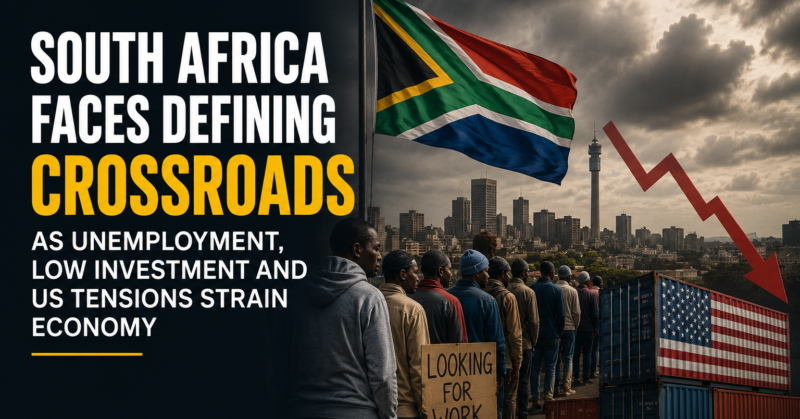
A report from African Insider reported that a leading South African mining company described its current situation as “some of the hardest times” in its history, according to a statement from the firm.
The company’s comment is a claim made by the miner itself and has not been independently verified. No specific financial figures, operational details or timeline were provided in the source material.
Mining in South Africa encompasses the extraction of a range of minerals, from gold and platinum to coal and iron ore. The sector has traditionally been a major contributor to national gross domestic product and a significant source of employment, especially in regions where alternative industries are limited.
One of the most visible challenges facing the industry is the frequency of power outages, commonly referred to as load shedding, which are managed by Eskom, the state-owned electricity utility. When supply is curtailed, mining operations must either halt production or run at reduced capacity, leading to higher per-tonne energy costs.
Labour disputes also play a recurring role in the sector’s risk profile. Unions representing mine workers periodically organise strikes or work-to-rule actions to negotiate wages, safety standards and job security. Such actions can interrupt production schedules and increase the cost of labour compliance.
Global commodity prices are another variable that directly influences profitability. Prices for metals and minerals fluctuate in response to international demand, currency movements and geopolitical developments. When prices fall, revenue streams shrink, while operating expenses often remain fixed.
These external pressures combine to squeeze profit margins, which represent the difference between revenue and total costs. When margins narrow, mining companies may defer capital projects, reduce workforce levels or seek to renegotiate supplier contracts in order to preserve cash flow.
The regulatory framework is overseen by the Department of Mineral Resources and Energy, which enforces the Mining Charter and environmental legislation. Compliance requirements add another layer of cost, as companies must invest in rehabilitation, water management and community development programmes.
Implications for South African SMEs
Small and medium-sized enterprises that provide goods or services to mines are directly exposed to the sector’s volatility. When a miner experiences cash constraints, it may delay payments to suppliers, extend invoice terms or reduce order volumes. Such changes can strain the working capital of an SME that relies on timely receipts to meet its own payroll and overhead.
Credit conditions in the broader economy often tighten in response to sector-wide stress. Banks and financial institutions may raise interest rates, require larger collateral packages or limit the amount of revolving credit available to businesses linked to mining. For an SME without diversified customers, this can increase the cost of borrowing and limit growth opportunities.
To mitigate these risks, owners should conduct regular cash-flow forecasting that incorporates worst-case scenarios, such as delayed payments of up to 90 days. Maintaining a buffer of liquid assets or securing a line of credit before a downturn can provide the flexibility needed to honour supplier obligations without resorting to emergency financing.
Contractual safeguards are another practical tool. Including clear payment terms, penalties for late payment and clauses that allow for price adjustments in line with commodity price movements can protect margins. Where possible, SMEs may also explore invoice-discounting arrangements that convert receivables into immediate cash.
Diversification of the client base reduces dependence on any single miner. By expanding into other sectors such as construction, agriculture or renewable energy, a business can offset potential revenue shortfalls that arise from mining-related disruptions.
Staying informed about sector developments is essential. Regularly reviewing reports from industry bodies, monitoring Eskom’s load-shedding schedule and tracking commodity price indices can help SMEs anticipate changes and adjust their operational plans accordingly.
In the absence of detailed information about which miner is facing difficulty, the broader message for South African business professionals is one of caution. While the sector remains a cornerstone of the economy, the combination of energy supply constraints, labour negotiations and price volatility creates an environment where financial resilience and proactive risk management are critical for sustaining growth.