For shoppers and suppliers alike, trust is a silent driver of daily decisions. When a retailer consistently appears at the top of a global trust list, it can shape where consumers spend and which partners businesses choose.
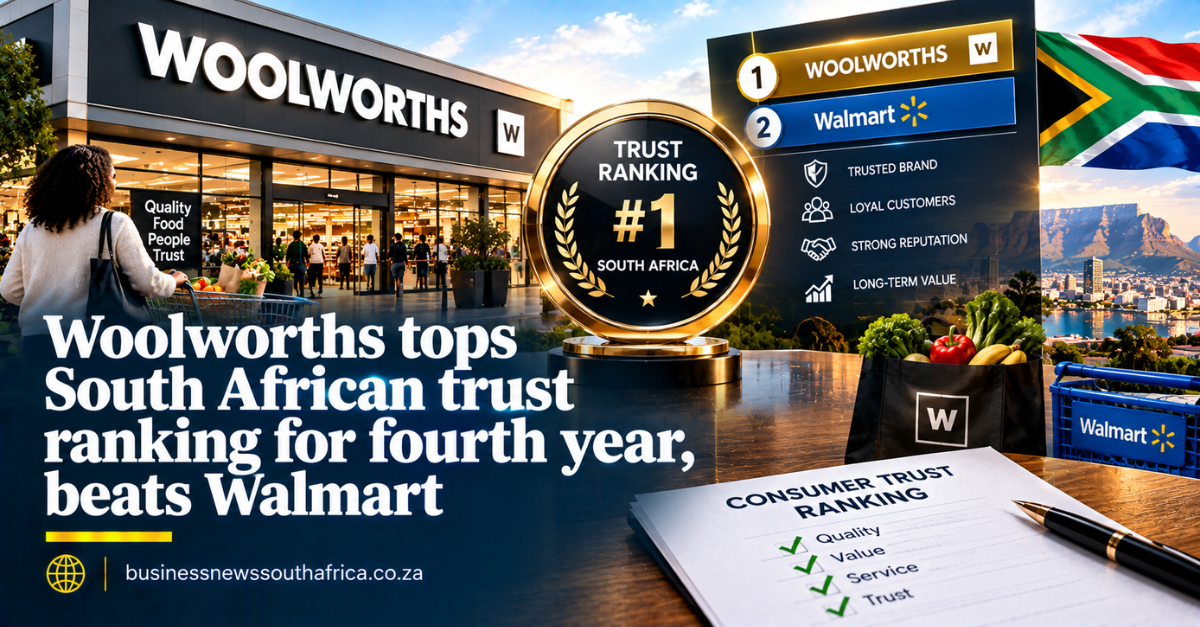
According to Newsweek and Statista, Woolworths has been placed 15th among the world’s most trustworthy retailers and is the highest-ranked South African company for the fourth year running. The ranking also puts local rivals Dis-Chem (21st), Clicks Group (27th) and Cashbuild (37th) ahead of the United States giant Walmart, which sits at 54th.
How the ranking is built
The list is compiled from more than 500,000 data points. Eighty percent comes from independent surveys that capture customer perception, investor confidence and employee engagement. The remaining twenty percent is derived from social-media sentiment analysis. Scores from previous years are rolled into the calculation, reflecting the idea that trust builds over time.
Newsweek said the ranking shows “trust can be one of the most valuable things a company earns” and that it can influence consumer spending and brand loyalty. Woolworths Group CEO Sam Ngumeni told the outlet that the recognition is “proof of our values in action” and pledged to keep working to earn trust every day.
Woolworths also highlighted its recent financial results. For the year to June 2026, turnover grew 4.3% to R84.5 billion and EBITDA, earnings before interest, tax, depreciation and amortisation, rose 2.8% to R8.9 billion. Headline earnings per share (profit per share before one-off items) increased from R2.68 to R2.82, despite a slight dip in basic earnings per share.
The Food segment was the standout performer, delivering 5.7% turnover growth and helping the group gain market share in South Africa’s grocery sector. Thirteen new grocery stores opened, taking total trading space to over 291 000 square metres. Other categories such as home and beauty grew modestly, with the home and beauty revenue rising 4.3% to R15.8 billion.
For small-business owners and local suppliers, the ranking signals a stable partner. A retailer that scores highly on employee engagement and investor confidence is less likely to cut costs abruptly, which can protect supply contracts and employment. The trust advantage also means Woolworths may attract more foot traffic, a factor that can benefit nearby SMEs that rely on spill-over shoppers.
Looking ahead, Woolworths says the trust score will guide its strategy, especially as it leans further into the Food business. Maintaining the top spot will require the group to keep its sustainability, transparency and quality promises, a challenge that will test its ability to balance growth with the expectations that earned it the ranking.
Woolworths isn’t the only South African name being benchmarked globally this week either: Time Magazine’s separate ranking of the world’s 1,000 best-performing companies placed nine South African firms on its list the same day, using a different methodology built around growth and employee satisfaction rather than consumer trust surveys. Two independent rankings pointing the same direction in one week is a stronger signal than either alone.
For SME owners who supply into Woolworths’ Food division specifically, the ranking has a more direct practical edge than most trust surveys carry: a retailer whose own brand equity is tied to sustainability and transparency claims has a real incentive to push those same standards down its supplier base, through audits, sourcing requirements or simply preferential shelf space for suppliers who can document their own practices. Holding the top domestic spot for a fourth consecutive year suggests that pressure is not a passing initiative but a fixed part of how Woolworths now expects to compete.
Smaller food producers and speciality suppliers hoping to get onto Woolworths’ shelves should read the ranking as a signal about what the buying team will now expect as table stakes rather than a nice-to-have: documented sourcing, credible sustainability claims and a supply chain that can withstand the same public scrutiny the retailer itself has just been placed under. A supplier relationship that once turned mainly on price and reliability increasingly turns on whether a smaller partner can hold up its end of a much more visible trust story.