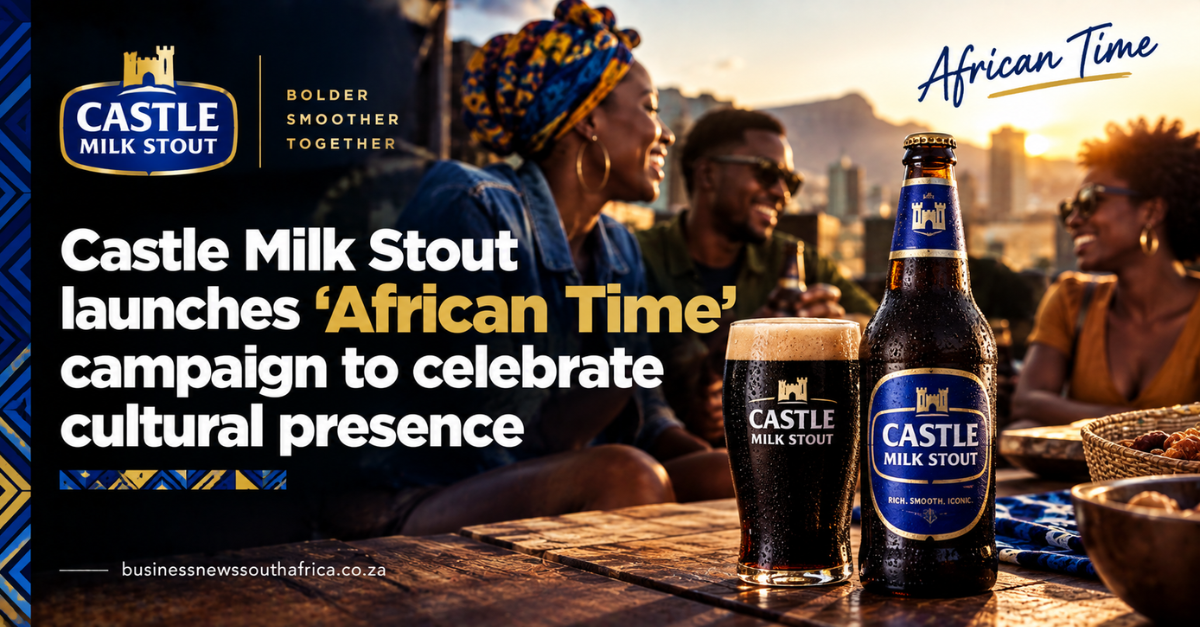
In a packed tavern on a Saturday evening, a group of friends clinked glasses of Castle Milk Stout and laughed as the bartender turned on a short video that celebrated “African Time“, a phrase the brand says should mean “presence, connection and cultural pride”.
According to a press release on Bizcommunity, the campaign invites South Africans to “reclaim African Time” and savour the moments that keep African culture moving forward. The company describes the effort as a cultural marketing push, not just a product advert.
Castle Milk Stout is part of SAB, the country’s largest brewer. By tying a beer brand to a broader cultural narrative, SAB hopes to differentiate its product in a crowded market where many brands compete on price alone.
For small-business owners, the campaign offers a concrete example of how a well-known brand can use cultural storytelling to deepen customer loyalty. Rather than focusing solely on discounts, the message leans on identity, a tactic that can be replicated on a modest budget through local events, social media storytelling or community partnerships.
South African marketers have increasingly turned to heritage and community themes to stand out. Recent years have seen other brands foreground local music, language and festivals in their advertising, signalling that consumers respond to messages that reflect their lived experience. The “African Time” angle taps into a shared frustration with punctuality stereotypes and flips it into a positive, inclusive celebration.
SME founders should watch how Castle Milk Stout integrates the campaign across TV, digital and on-premise activation. The consistency of the message, that time spent together is valuable, can inspire small retailers, cafés or service providers to craft their own narratives that resonate with local culture.
What SAB actually is
South African Breweries has operated in the country since 1895 and today produces the large majority of beer sold domestically, operating as the local division of global brewer AB InBev since a 2016 merger. That scale is part of why a campaign like this one gets media attention beyond a typical beer advert: SAB’s marketing choices tend to shape category-wide advertising trends, since smaller competing brands often respond to, rather than set, the tone SAB establishes for how beer is marketed to South African consumers.
Cultural-marketing campaigns of this kind typically run for a defined season rather than indefinitely, timed around a specific cultural moment, in this case aligning with Heritage Month, which runs through September. SME owners considering a similar approach should note that the cost of national television production is well beyond most small businesses’ budgets, but the underlying idea, tying a brand to a genuine cultural touchpoint rather than a generic discount, scales down perfectly well to a single social media post or in-store display.
Heritage Month itself was formally established in South Africa in 1996, growing out of what was originally proposed as a day honouring King Shaka before being broadened into a national celebration of cultural diversity on 24 September. Brands that tie campaigns to the month are engaging with an occasion that already carries genuine public recognition, rather than manufacturing a marketing moment from scratch, which is part of why the approach tends to land better with consumers than a generic seasonal sale.
Whether the campaign meaningfully shifts sales will only be visible in SAB’s next set of results, since brand-perception campaigns of this kind are designed to build long-term loyalty rather than drive an immediate spike in volume. For now, the campaign remains a marketing exercise worth watching rather than a confirmed commercial success. Check SAB’s own channels for the campaign’s full rollout schedule, and we will follow up if any sales figures are released.