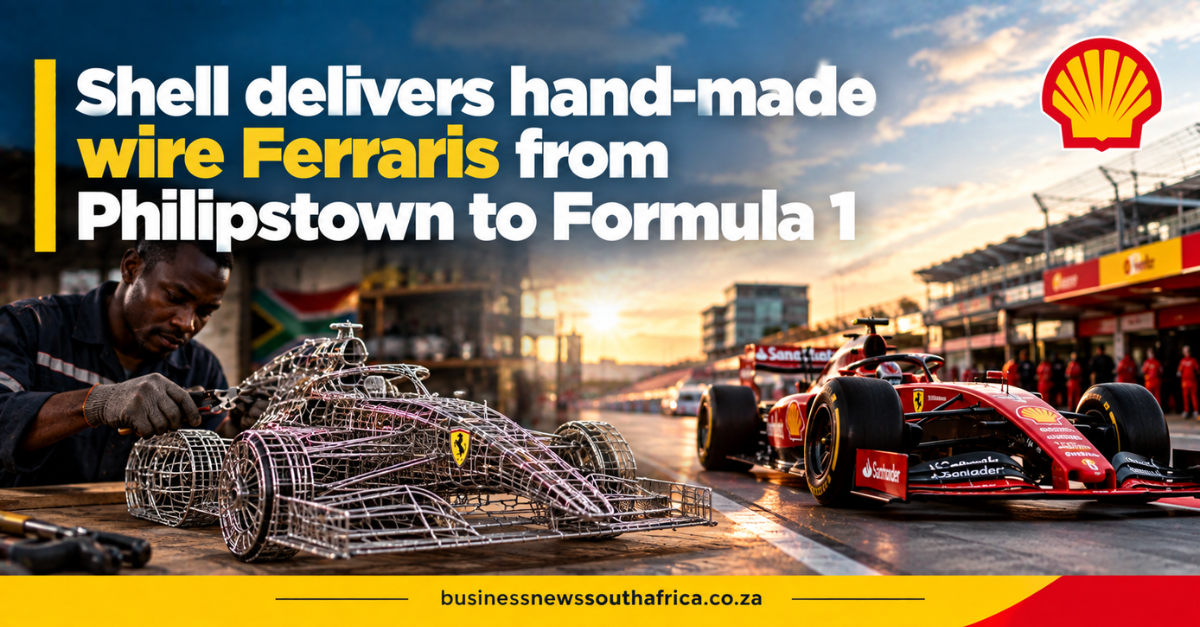
When actress Nomzamo Mbatha handed two handcrafted wire Ferraris to Lewis Hamilton and Charles Leclerc in Budapest, the moment felt like a bridge between a remote Karoo settlement and the global motorsport arena. The cars, built by children in Philipstown, were not toys but the product of a fourteen-year tradition of constructing “draadkars”, wire cars made from discarded wire, scrap metal and other recycled parts.
Philipstown lies in the Renosterberg Local Municipality, an area where formal jobs are scarce and many households face persistent socioeconomic challenges. Yet the annual WireCar Grand Prix, held each September, has turned the town into a showcase of ingenuity. Young participants design and assemble their own wire cars, then race them along a three-kilometre course that winds through the streets. The event grew from a simple community pastime into a source of pride and a catalyst for local skill development.
The growth of the event led to the creation of the Philipstown WireCar Foundation, a non-profit that uses the wire-car programme as a platform for education, practical skills training and modest income-generating activities. According to the foundation, the aim is to give young people access to computers and digital training that can open doors beyond the wire-car workshop.
Shell South Africa, which has a long-standing partnership with Formula 1 through its V-Power brand, saw an opportunity to amplify the story. Monica Sithole, marketing manager at Shell South Africa, said the company wanted to demonstrate that “extraordinary potential can be found in the most unexpected places”. The handover of the wire Ferraris was intended to bring international visibility to the foundation’s work and to illustrate how heritage, creativity and skills development can contribute to community upliftment.
Alistair King, vice-chair of the foundation, explained that the wire cars are “ideas brought to life by young people with their own hands”. He added that the project has already helped a handful of families earn small amounts from selling miniature wire-car models to visitors, and that the exposure from the Formula 1 stage could attract further support for digital-skill programmes.
For entrepreneurs and small-business owners, the story offers a reminder that grassroots innovation can be a springboard for larger opportunities. While the wire-car model does not replace formal manufacturing, it shows how low-cost materials and community engagement can generate both social and modest economic returns. Companies looking to embed corporate social responsibility into their brand may find value in partnering with similar community-led projects, especially when the partnership aligns with existing brand narratives.
What this means for small enterprises
Small enterprises operating in resource-constrained environments can draw three practical lessons. First, leveraging locally available waste material can reduce input costs and create a unique product story. Second, aligning a community project with a well-known brand or event can multiply exposure without a large marketing budget. Third, integrating digital-skill training into a hands-on activity can broaden future employment pathways for participants, which in turn can sustain the supply chain for the original activity.
Shell’s involvement also highlights how large corporations can use targeted activations to support community-based entrepreneurship without committing to large-scale capital projects. The company’s statement notes that the initiative is part of a broader effort to celebrate South African talent on a global stage, but it does not disclose any long-term funding commitments beyond the current activation.
As the wire Ferraris travelled from the Karoo to the Formula 1 paddock, the underlying message was clear: creativity and resilience can thrive anywhere, and with the right platform, even a small town’s craft can capture worldwide attention.
For readers interested in exploring how community projects can be linked to business development, the SME & Entrepreneurship section offers tools and case studies. The Commercial Funding Suite can help small firms assess financing options for social-impact initiatives.
Source: Bizcommunity. Additional information about Shell South Africa can be found at Shell South Africa. Formula 1 details are available on Formula 1.