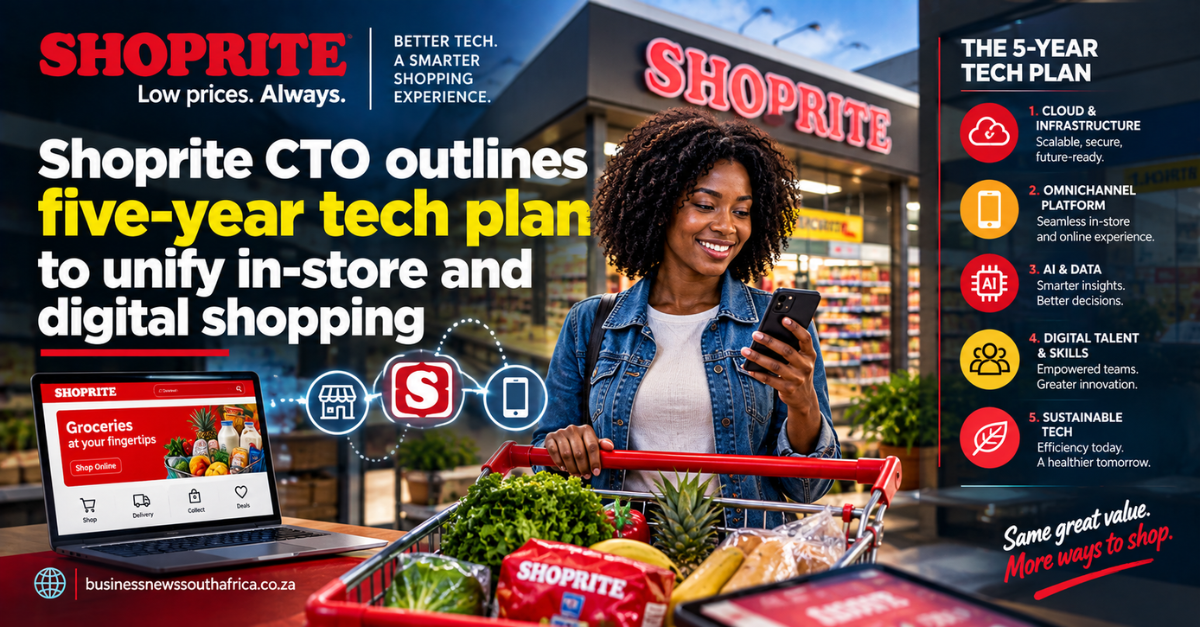
In a bustling township shop, a mother selects fresh tomatoes while a voice assistant in a distant home orders a loaf of bread. The two transactions, separated by kilometres, are meant to feel like they belong to the same shopping journey.
That vision was laid out by Chris Shortt, chief technology officer of Shoprite Group, during a recent episode of TechCentral’s Meet the CIO podcast, produced in partnership with NTT DATA. Shortt told the host that the next five years will be spent “meeting the customer at their point of need, wherever that is”, and that this does not signal the end of the physical store.
Shoprite, Africa’s largest retailer, is betting on a unified experience that works whether a shopper orders by voice from a home assistant or walks down an aisle to choose a fillet. The company calls this an “omnichannel” approach, a retail model that lets customers move freely between online, mobile and brick-and-mortar channels without friction.
Why the SAP upgrade matters
The technical backbone of that promise is a modernised SAP retail platform. SAP, a German software firm, provides enterprise applications that manage inventory, pricing, promotions and supply-chain logistics. Shortt said the upgrade is the largest technology project the group has ever run because it will create a real-time inventory layer, a system that updates stock levels instantly across all stores and online channels. Real-time inventory means a product shown as available on the website truly is on the shelf, and vice-versa.
According to Shortt, the new platform will also support voice-ordering interfaces, allowing customers to add items to a digital basket by speaking to devices such as Amazon Echo or Google Nest. The retailer plans to blend these digital touchpoints with the traditional store experience, letting shoppers decide how they want to shop rather than being forced into a single channel.
For Shoprite’s suppliers, many of them small and medium-sized enterprises, the shift to real-time inventory could change the way they manage deliveries. If the retailer can see stock levels instantly, it may ask for more frequent, smaller shipments to keep shelves stocked. That could increase the logistical burden on a supplier but also open up opportunities for those who can integrate their own systems with Shoprite’s data feeds.
The move also has implications for independent retailers who compete on price and convenience. A unified, data-driven experience may raise customer expectations for speed and availability, putting pressure on smaller players to adopt similar technologies or risk losing foot traffic.
Shoprite’s strategy mirrors a broader trend in South African retail, where large chains are investing heavily in digital infrastructure to stay ahead of both local competition and global e-commerce players. While load-shedding and economic headwinds remain challenges, a robust technology platform can help mitigate stock-outs and improve operational efficiency.
Shortt stressed that the physical store remains “alive and active as it has always been”. The technology upgrade is not a plan to close stores but a tool to make each location more responsive to local demand. In practice, a shopper in a rural town could still walk in for fresh produce, while the same store’s inventory data feeds a city-dweller’s voice-order in real time.
As the project rolls out over the next five years, the success of Shoprite’s omnichannel ambition will hinge on how well the new SAP system integrates with existing point-of-sale hardware, delivery networks and third-party voice platforms. For the retailer’s customers, the promise is clear: a seamless shopping experience that respects their preferred method of buying. For suppliers and smaller retailers, the message is a reminder that technology is becoming a non-negotiable part of the retail landscape.